Minewind is a survival server built around choosing your own path and hunting down powerful loot that fits your play style. Find a wide variety of gear in chests across the world, trade with villagers for emeralds, and take on dangerous mon…
Competition
Competition servers make Minecraft outcome-driven. You are not logging in to slowly accumulate stuff; you are chasing wins, faster times, clean rounds, and higher ratings. Matches are structured, results are recorded, and improvement is visible. The culture is focused: players warm up, review mistakes, and queue again.
The loop is built for repetition. You spawn into a defined ruleset, play for a clear objective, then reset and run it back with minimal downtime. That can be ranked PvP (duels, boxing, gapple, soup, crystal), objective modes like BedWars or Capture the Flag, or time-based formats like parkour trials and speedrun boards. Strong servers keep rules obvious, pacing tight, and feedback immediate.
Skill expression is the point, and it shows in details. In PvP that means spacing, movement reads, hotbar discipline, block placement under pressure, pearl routes, and crystal or anchor execution. In non-combat formats it is line choice, momentum control, and consistency under nerves. Because results are measurable, metas form quickly and players learn counters instead of relying on surprises.
Fairness is the deal. Expect standardized arenas and kits, strict anti-cheat, and limits on random advantages. Many servers split casual and ranked queues, use ELO-style ratings, and run seasons so progress has a rhythm. Socials are tighter than most modes: recognizable rivals, practice partners, scrims, and a chat that can get sharp if moderation is weak.
What separates a competitive server from a server that just has PvP?
A competitive server has explicit win conditions, consistent rules, and a system that tracks outcomes. Ranked queues, brackets, timed boards, match resets, and seasons create a loop where performance is the main progression, not gear hoarding or grinding.
Do I need a team or voice chat to play?
No. Most competitive formats support solo play through duels, FFA, and solo matchmaking in team modes. Voice chat helps in coordinated objectives, but well-run servers make it clear what to do even when you queue alone.
How do rankings and seasons usually work?
Most use ELO-style ratings with divisions or tiers, plus seasonal resets to keep the ladder active. Some modes add tournaments, win streak tracking, or time-based leaderboards. Good systems prevent easy farming by separating new players from established ones and by tightening matchmaking as you climb.
Is competition always PvP?
No. PvP is common, but competition also includes parkour time trials, speedrun races, puzzle or minigame leaderboards, and judged building rounds with fixed rules. The shared idea is consistent constraints and measurable results.
What should I check if I care about fairness and clean play?
Look for transparent rules, active anti-cheat, consistent knockback and kits, and fast resets between rounds. Ping-aware matchmaking helps when available. Clear policies on client mods and macros matter, and long-term retention of top players is usually a good sign the environment is stable.
-
-
2
 88/200OnlinePurity Vanilla is a vanilla anarchy Minecraft server running since March 23, 2019. We keep the experience as close to the base game as possible, giving players total freedom to play Minecraft the way it was intended. There are no gameplay-a…
 -
3
 27/28OnlineWelcome to Survivaldub Network, a multi mode server built around Survival and PvP, with plenty to do no matter how you like to play. Jump into LifeSteal, level up with McMMO, and take on Mob Arenas when you want something more action…
 -
Welcome to Lavender Isles, a rising Fabric Cobblemon server built around fair play, quick onboarding, and a community that stays involved. We focus on keeping things anti pay to win while still delivering frequent updates and reasons to log…
-
Welcome to Better Towny, our take on the Towny experience with progression at the core. Push your character forward with our leveling system using /level, train your MCMMO skills, and level up jobs to earn money as you play. Daily quests an…
-
6
 11/500OnlineWelcome to CoastSMP, a survival server where competition and creativity come together. Whether you prefer building big bases, exploring the world, or taking on other players, there’s always something going on. We encourage players to form a…
 -
7
 8/250OnlineThe Den SMP is a vanilla-inspired Survival SMP with seamless Java and Bedrock crossplay. We’re an 18+ whitelisted community built for mature, respectful players who want a relaxed, drama-free place to enjoy long-term survival. Founded March…
 -
8
 7/50OnlineWelcome to Noob-Friendly, a simple vanilla-style survival server for players who just want a solid survival experience with friends. We focus on a respectful, welcoming community with responsible staff and an active owner who cares about th…
 -
9
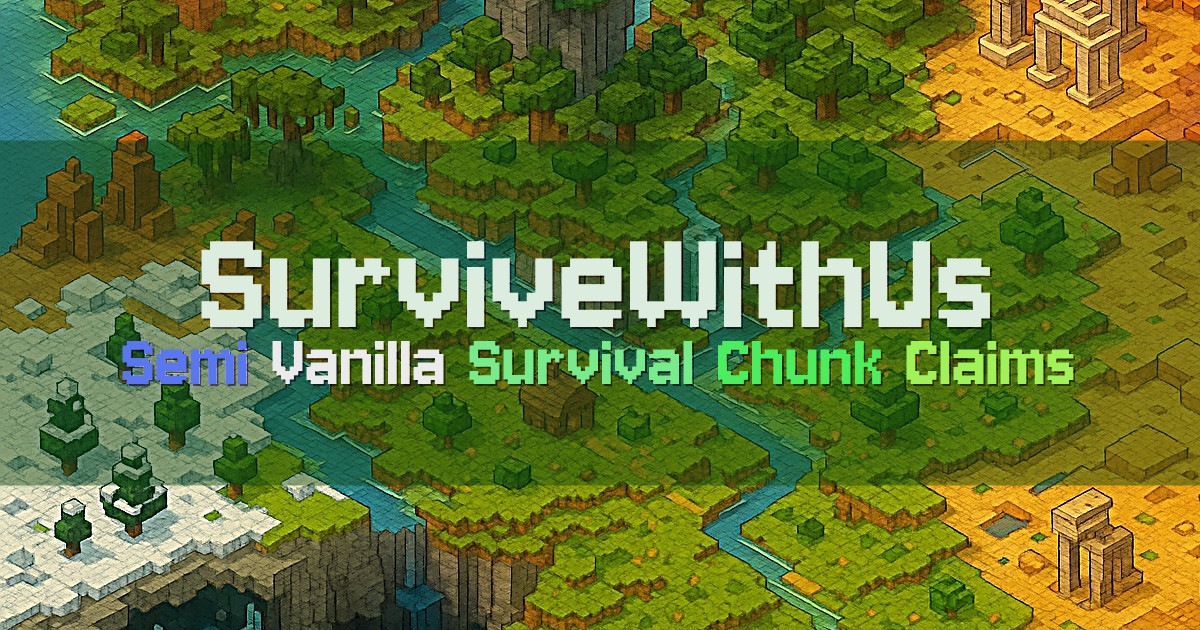 4/69OnlineSurviveWithUs is a semi-vanilla survival server built around community and long-term play. We focus on keeping the core survival experience intact while giving players chunk claiming to help protect what they build. The server is back under…
 -
VanillaEvolved has been focused on a vanilla Minecraft experience since 2013. We keep things simple and avoid adding unnecessary extras, so the core survival gameplay stays familiar and player driven. The server runs as a semi anarchy SMP…