Minewind is a survival server built around choosing your own path and hunting down powerful loot that fits your play style. Find a wide variety of gear in chests across the world, trade with villagers for emeralds, and take on dangerous mon…
earth towny
Earth Towny is survival on a scaled Earth map where the real game is land, borders, and people. You claim chunks, build a town, and end up in nation politics because the map forces it. Coastlines, mountain ranges, deserts, and straits are familiar, so your first choice is geographic: where you can grow, what you can defend, and who you are guaranteed to live next to.
The loop is straightforward: settle a region, secure claims, and build a town that can actually function for a group. Farms, storage, roads, ports, and a safe spawn matter because towns are long-term projects. As claims spread, towns align into nations, borders become real lines on the map, and negotiation stops being optional. Good coastline and chokepoints get taken early, and scarcity makes agreements and rivalries stick.
Earth Towny rewards planning and logistics more than raw PvP mechanics. Terrain creates natural trade routes, distance makes certain resources and biomes valuable, and infrastructure becomes power. Holding an island, controlling a channel, or being landlocked behind a hostile neighbor changes your whole playstyle in a way normal worlds rarely do.
Conflict is usually structured so builds can survive. Many servers use war windows, siege systems, or conquest rules that focus on capturing territory, taxing, or occupying rather than leveling everything overnight. The tension comes from treaties, blocs, and border pressure: one week you are laying rail and expanding a skyline, the next you are fortifying, moving valuables, and deciding whether to fight or sign.
At its best, Earth Towny is social strategy layered on Minecraft. You join a town, get a plot, contribute to shared projects, and learn the local meta fast: crowded regions with constant diplomacy, quieter frontiers with long supply lines, and the big nations that shape everyone else’s choices.
What do you do day to day on an Earth Towny server?
Gather and process materials, expand or maintain claims, and build town infrastructure that benefits everyone. A typical session is mining and farming, then turning it into roads, walls, docks, shops, and public storage. When politics heat up, you scout borders, stockpile gear, and show up for war events or defense shifts.
Do I need to roleplay to fit in?
No. Some groups run governments, flags, and lore, but you can play it like serious claim-based survival. If you respect borders, follow town rules, and contribute occasionally, you will fit in without doing character roleplay.
Why does the Earth map change the experience so much?
Because the shape of the world is known and constrained. Prime coastlines, river mouths, and chokepoints are limited and become political flashpoints. Travel corridors matter, neighbors are predictable, and where you settle determines your trade options and your enemies in a way random terrain does not.
If my town loses a war, do I lose everything?
Usually not, but rules vary. Many servers prefer territory capture, taxes, or temporary occupation over total destruction so towns stay playable. Before committing to a nation, read how sieges work and what protection exists for claims, chests, and spawns.
How should I choose a town to join?
Pick activity and leadership first: consistent players, clear rules, and a plan for growth. Then consider location and risk: crowded regions mean faster trade and diplomacy but more border pressure, while remote areas are calmer but can feel isolated. A solid town offers a plot, a way to earn money, and a say in decisions.
-
-
2
 280/500OnlineWelcome to Twenture Network, a Java server built around custom and unique experiences across multiple game modes. Our lineup includes OneBlock, Survival, LifeSteal, and Earth Towny, with a focus on thoughtfully designed gameplay that stays…
 -
3
 65/400OnlineWelcome to PlayHeroMC, an innovative multiplayer server built around a unique Earth SMP survival experience. Join on Java or Bedrock and play with friends or jump in solo from just about any device. Whether you prefer a relaxed PvE focus, b…
 -
4
 44/1000OnlineWelcome to SunRealms, a Minecraft server featuring Skyblock, Generators, Survival, and Prison. We focus on a friendly community with dedicated staff and regular events to keep things fresh, whether you are building up your island, progressi…
 -
5
 12/500OnlineWelcome to CoastSMP, a survival server where competition and creativity come together. Whether you prefer building big bases, exploring the world, or taking on other players, there’s always something going on. We encourage players to form a…
 -
6
 11/50OnlineWelcome to Aggroculture SMP, a semi vanilla survival server built for players who want real risk, real progression, and an economy that comes from the land. We focus on farming and PvP with a multi-crop, player-driven economy and skill-base…
 -
Firestarter is a simple, cozy, and relaxing community SMP. Whether you want to play with friends or jump in on community projects, we aim to offer a welcoming place to enjoy Minecraft at your own pace. We run a player-driven economy with…
-
8
 7/1000OnlineAnarchySMP is a no-rules anarchy survival server where PvP is always on and the world will never reset. The experience is intentionally open-ended and unstructured, so you can build, raid, ally, or destroy without protections or claim syste…
 -
9
 7/120OnlineWelcome to CityRP, a Minecraft city roleplay server built around life in a detailed urban world. Whether you want to build, explore, trade, or carve out a role in the community, we focus on creating a place where your choices have real…
 -
10
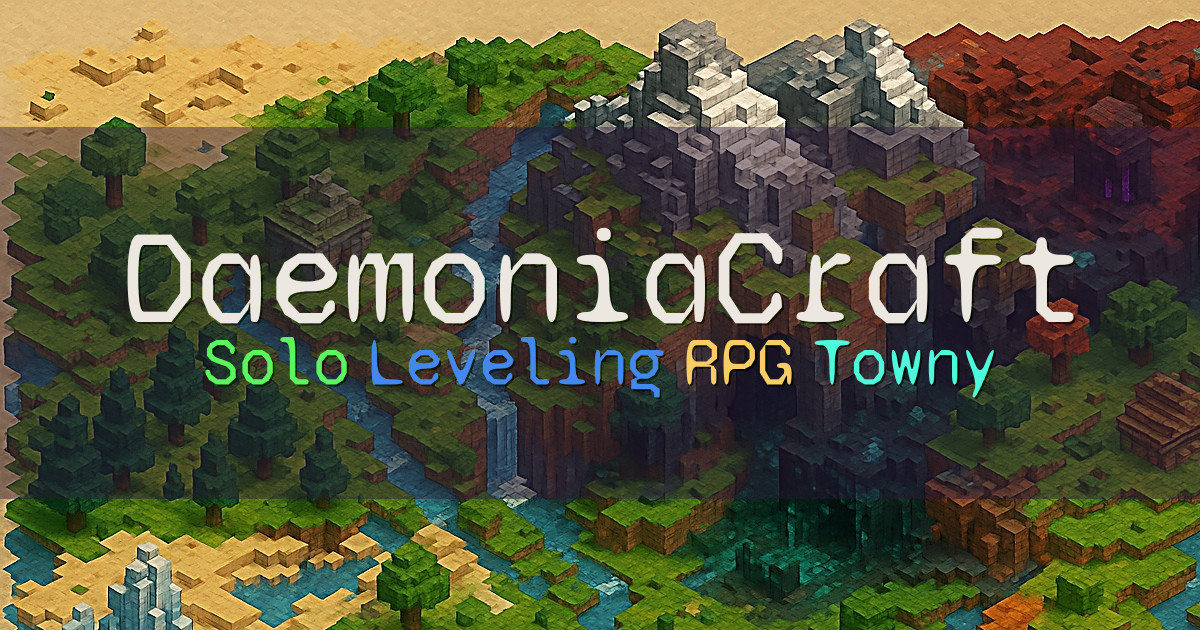 3/105OnlineWelcome to DaemoniaCraft, a Solo Leveling inspired survival RPG on a medieval Earth where kingdoms and towns shape the world. Start your journey as a Hunter at E-Rank and climb toward S-Rank through RPG-style progression. Unlock custom skil…