Minewind is a survival server built around choosing your own path and hunting down powerful loot that fits your play style. Find a wide variety of gear in chests across the world, trade with villagers for emeralds, and take on dangerous mon…
fair rules
A fair rules server runs on consistency. The rules exist to keep play competitive and livable, not to give an edge to loud players, rich groups, or friends of staff. You know what counts as griefing, what counts as legitimate raiding, what crosses the line in chat, and what gets handled as normal Minecraft conflict.
The loop is the same survival multiplayer, just with less second-guessing. You gather, build, trade, fight, and make enemies, and when something goes sideways there is a predictable path to resolution. If the server allows raiding, losing unsecured loot is part of the risk. If someone dupes, phases through blocks, uses combat hacks, or abuses a bug, that is treated as rule-breaking, not clever play.
These servers lean on repeatable standards and evidence. Rules are written plainly, staff ask for context, and punishments scale with intent and history instead of mood. You still get rivalry and drama, but it stays in-game. The vibe is closer to organized multiplayer than anarchy: hard competition without harassment, slur spam, doxx threats, exploit abuse, or staff shopping deciding outcomes.
What makes rules feel fair instead of just strict?
Fair means clarity and predictability. You can tell what is allowed and you can expect the same call no matter who you are, when it happens, or who you are fighting. Strict just means lots of limits. A fair rules server can be relaxed or sweaty, but it draws clean lines and enforces them consistently.
Does fair rules mean no PvP or no raiding?
No. Many fair rules servers allow PvP and raiding, they just define what counts as legit. Winning fights, setting traps where they are allowed, or raiding through normal mechanics can be fine. Duping, glitching into bases, using hacked clients, or bypassing protections through exploits usually is not.
How can I tell if a server actually enforces rules consistently?
Read the rules and look for specifics on common problems like hacks, exploits, chat conduct, and raiding edge cases. Check if there is an appeals process and whether staff explain decisions. In-game, pay attention to how quickly and transparently they deal with obvious stuff like combat hacks or slur spam. If enforcement only happens after a public argument or depends on who is involved, it shows fast.
What proof do servers usually want for reports?
Usually: screenshots for chat, short clips for hacks or exploits, and timestamps plus coordinates for theft or grief reports when relevant. If the server has logs or rollbacks, your job is mainly to give enough detail for staff to verify what happened.
Are fair rules servers better for new players?
Often, yes. A consistent baseline means new players are less likely to get pushed out by unchecked toxicity or exploiters. You still need to learn the server specifics, like whether claims exist or how raiding is handled, but the ground rules are steadier.
-
-
2
 11/200OnlineBienvenido a Cuackverse. Somos un servidor Cobbleverse enfocado en el progreso constante, con recompensas, eventos y una economía equilibrada. La idea es simple: romper, mejorar y evolucionar a tu ritmo, descubriendo hasta dónde puedes lleg…
 -
3
 10/48OnlineCrescenta is a long-running worldbuilding, storytelling, and geopolitical roleplay server built around a mature community and player-driven stories where your choices can meaningfully change what happens next. Our current world, Gary, is ab…
 -
4
 9/40OnlineEcoSMP is a cross-platform semi-vanilla survival server built around a genuine community and long-term worlds with no server resets. We’re intentionally family-friendly and focused on a smaller, higher-quality community. Our goal is to keep…
 -
5
 5/110OnlineNovaTek is an international, community-oriented SMP built for both technical players and casual players who want to enjoy the base game with minimal technical restrictions. Our main world is a no-resets, forever world meant for long-term bu…
 -
6
 3/100OnlineNaruto Adventures is a Minecraft server built around progression, combat, and player-driven systems inspired by Naruto. Over the past months we’ve rebuilt our core features to be fully automated so the server can run smoothly without consta…
 -
Welcome to Semi Anarchy SMP, Chapter 1. This is a survival multiplayer world built for players who like freedom, risk, and player-driven chaos. Betrayals are allowed, and how you survive is up to you: build, fight, trade, or just blow thing…
-
8
 2/500OnlineGementarMC is a survival SMP server for players from Malaysia, Singapore, and Indonesia who want a solid experience with a chill community and competitive vibes. Set up your base, grind resources, and explore new lands at your own pace. Tea…
 -
9
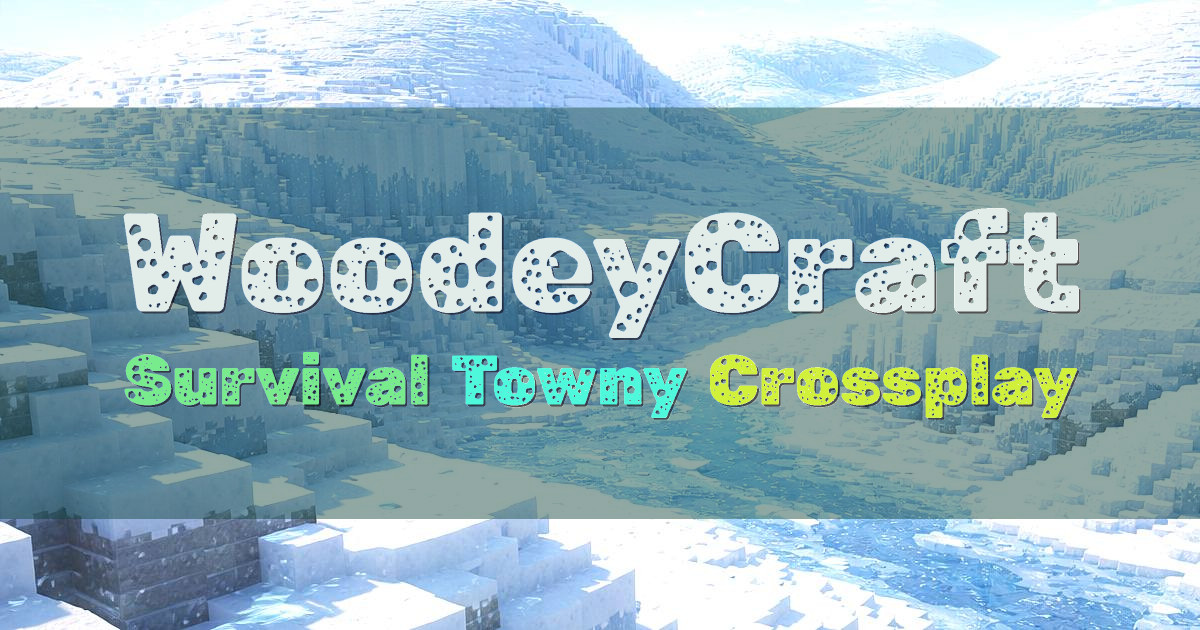 1/15OnlineWoodeyCraft is a balanced Survival and Towny server with full Java and Bedrock crossplay. Whether you play solo or with friends, you can build a base, claim land, and grow your town over time. Towny brings land claiming and administration t…
 -
10
 0/200OnlineLolliGamesMC is a community-run Java survival server hosted in Frankfurt, EU, built for players who want a straightforward vanilla experience with a friendly, active community. We keep things fair and simple. There is no pay-to-win, and any…