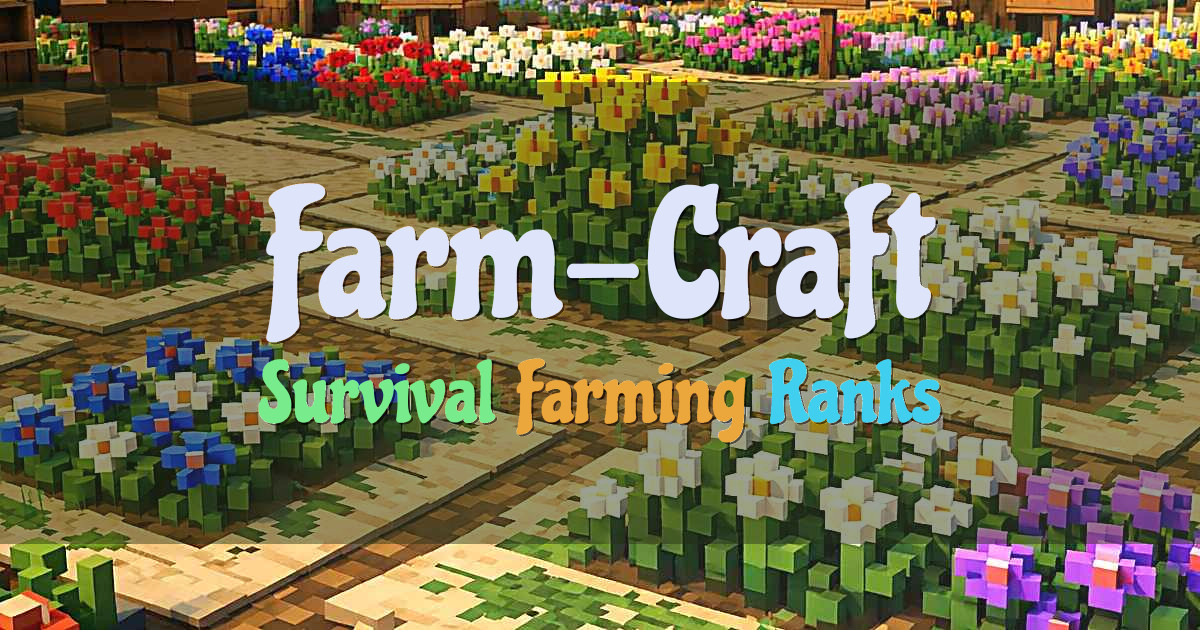
Farming as a server format treats renewable resources as the main progression path. The core loop is simple and satisfying: plant, breed, harvest, process, restock, then turn surplus into upgrades. Progress feels steady rather than spiky, and the flex is reliability: fields that stay stocked, pens that cycle cleanly, storage that never jams.
Most playtime happens inside your base footprint. You start with wheat, carrots, potatoes, sugar cane, and basic livestock, then grow into villager trading and supply chains that actually pay off: pumpkins and melons into emeralds, paper into librarian trades, golden carrots and cooked food into daily staples. When the server ties farming into an economy, jobs, or quests, a well-run patch is not decoration, it is your income stream.
Long-term, the game becomes production engineering, even if the server limits heavy redstone. Players scale with water collection, villager-powered crop farms, honey setups, compact cookers, and storage rooms built around hoppers, filters, and bulk sorting. The vibe is part builder, part operator: you spend time on layout, spawn-proofing, and throughput because consistency beats burst grinding here.
The social layer is usually cooperative. People swap seeds and breeding stock, buy and sell in markets, compare designs, and carve out roles in a local supply chain. Competition still shows up, but it is economic: who keeps the shop district stocked, who has the best villager hall, who controls high-demand staples like rockets, books, or golden apples that farming indirectly funds.
A strong farming server ends up deeper than it looks. Light levels, growth mechanics, villager behavior, mob caps, and chunk rules quietly shape what is worth building. You can stay casual and hand-harvest forever, but the format naturally rewards learning how Minecraft systems interact, because every small optimization turns into repeatable profit.