Minewind is a survival server built around choosing your own path and hunting down powerful loot that fits your play style. Find a wide variety of gear in chests across the world, trade with villagers for emeralds, and take on dangerous mon…
Italiano
Italiano servers put Italian first. The game mode can be anything, but the social layer is unmistakable: public chat, /rules, announcements, and most player-to-player coordination assume Italian. That single choice shapes how quickly you can plug into the server, from asking for help to understanding what behavior is actually expected.
They tend to feel like a local scene rather than a global lobby. Trading, recruiting, and casual banter move faster when everyone shares the same language, and the practical stuff gets easier too: negotiating land claims, sorting out a grief report, coordinating a Nether hub, or reading staff instructions during an event. Discord and ticket support usually follow the same Italian-first approach, so there is less second-guessing when something goes wrong.
If you speak Italian, the whole server runs with less friction and more social momentum. If you do not, you can still play the mechanics, but you will miss context, jokes, and fast-moving decisions, and you will lean on translating when it matters most, like disputes, trades, and group plans.
Do I need to speak Italian to play on an Italiano server?
Usually not, but it helps a lot. Expect most chat, rules, and support to be in Italian. You can handle basic survival play without it, but teaming up, trading, and resolving issues gets rough when you cannot follow quick chat or Discord threads.
Is Italiano a gameplay mode like Survival or Factions?
No. It is the language the community runs on. The server could be Survival, Skyblock, Factions, minigames, or anything else, but the default communication and culture are Italian.
How can I tell if a server is actually Italian-first?
Look at what happens when you join: spawn signs and /rules in Italian, public chat mainly in Italian, and staff replies and announcements staying in Italian. A strong sign is an active Italian Discord where updates and support happen in the same language.
Does time zone matter on an Italiano server?
Most of the activity lines up with Italy and nearby European time zones. That affects peak economy hours, how quickly staff respond, and when group activities and events actually fire.
-
-
2
 18/19OnlineEn Universo PokéNet reunimos Cobblemon y Pixelmon en el mismo servidor para que puedas jugar con el mod que prefieras sin dejar atrás a tu comunidad. Nuestro objetivo es ofrecer una experiencia centrada en Pokémon dentro de un entorno de su…
 -
Welcome to PokeSaga, a Pixelmon Reforged server running v9.1.11. We focus on a Survival PvE experience with an economy, plus extra activities like MCMMO and parkour. To join, use our Technic modpack. If you run into any issues getting set u…
-
Welcome to Aspiria Mc, a long-running Minecraft server built around a friendly, vibrant multiplayer community. We’ve been growing and playing together since 2013, and we focus on creating a place where new and veteran players can settle in…
-
5
 6/75OnlineXCraft Survival has been running since 2013, built around an old-school survival experience with a few fun twists that keep things fresh without losing the core feel of survival. You’ll find custom enchantments, tweaked crafting recipes, an…
 -
6
 5/80OnlineSerendipityMC is a forever-world Survival SMP built for players who want a place to truly settle in. We do not reset the world. Your builds stay, your progress is permanent, and what you contribute to the economy continues to matter over th…
 -
7
 4/2026OnlineSlime Throne is a kingdom-focused server built around building your own legacy, ruling your lands, and choosing when to clash with other players. We put a lot of care into presentation, with custom GUIs, GUI artwork, and custom prefix artwo…
 -
8
 4/500OnlineWillkommen auf Veylor.NET, unserem Survival Server mit einer riesigen Welt voller Abenteuer und Herausforderungen. Wir setzen auf ein stimmiges Spielerlebnis, eine freundliche Community und sorgfältig ausgewählte Plugins. Ob du alleine losz…
 -
9
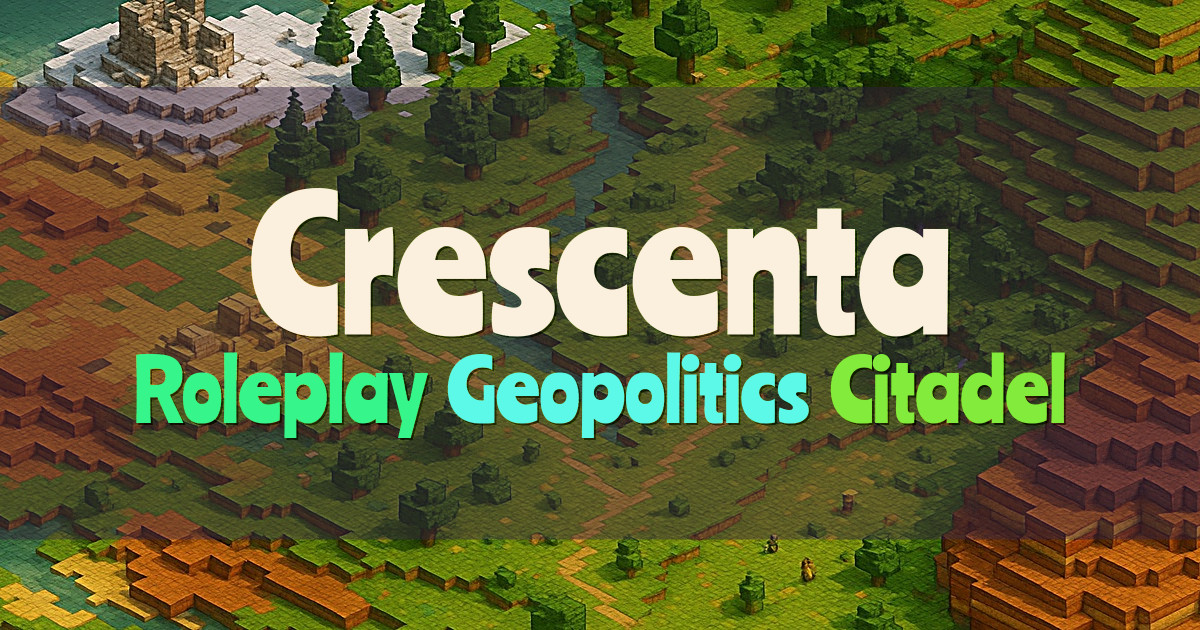 3/48OnlineCrescenta is a long-running worldbuilding, storytelling, and geopolitical roleplay server built around a mature community and player-driven stories where your choices can meaningfully change what happens next. Our current world, Gary, is ab…
 -
DivertitiInSurvival è un piccolo server Vanilla Bedrock in modalità survival a difficoltà difficile. Abbiamo aperto da poco e puntiamo a un’esperienza semplice ma curata. Allo spawn troverai una piazza accogliente con molti NPC pronti ad ai…