Minewind is a survival server built around choosing your own path and hunting down powerful loot that fits your play style. Find a wide variety of gear in chests across the world, trade with villagers for emeralds, and take on dangerous mon…
Legendary raids
Legendary raids are endgame co-op runs built around curated encounters: a dungeon wing, a gauntlet, or a multi-phase boss arena. You are not wandering into a random overworld fight. You queue up, show up prepared, and learn a set of mechanics that will punish sloppy play and reward a team that communicates.
Most servers treat entry as a commitment. Keys, raid passes, cooldowns, or gear requirements keep the pace intentional, and wipes are part of the loop. Inside, the vibe shifts to controlled spawns, tighter rooms, scripted phases, and clear fail states like limited revives, room resets, or timer pressure. It plays closer to progression raiding than grinding mobs.
Even when the server does not hard-lock classes, legendary raids still create roles. Someone kites adds, someone calls phase swaps, someone handles objectives, and somebody stays alive long enough to stabilize the pull. Expect potion timing, totem management, shields, ranged burst, and constant movement around telegraphed hits or custom systems like affixes and stagger windows. The good raids feel demanding but learnable, where each wipe teaches you something real.
The payoff is targeted progression. Legendary raids usually drop the items that define builds on that server: unique weapons, upgrade materials, currencies, and cosmetics with actual flex. Strong servers keep them relevant with difficulty tiers, rotating modifiers, and weekly clears so veterans have a reason to run without turning it into a one-time victory lap.
Do legendary raids require a full party?
Usually they are tuned for a group, but the real requirement is covering mechanics. Some are duo-able with strong builds and clean play. Others need multiple players for split phases, switches, or add control. If there are difficulty tiers, start low and treat early clears as practice pulls.
What should I bring to a first legendary raid?
Bring more supplies than you think: spare food, backup gear, and whatever the server uses for sustain like healing pots, regen items, or totems. Have a ranged option even if you are melee, plus mobility like ender pearls. If block placement is allowed, a stack of blocks for cover or line-of-sight breaks can save runs.
How do wipes and resets typically work?
Common setups are limited lives, revive tokens, or checkpoints between rooms but not mid-boss. Some servers reset the instance on a full wipe, others allow re-entry for a short window. Check the rules before you pull, because losing a key to a blind attempt is a common first-timer mistake.
How can I tell if a server's legendary raids are pay-to-win?
Look at where the best raid power comes from. If top-tier materials and best-in-slot effects are earned through consistent clears, the raid scene stays skill-driven. If the strongest upgrades are locked behind cash-only crates or store bundles, progression turns into a gear wall and groups get picky fast.
How do I find groups without getting carried or flamed?
Join learning or progression runs, say your experience level up front, and ask what the raid expects before you enter. Bring your own consumables and follow callouts. Guilds and party-finder channels are usually safer than random invites, and good communities treat early wipes as normal when everyone is trying to improve.
-
-
2
 142/1500OnlineZetrexMC Network is a cross-play Minecraft server where Java and Bedrock players can play together in one shared community. We offer replayable modes like Survival, SMP, Lifesteal, and Bedwars, plus more, with custom features that keep thin…
 -
3
 105/300OnlineWelcome to MINERAZE. We focus on a survival experience built around our Custom Towny, with plenty of extra content to keep things fresh as you play. Alongside Towny, you can dive into jobs, an economy, MCMMO progression, custom items, and c…
 -
4
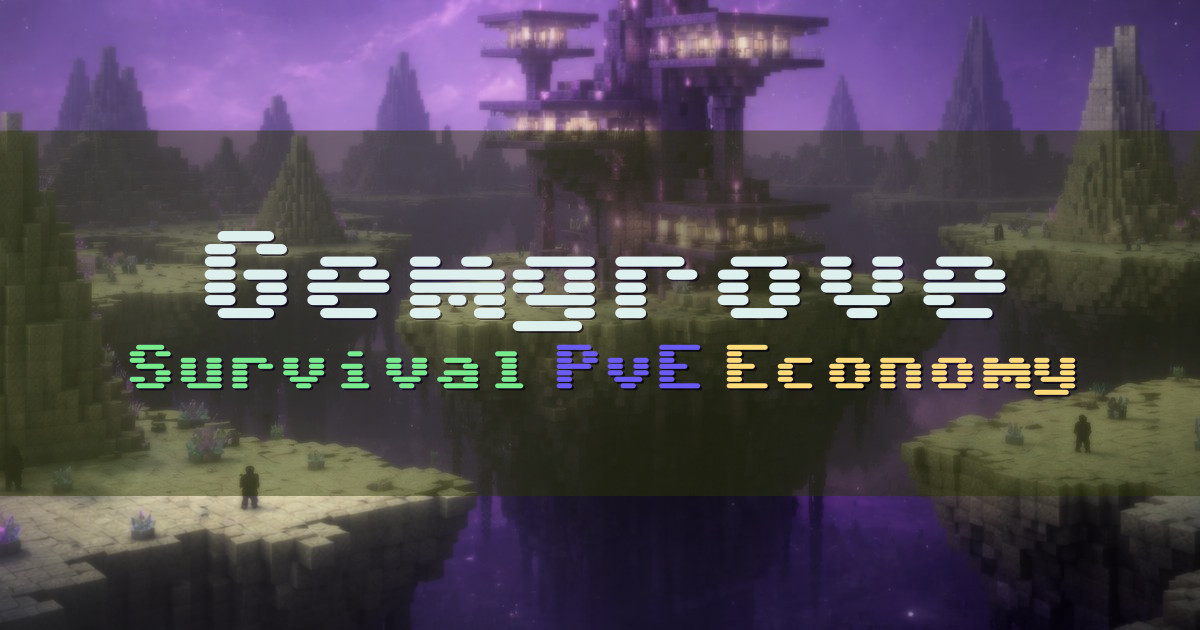 18/500OnlineWelcome to Gemgrove SMP, a cozy and adventurous fantasy survival server built for players who enjoy relaxing building alongside meaningful progression. Discover our unique gem system as you explore, find, collect, and use mystical gems with…
 -
5
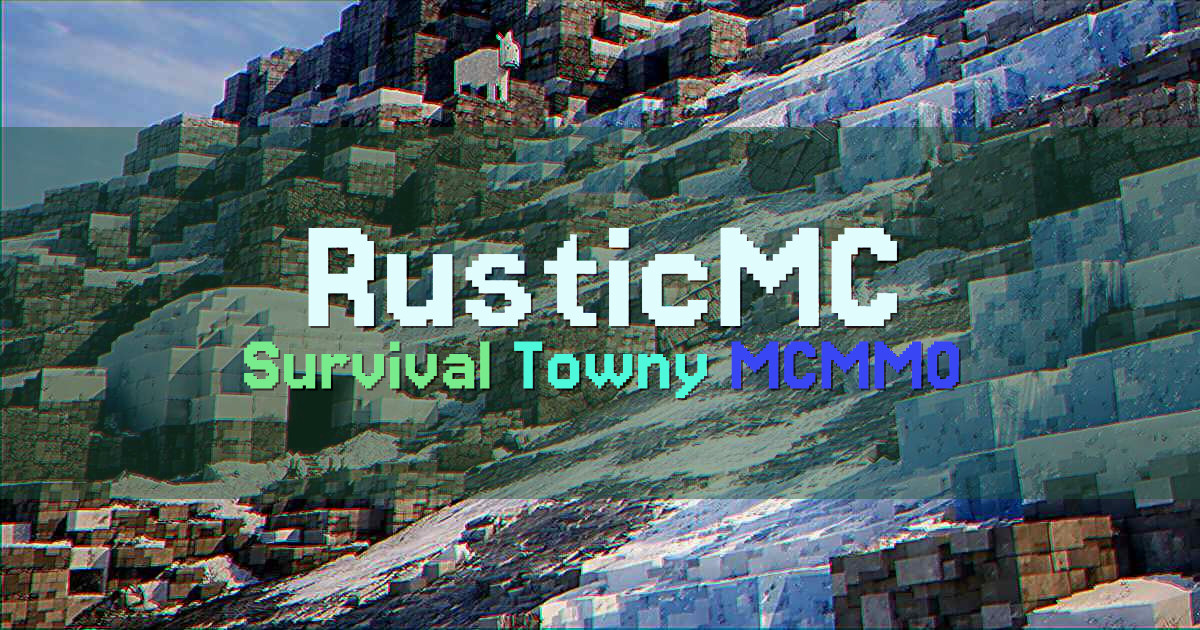 14/25OnlineRusticMC is a community-oriented survival server where you can play your own way. Settle into our main community village and build alongside others, or head out and start something independent. We launched on September 10th, 2024, and we do…
 -
6
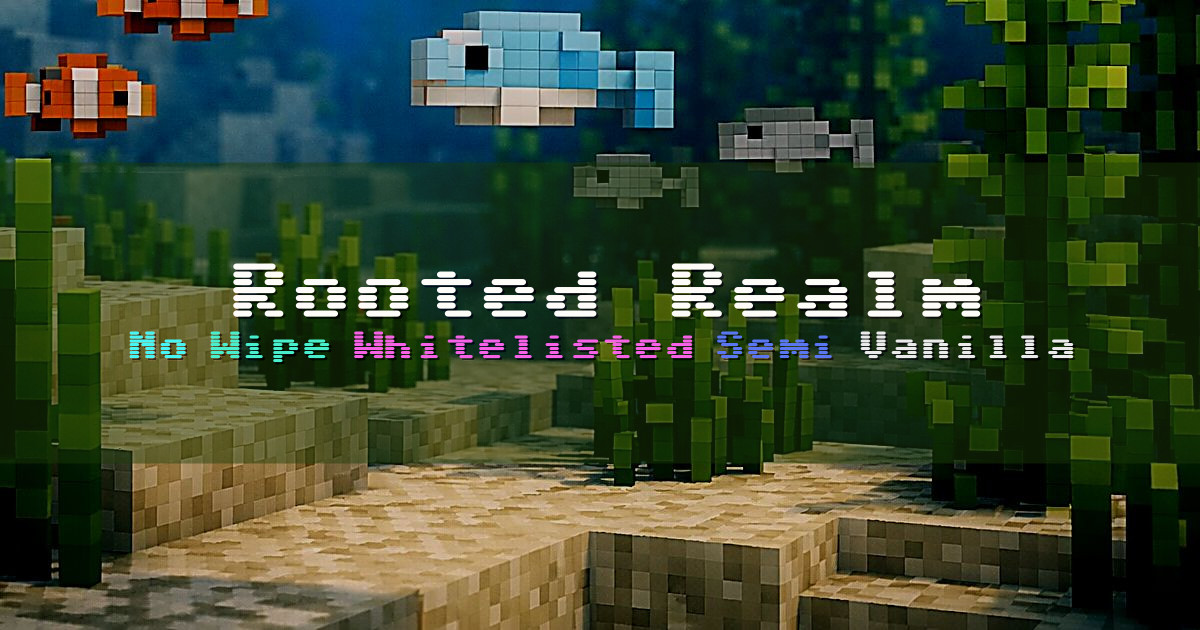 9/100OnlineRooted Realm is a long-term, never-wiping Minecraft Java server built for an adult community that values a stable world and respectful play. We keep things semi-vanilla while adding a few quality features that reward consistent progression…
 -
7
 9/200OnlineViking Factions OG is built for players who want the classic factions experience with skill-based 1.8-style pot PvP, running on a modern Minecraft 1.21.4+ server. We focus on fair competition with no pay-to-win and a balanced economy. If yo…
 -
Welcome to Yskalaberds, a survival multiplayer world built around myths and legends. Our goal is to keep the core of vanilla survival intact while adding smart quality-of-life touches that make day to day play smoother. Set out across god-t…
-
9
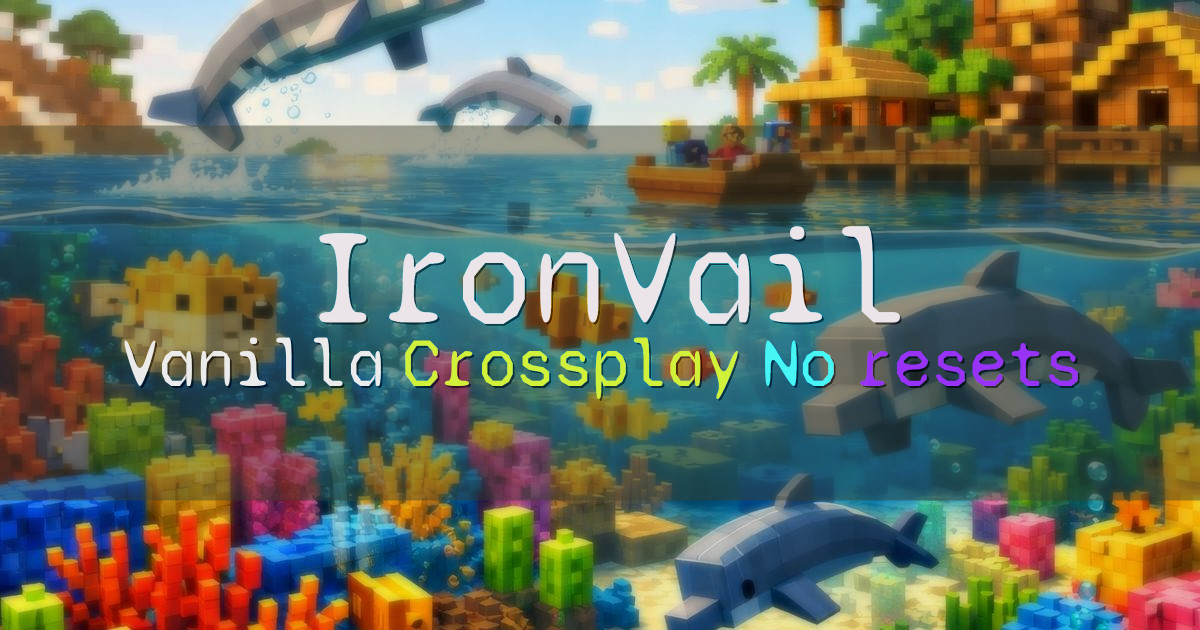 3/50OnlineIronVail is a vanilla crossplay server built for players who want a long-term world that never resets. We started recently and already have a small community, including a faction that formed naturally in-game. Our goal is to grow into a wor…
 -
Bienvenido a PlatiumCraft Pixelmon 1.21.1, un servidor donde Pokémon y Minecraft se combinan para crear una aventura completa, con una comunidad amigable y eventos frecuentes. Aquí puedes construir y jugar con tranquilidad gracias a nuestro…