Minewind is a survival server built around choosing your own path and hunting down powerful loot that fits your play style. Find a wide variety of gear in chests across the world, trade with villagers for emeralds, and take on dangerous mon…
Map viewer
A map viewer setup pairs a normal multiplayer world with a live web map that renders terrain and player-made structures outside the game. The core mode is still survival, SMP, factions, or anarchy, but exploration stops being guesswork. You can open a browser and read the shape of the land, where rivers and ridgelines actually run, and how your base sits relative to spawn, roads, towns, or claim borders.
It turns travel into planning instead of wandering. Players plot routes along coastlines, pick base sites with real distances in mind, and design Nether hub spokes and overworld infrastructure with a shared overview. Builds also feel different when you can step back and see them from above: city grids, rail lines, canals, and highways are easier to align, expand, and connect when everyone is looking at the same map.
It also shifts the culture around information. On cooperative servers, a map viewer makes public farms, markets, and hubs easy to find and encourages shared projects. On competitive servers, the map can become intel: new roads, fresh craters, and newly loaded chunks can give away activity. Most servers set expectations through options like player markers, update delay, maximum zoom, whether underground renders, and who can access the map.
What do you usually get from a map viewer?
A zoomable overhead render with coordinates and often separate views for the Overworld, Nether, and End. Many servers add markers for spawn and hubs, plus optional claim or region overlays.
Does a map viewer make hiding a base pointless?
Not always. It depends on settings and how disciplined players are. Fast updates, deep zoom, and player markers make scouting much stronger; slower updates, limited zoom, hidden underground, and gated access keep bases more viable.
How does it change day-to-day survival?
You spend less time orienting and more time executing. Resource runs become targeted, meetups are quicker, and group projects stay coherent because routes and landmarks are visible to everyone.
What should I look at before joining a server that uses a map viewer?
Whether the map is public or requires login, whether live player markers are on, how often it updates, and whether claims are shown. Those choices tell you a lot about the server’s stance on privacy, competition, and coordination.
-
-
2
 375/500OnlinePixelBlock is an economy-focused survival server for players who enjoy steady progression and a community-driven market. We keep things approachable with keep inventory, while still leaving room for competition through PvP. Progression is c…
 -
3
 33/100OnlineWelcome to PixelMC, a cracked and premium Minecraft server built around an active community. Play Survival and SMP for a classic experience, or switch it up with BoxPvP, Practice, and OneBlock when you want something more competitive or dif…
 -
4
 22/23OnlineFrozen Network is an upcoming multi-network Minecraft server focused on smooth, stable, lag-free gameplay. We’re building a place where players can jump in early, help shape the community, and enjoy a server that’s being actively improved…
 -
5
 20/250OnlineSunny Survival is here to give Minecraft lovers a simple place to play together. We focus on a vanilla-style survival experience with lag-free gameplay and a small, friendly community. Our economy is player-driven. Set up your own shops to…
 -
6
 8/250OnlineThe Den SMP is a vanilla-inspired Survival SMP with seamless Java and Bedrock crossplay. We’re an 18+ whitelisted community built for mature, respectful players who want a relaxed, drama-free place to enjoy long-term survival. Founded March…
 -
7
 7/50OnlineWelcome to Noob-Friendly, a simple vanilla-style survival server for players who just want a solid survival experience with friends. We focus on a respectful, welcoming community with responsible staff and an active owner who cares about th…
 -
8
 6/24OnlineSqueejCraft is a hard difficulty, performance-focused semi-vanilla SMP built around server quality, build freedom, and sticking closely to vanilla game mechanics. We offer home points, chest shops, and a sophisticated land claim system alon…
 -
9
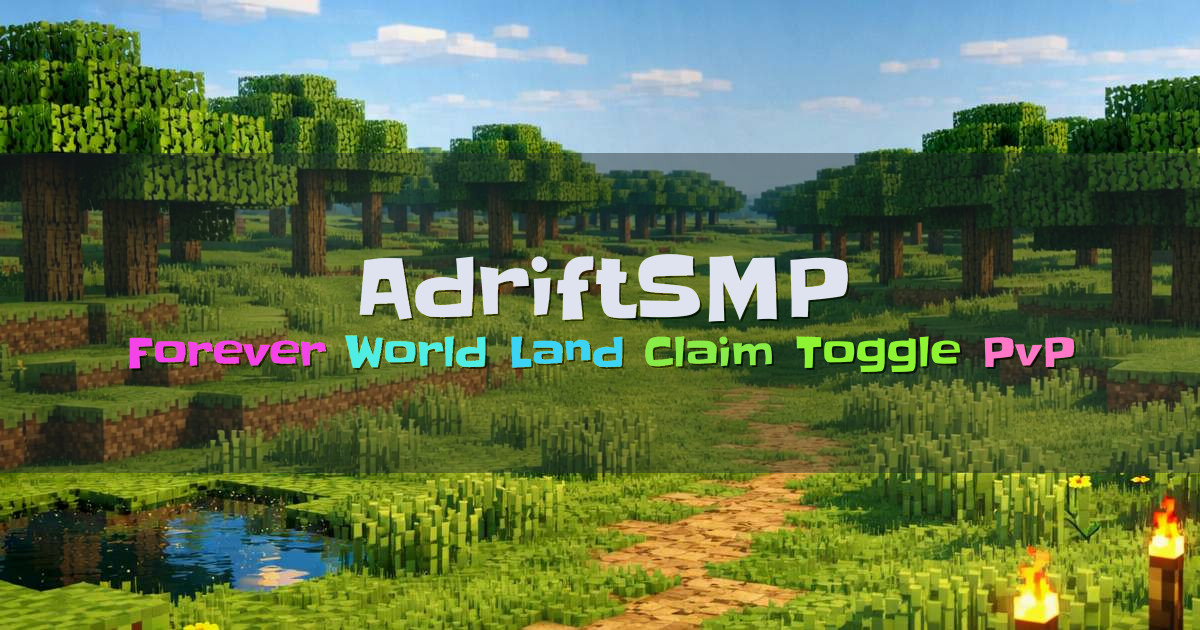 0/500OnlineAdriftSMP is a community-first survival server we started after getting tired of servers constantly changing rules and goals. We’re here to keep things focused on the people playing, not on pay to win nonsense. The world is built to last. A…
 -
Welcome to CreativeFun, a creative server for players who want room to build, roleplay, and turn their creations into something playable. We offer large 505×505 plots with grief protection, advanced WorldEdit commands, and redstone access s…