Minewind is a survival server built around choosing your own path and hunting down powerful loot that fits your play style. Find a wide variety of gear in chests across the world, trade with villagers for emeralds, and take on dangerous mon…
Multimode
A multimode server is a network where one IP drops you into a hub and you branch into several distinct game modes, each with its own rules and pace. You might spend an hour in Survival, hop to Skyblock to check farms, then queue BedWars or run Parkour while friends log on. The point is that swapping modes is part of the routine, not a special event.
Most of the experience lives in the hub flow: portals or menus, quick travel, parties, queues, and clear signposting for where you are and what applies. Each mode usually has its own spawn, commands, and onboarding, so a good network makes the handoff obvious. You should never be guessing why your inventory changed, which chat you are in, or whether /home works the same way here.
Progression is the real divider. Some networks keep everything isolated, separate inventories, money, and stats per mode, so each one stands on its own. Others share ranks, cosmetics, and sometimes a global currency to make the whole network feel like one account. Shared systems can be convenient, but they also encourage farming whatever mode pays best, while separated progression keeps balance tighter and expectations clearer.
Socially, multimode tends to feel busier and more lobby-driven than a single focused server. People bounce around, parties form and dissolve quickly, and chat often has that hub energy. The better networks still build long-term groups by giving each mode its own regulars, plus cross-mode friends, guilds, or party tools so you stay connected even when everyone is doing different things.
The tradeoff is coherence. Multimode can be smooth and time-saving, or it can feel like five servers taped together with different rules, different resets, and constant context switching. The strongest ones respect your time with consistent moderation, clear carry-over rules, and mode design that gets you playing fast instead of living in menus.
Do multimode servers share inventory, money, or stats between modes?
Sometimes, but not reliably. Many keep items and economies separated per mode to avoid exploits and balance problems. Common middle-ground setups share ranks and cosmetics network-wide while keeping inventories isolated. Check the hub info or /help for what carries over before you commit to a grind.
How is multimode different from a minigame-only network?
Minigame networks are usually built around short match queues. Multimode often mixes those with long-form modes like Survival, Skyblock, Prison, or an RPG world. The defining feature is multiple distinct rulesets and progression loops under one roof.
Can I party with friends across different modes?
On most established networks, yes: parties and friends lists are global so you can pull people into a subserver or queue together. Smaller setups may only support parties inside certain modes. The quick test is whether you can party in the hub and reliably bring everyone to the same place.
Do multimode networks lean more pay to win?
They can, because a network-wide rank or perk can touch multiple modes at once. The tell is whether purchases change outcomes: stronger PvP kits, economy boosts that snowball progression, or queue priority that affects competitive matches.
What should I check first when I join a multimode server?
Pick one mode and confirm the basics: where rules live, what resets and when, what commands are available (/spawn, /home, /tpa), and what carries over from the hub. Clarity on those four things is the difference between fun variety and constant confusion.
-
-
O StarDix é um servidor brasileiro de Minecraft com foco em PvP e uma boa variedade de modos para quem curte competição e diversão. Aqui você encontra Full PvP, KitPvP, BedWars e Survival, além de vários mini games para alternar entre parti…
-
3
 3/500OnlineMuttsWorld is a long-running Minecraft server built for players who like having real choice in how they play. We keep things family friendly and focus on creating a place where you can settle in, meet others, and stick around. Our server of…
 -
4
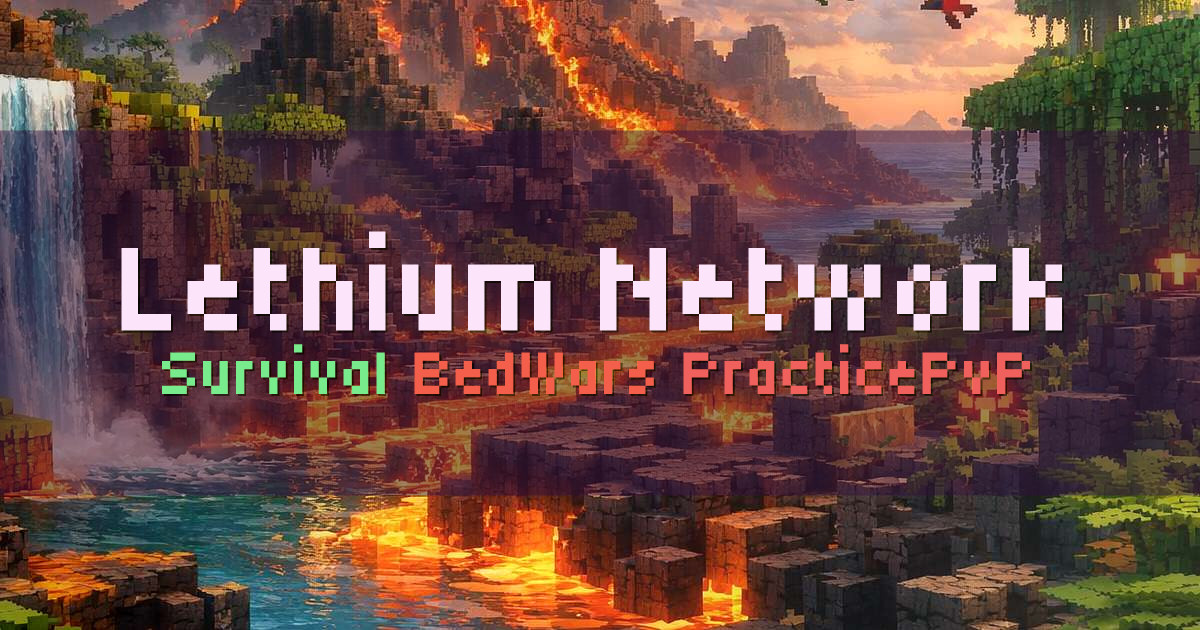 2/2025OnlineWelcome to Lethium Network, a multi-mode server built around a friendly Romanian and English speaking community. If you enjoy progression and tech-style survival, Survival Gods is our Slimefun experience with 30+ addons. For a different pac…
 -
Corey Games is a multi-mode Minecraft server we’ve been building and refining ourselves over the last year. Alongside six main modes, we’ve put a lot of time into hub activities and extra minigames to keep things fun between sessions. If yo…
-
AppleMC is a multi mode server for players who like variety, an active schedule, and a lively community. We support Minecraft 1.8 through 1.21, with daily updates and major weekly events to keep things feeling fresh. If you are looking for…