Minewind is a survival server built around choosing your own path and hunting down powerful loot that fits your play style. Find a wide variety of gear in chests across the world, trade with villagers for emeralds, and take on dangerous mon…
Nether tunnels
Nether tunnels are survival servers where the Nether becomes the main transit layer. Players build protected corridors and hub routes so long Overworld trips turn into short, repeatable runs. With Nether distance compressing travel at an 8:1 scale, a working tunnel network makes far-flung bases feel like neighbors.
The loop is: link portals, line up coordinates, then make the route safe to run while carrying valuables. Most tunnels are straight, sealed corridors with lighting, clear turns, and labeled branches. For speed, many networks add ice boat lanes in low channels with fences, slabs, or trapdoors to keep boats from clipping walls.
This format stands out because infrastructure becomes shared space. A central hub turns into a meet point, routes get upgraded over time, and even players who never talk still rely on the same junctions. Travel stops being an isolated chore and starts feeling like moving through a server-made map.
The same chokepoints that enable trade also create stakes. Busy lines attract shops and chance encounters, but they also invite portal mislinks, messy hub sprawl, and on harsher servers, traps and ambushes. Most communities end up with some etiquette around portal spacing, signage, and whether a line is public, claimed, or deliberately kept private.
Does this change gameplay, or is it just faster travel?
It changes the server rhythm. When travel becomes reliable, people spread out more, specialize, and trade more often because meeting up is easy. Hubs and intersections become natural social zones, and the network itself turns into a shared project players argue over, improve, or defend.
What makes a tunnel feel safe on a busy server?
A safe route is one you can sprint without stopping to patch terrain or fight for your life. That usually means fully enclosed walls and ceiling, consistent lighting, blocked ghast lines of sight, guarded lava edges, and intersections that are impossible to misread. Good signage matters as much as blocks.
Why do some servers build highways near the Nether roof?
Higher layers are flatter and easier to run straight, with fewer lava seas and terrain detours. If the rules allow it, above-roof highways are the cleanest long-distance option. If not, servers still aim for a stable Y level inside the Nether to keep routes predictable.
What problems show up when everyone connects portals without planning?
Portal linking gets unreliable, hubs turn into spaghetti, and navigation becomes guesswork. You also get accidental overlaps where one portal steals another player’s link. The fix is usually coordination: spacing standards, shared maps, and a habit of labeling both portals and tunnel branches.
Can I connect my base to the main network without causing drama?
Usually, yes, if you connect responsibly. Place your portal with enough distance to avoid stealing links, label it clearly, and do not punch random side tunnels into someone else’s line. Some servers treat main routes as public works with rules, while others expect you to negotiate before merging.
-
-
2
 16/250OnlineMooshySMP is a chill, long-term survival server for players who want a world that sticks. Our protected building zone will never wipe, and raiding and PvP are disabled so you can focus on building, exploring, and progressing at your own pac…
 -
Ravencraft is a semi-vanilla survival multiplayer server for grown-ass adults who enjoy building, exploring, experimenting, and creating together. We run a community-oriented SMP with friendly mods who have worked together for years, plus a…
-
4
 10/69OnlineDownRiver SMP is a vanilla-plus survival server built around people and community. We aim to keep the core Minecraft experience intact while offering a thoughtfully tuned SMP environment. We are currently in our 4th season and always happy…
 -
5
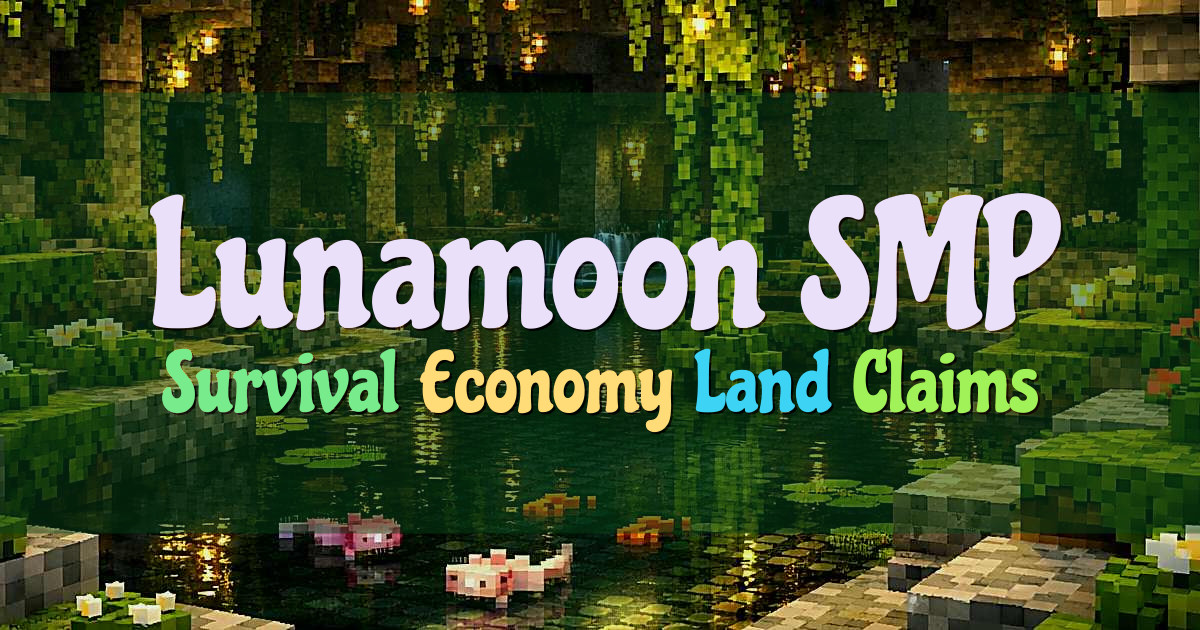 8/100OnlineWelcome to Lunamoon SMP, a calm and friendly survival multiplayer server built for players who want to relax, build, and enjoy Minecraft together. We focus on smooth, lag-free gameplay with a balanced Keep Inventory setup, plus an economy w…
 -
6
 7/80OnlineBienvenidos a WalkingPlayers. Nuestro objetivo es ofrecer un servidor donde la diversión y la comunidad vayan de la mano, con una experiencia completa para quienes quieren tener siempre algo nuevo que hacer. Aquí encontrarás misiones person…
 -
Vanilla10k is a vanilla survival server focused on classic PvP where fights are decided by skill and strategy. We keep gameplay clean and straightforward with no maces and no crystal spam. The world is contained within a 10k border to keep…
-
8
 0/50OnlineWelcome to Vanilla Tyme, a whitelisted survival server focused on a true vanilla experience with no game-altering plugins. We keep things simple and player-driven, and we ask everyone to apply before joining. We appreciate thoughtful applic…
 -
Welcome to Apex Cobblemon. We’re currently running Cobblemon version 1.7.3. We recommend using our lightweight Fabric modpack built for optimal performance, and following our install tutorial to get set up quickly. If you run into any issue…
-
Welcome to ChillSMP, a 1.20 Survival SMP built around a friendly community and a relaxed, semi-vanilla experience. We use the latest world generation and focus on giving players the tools to build and progress with confidence, including gri…