Minewind is a survival server built around choosing your own path and hunting down powerful loot that fits your play style. Find a wide variety of gear in chests across the world, trade with villagers for emeralds, and take on dangerous mon…
Persistent worlds
Persistent worlds are Minecraft servers built around continuity. The map does not wipe on a schedule, so explored terrain stays explored, bases and shops stay where they were built, and storage and infrastructure remain part of the shared landscape. The pace shifts from racing a reset to living in a place that accumulates history.
The gameplay loop is long-term progression and compounding convenience. Players scout a home region, establish a starter base, then upgrade into permanent systems: villager trading halls, iron farms, nether hubs, perimeter projects, and maintained roads or ice boat paths. When your routes, farms, and builds still matter months later, planning and build quality become real power.
Socially, persistence raises the stakes of reputation. You keep running into the same neighbors, so norms around spacing, boundaries, and shared areas carry weight. Shopping districts, community farms, and public utilities make sense because they will keep paying off, and many servers formalize that with claims or protections, or rely on simple etiquette like signs and honest chest-shop payments.
Keeping a long-lived world healthy is its own challenge. Admins have to balance grief risk, performance issues from redstone and mob farms, and world size growth as players explore farther out. Common solutions include claims, rollback tools, performance rules, world borders, and optional resource worlds that can reset without erasing the main world and its landmarks.
Does persistent mean my builds are safe forever?
It means the server is not designed around regular wipes, so your builds are intended to last. Actual safety depends on moderation and protections like claims, rollback logging, a whitelist, and enforced anti-grief rules.
How do persistent worlds handle resource depletion?
They lean on renewables (villagers, crop and mob farms, tree farms) and either push mining and exploration outward or offer a separate resource world that can reset while the main world stays intact.
Is a persistent world just survival multiplayer?
Many are survival, but persistence is the defining trait. You will also see persistent worlds with economies, roleplay rules, or semi-vanilla tweaks, as long as the core map and progress are meant to continue.
What is the downside of joining late?
The world can feel established, with veterans holding strong gear, farms, and prime locations. Better servers keep starter areas active, maintain accessible transport to hubs, and design the economy so newcomers can earn value quickly.
Do the Nether and End persist too?
Usually yes, which is why nether highways and hubs become major long-term projects. Some servers selectively refresh the End to renew loot while keeping portals and main routes stable.
-
-
2
 76/1000OnlineDesde março de 2023, o LusíadasCraft junta a comunidade portuguesa num Survival com temática da nossa cultura, pensado para jogar em conjunto e evoluir a longo prazo. Aqui encontras mecânicas próprias como pesca customizada, sistema de skil…
 -
3
 27/2025OnlineSaltyMC is a high-quality Survival SMP focused on a solid survival experience, unique content, and an active community. We work to keep things welcoming and well-run, with friendly staff and players who enjoy building, exploring, and progre…
 -
Welcome to FlamingoMC, a unique BoxSMP survival experience where the challenge is real and progression matters. Start from the basics, mine resources, claim your land, and build your base as you work your way up through the ranks. We keep t…
-
5
 10/100OnlinePunchwood Survival is a brand new public SMP for Minecraft 1.21.11, opening on 2/9/26. We run a straightforward survival experience built around a friendly community and a clean playing field where everyone is equal, with no paid ranks or p…
 -
6
 9/100OnlineEnvy Block is a premium, community-driven Minecraft network built for players who want polished gameplay, depth, and long-term progression. We focus on thoughtful design, strong performance, and frequent updates across all of our servers, w…
 -
7
 8/250OnlineThe Den SMP is a vanilla-inspired Survival SMP with seamless Java and Bedrock crossplay. We’re an 18+ whitelisted community built for mature, respectful players who want a relaxed, drama-free place to enjoy long-term survival. Founded March…
 -
8
 7/7OnlineWelcome to MineScape, a Minecraft MMORPG inspired by the feel of Old School RuneScape. Our goal is to offer a progression-focused adventure where you can explore, train, and carve out your own story alongside other players. MineScape featur…
 -
9
 4/420OnlineHemisphere SMP is a Hermitcraft-inspired, vanilla-faithful survival server built to last. We’ve been playing in the same world for a decade with zero resets, and the map’s history is something you can feel in every district and long-term bu…
 -
10
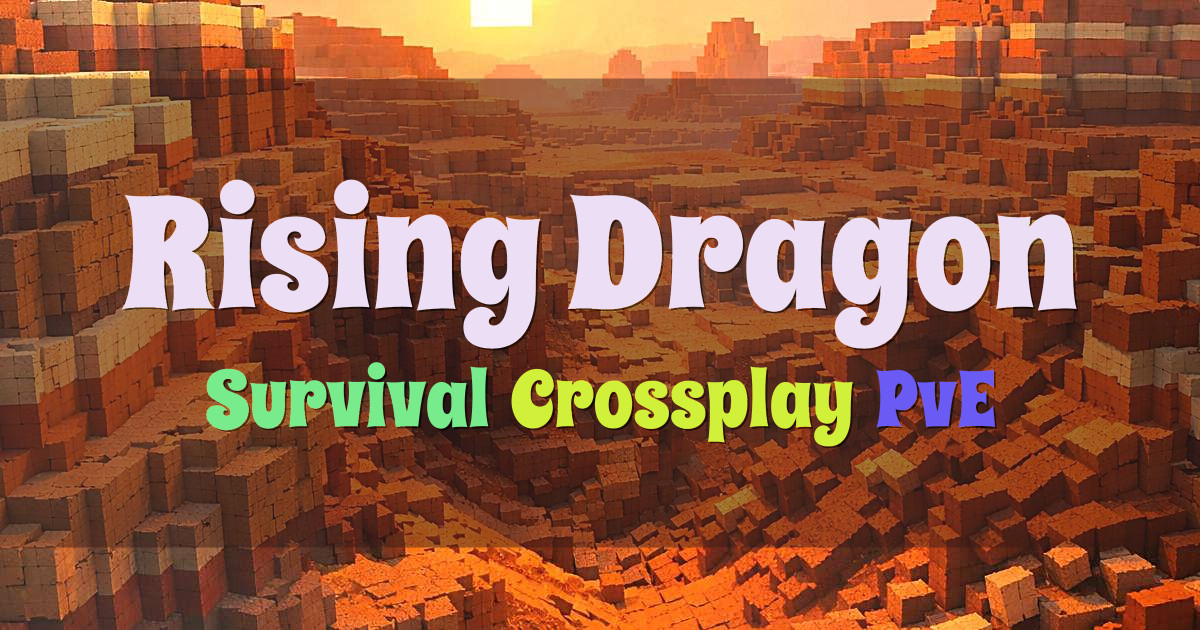 2/64OnlineRising Dragon is a small, family-friendly survival server for players of all ages and skill levels. We aim for a vanilla-like experience while adding a few features that give you more to work toward over time. Our world setup is built aroun…