Minewind is a survival server built around choosing your own path and hunting down powerful loot that fits your play style. Find a wide variety of gear in chests across the world, trade with villagers for emeralds, and take on dangerous mon…
QuickShop
QuickShop servers run on a player-run market built from real containers placed in the world. A chest or barrel becomes a storefront, usually marked by a sign or item display. You walk up, click, pay, and the item moves between your inventory and the shop stock. It plays like trading in a town instead of browsing a menu.
The loop is gather, stock, and sell where people actually pass by. Location is power: spawn shops, shopping districts, and portal hubs will outsell better prices hidden at a remote base. Because inventory is physical and limited, empty shelves are visible, restocking becomes routine, and pricing battles are easy to notice.
What makes this format stick is the social memory it creates. Regulars learn which player always has rockets, who sells bulk blocks, and which shops stay organized and stocked. On busy servers, shopping districts turn into real infrastructure: labeled aisles, themed storefronts, and hopper-backed storage rooms feeding the sales chests. The pressure comes more from scarcity, space, and convenience than from combat, and the best shop owners win by being dependable.
Is QuickShop the same thing as a global auction house?
No. The defining experience is in-world, container-based buying and selling with limited stock at a player-built location. Some servers add search or listing commands, but the economy still revolves around visiting shops.
How do you pay at a QuickShop shop?
Most servers use an economy balance (often Vault-backed). You interact with the shop container, pick a quantity, and the transaction happens automatically. Some servers use item currency like diamonds, but the click-to-trade flow is the same.
Can a shop trick you with fake signs or swapped items?
The plugin enforces the item type and price tied to the shop, so the trade itself is usually safe. The real risks are practical ones: empty stock, messy layouts, hard-to-reach locations, or shopping districts designed to waste your time.
Why do shopping districts matter so much here?
Because convenience is the advantage that compounds. When shops are physical, being close to spawn, a nether hub, or a main road means steady traffic, and steady traffic means steady sales even if you are not the cheapest option.
What actually makes a QuickShop shop successful?
Consistent stock, clear signage, and prices that make sense at a glance. Staples move fastest: rockets, food, building blocks, common mob drops, and utility gear. Shops that restock often and stay easy to navigate become the default stop for regular buyers.
-
-
O Beuteugeu Server é um servidor de Minecraft focado em sobrevivência para jogar com outros jogadores, evoluir e construir em grupo. Aqui você pode sobreviver, desafiar amigos e criar construções épicas, além de participar de eventos e comp…
-
3
 19/100OnlinePisellini Cobblemon nasce dalla passione di FariVII per unire la libertà di Minecraft alla magia dei mostriciattoli tascabili. Abbiamo costruito un’esperienza pensata per chi vuole giocare, allenarsi e condividere avventure con una communit…
 -
4
 7/1000OnlineWelcome to AlanBeckerMC, the official Alan Becker Minecraft server. We run a selection of gamemodes so you can play the way you like, including Survival, Skyblock, and Creative, with more to explore in-game. If you are looking for a friendl…
 -
5
 6/1304428545OnlineWelcome to CosmicX, a long-running creative network built for players who want real freedom to build and experiment. Our legendary creative plot world has been around for well over 10 years, offering expansive 512×512 plots that never reset…
 -
Bem-vindo ao Hu3Server. Nosso foco é um Survival com uma seleção grande de plugins para dar mais opções de progresso, comércio e qualidade de vida, mantendo a experiência de sobrevivência como base. Usamos Slimefun e diversos addons para ex…
-
7
 3/200OnlineWelcome to MyChunk, a dedicated creative sandbox server built for builders who want a stable, professional place to design and build. WorldEdit is available for everyone from the start, so you can work efficiently without paywalls getting i…
 -
8
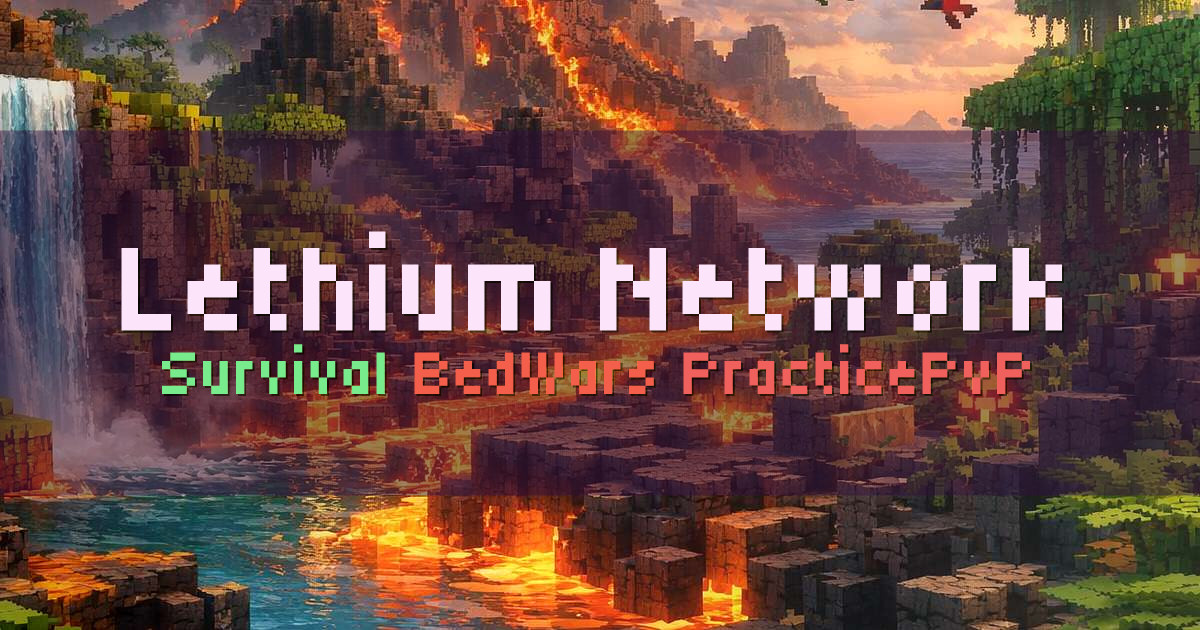 2/2025OnlineWelcome to Lethium Network, a multi-mode server built around a friendly Romanian and English speaking community. If you enjoy progression and tech-style survival, Survival Gods is our Slimefun experience with 30+ addons. For a different pac…
 -
GigaVanilla Online is a public, self-hosted vanilla Minecraft server we run on dedicated hardware from our own machine. Our goal is to provide a long-term world with minimal upkeep and a consistent place to play. We keep gameplay strictly v…
-
Play Amethyst is a close-to-vanilla Survival SMP built around a fair, long-lasting player economy where progress comes from playing the game. We keep things straightforward: no pay-to-win, no crazy modifiers, and no shortcuts. Our world is…