Minewind is a survival server built around choosing your own path and hunting down powerful loot that fits your play style. Find a wide variety of gear in chests across the world, trade with villagers for emeralds, and take on dangerous mon…
server merchants
Server merchants is a multiplayer style built around players who specialize, stock, and sell. Instead of everyone grinding every resource, you rely on a marketplace. Over time the world grows a shop district, well-worn routes to spawn, and a few sellers everyone knows because their stores stay stocked.
The loop is straightforward: pick a niche, lock down supply, set prices, and win on reliability. Early markets revolve around food, wood, stone variants, and starter gear. Once farms and infrastructure are online, the real volume shifts to rockets, shulker boxes, beacons, enchanted books, and bulk building blocks. Merchants spend their time on farms, inventory flow, and restocks so buyers can skip the grind.
What separates it from a normal survival economy is the social friction. You learn who undercuts, who runs fair prices, who answers bulk orders, and who disappears after week one. Trades happen in chat, at spawn stalls, through chest shops, or in trade halls. Builders put in repeat orders, pay for deliveries, and outsource annoying materials like sand, terracotta, or specific mob drops.
Strong merchant worlds protect commerce without turning it into admin theater. Shop plots, anti-grief rules, and clear trade expectations keep things playable. When it clicks, the server feels busy even without constant PvP because the real competition is supply lines, pricing, and convenience.
Do I need a lot of money to start as a merchant?
No. Early profit usually comes from being consistent with basics people burn through: food, common blocks, dyes, arrows, simple tools, and starter armor. Reliability builds a bankroll faster than trying to corner rare items.
How do players usually buy and sell?
Most servers use a spawn market with stalls, chest shops with signs, or a plugin economy with balances. Some worlds keep it simple with barter and honor-system pricing, especially early in a season.
What actually sells week after week?
Time-savers: rockets, golden carrots, XP and repair supplies, shulker boxes, popular building palettes in bulk, and anything tedious to gather like sand, clay, terracotta, or targeted mob drops. Convenience moves more volume than novelty.
Is this format automatically pay-to-win?
Not by default. The economy lives or dies on player supply and competition. Perks like extra claims or cosmetic shop fronts can exist, but if purchases meaningfully outpace player effort, the market usually collapses into a few locked-in sellers.
What rules matter most if I want to run a shop?
Look for clear protection for market areas, strong grief and theft enforcement, explicit scamming rules, and guidance on customer access. Good servers make it easy for strangers to enter a shop safely without needing base-level trust.
-
-
Welcome to CitrusSMP, a community-focused Survival SMP with a friendly, growing playerbase. We support both Java and Bedrock, so you can play together across platforms. Alongside the core survival experience, you can collect free collectibl…
-
Welcome to SubZeroMC, a friendly and unique Survival SMP focused on a classic survival experience with quality-of-life enhancements. We run a player-driven economy with player shops, and PvP is part of the experience. Crystal PvP is welcome…
-
The Pen is a classic, barebones Prison server built for players who miss the older 2014-style grind. No overpowered armor, no instant-sell mines. You start simple and work your way through the ranks by mining, manually smelting, and making…
-
5
 13/500OnlineWelcome to Smithtainment, a custom survival server built to keep the vanilla-ish feel players love while adding quality of life features that make long-term play more rewarding. Whether you spend your time mining, farming, building, or figh…
 -
6
 8/48OnlineCrescenta is a long-running worldbuilding, storytelling, and geopolitical roleplay server built around a mature community and player-driven stories where your choices can meaningfully change what happens next. Our current world, Gary, is ab…
 -
7
 5/50OnlineCreepers Lab is a long-running Minecraft network and community that has been around since 2011, built for players who want a friendly place to build, explore, and survive together. Our main focus is near-vanilla survival, and our main world…
 -
8
 5/2026OnlineInfinityX.Network ist ein frisch gestartetes Server-Netzwerk für alle, die echtes Vanilla-Survival im CraftAttack-Stil suchen. Da der Server erst vor Kurzem gestartet ist, sind die Fortschritte noch nicht weit auseinander und du kannst von…
 -
9
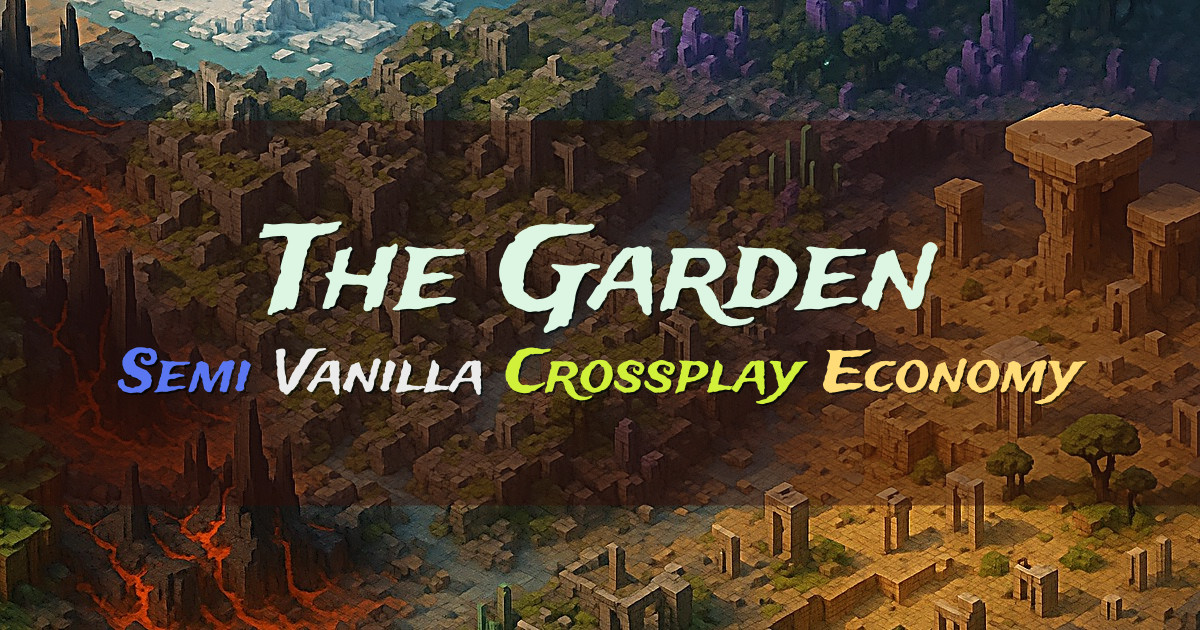 4/50OnlineThe Garden is a semi-vanilla survival multiplayer server built around a small, friendly community and a protected play environment. We keep the core vanilla survival experience intact while adding quality-of-life and progression features th…
 -
Welcome to our JoJo-inspired (Steel Ball Run themed) modded Minecraft server for 1.20.1 Forge, built around stands, vampirism, and a high-stakes race for power. Getting a stand is a journey. You can wait for an extremely rare meteorite to s…