Minewind Anarchy
Minewind is an open-ended survival world where we leave your adventure largely in your hands.
230 players online

Browse Minecraft servers related to Sethome.
Sethome servers play like survival with one decisive convenience: you can save a personal location and return to it later, usually via /sethome and /home. That single rule changes pacing. The long reset after mining trips, distant deaths, villager hauling, or supply runs turns into a quick loop, so you spend more time building and progressing and less time doing the same walk again.
The survival loop stays intact: gather, build, explore, trade, fight. What changes is commitment. Players roam earlier because a deep push into a new biome or structure does not automatically mean an hour of backtracking. Bases also become true centers of gravity, not temporary pits you abandon because traveling back is miserable.
Most servers keep it honest with limits: a small number of homes, plus a warmup and cooldown. Those constraints create the real decisions. Your slots go to places you return to constantly, like a main base, a trusted nether portal, a villager trading hall, a mob farm, or a sand spot. When homes are tight, good servers still reward infrastructure between them: nether tunnels, ice roads, rails, and shared hubs.
Multiplayer tends to spread out. Sethome supports smaller personal bases and outposts without forcing everyone into one crowded spawn town, and it makes meetups and recovery after a death straightforward. The tradeoff is fewer chance encounters on the roads, so servers that care about PvP integrity often restrict /home in combat, hostile areas, or certain regions to prevent cheap escapes.
Common setups start around 1 to 3 homes, with some servers offering 5+ through progression or perks. The number matters: low limits push you to commit to a few anchors, while high limits lean toward outpost hopping and convenience-first play.
Warmups stop instant panic teleports by requiring you to stand still for a few seconds, often cancelling if you move or take damage. Cooldowns keep travel from becoming constant, so choosing when to warp, and when to walk or use the nether, still matters.
Yes on servers with reasonable limits. Sethome is usually your reliable return to key anchors, while nether routes stay best for pushing into new areas, linking farms, and moving bulk resources efficiently.
Many servers block /home during combat, add longer warmups, or prevent teleports from enemy claims and specific regions. The goal is to keep fights, chases, and theft from turning into instant getaways the moment danger appears.
Set it where you can recover safely: your starter base or a secure shelter near early resources. After that, prioritize daily-return locations like a nether portal you trust, trading, and core farms over one-off exploration targets.
Minewind is an open-ended survival world where we leave your adventure largely in your hands.
At StravosSMP, we keep the focus on survival multiplayer: gather resources, build your base, explore, and shape a shared world with other…
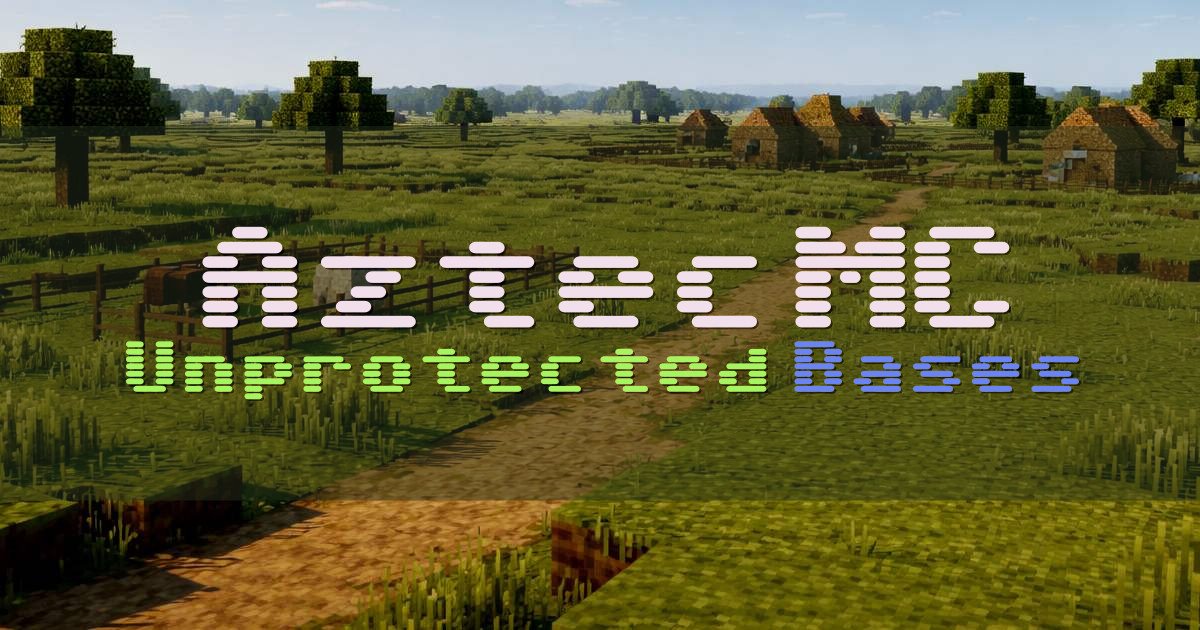
AztecMC is our hard-mode survival server for players who enjoy finding resources, hiding bases, and defending what they build.
SpeedVanilla is our open-world vanilla survival server, built for players who enjoy meaningful risk and direct player interaction.

LegacyMC is a 100% vanilla, no-rules Minecraft survival server for players who want the world, and its consequences, in their hands.
At SemiAnarchyMC.net, we keep survival close to vanilla and let your choices shape a lasting world.

feather64 is a long-running survival SMP, running since 2011, built around an open, player-driven world.

sVanilla is a long-running semi-vanilla Survival SMP for players who want old-school Minecraft with meaningful risk.
LigheneuSMP is our DonutSMP-inspired survival server for players who want an open, high-risk world.

Enthusia is our permanent survival world: build wherever you like, but with no land claims, bases can be found, raided, and rebuilt.