Minewind is a survival server built around choosing your own path and hunting down powerful loot that fits your play style. Find a wide variety of gear in chests across the world, trade with villagers for emeralds, and take on dangerous mon…
Spawner shop
Spawner shop servers put mob spawners at the center of progression by selling them through a server shop. Instead of relying on dungeon luck, you choose a mob type, save up, buy the spawner, and turn it into a grinder that prints drops on a schedule. The focus shifts from exploration to production: spawn output, kill speed, collection throughput, and how efficiently you convert items into cash, XP, or crafting materials.
The loop stays addictive because it is measurable. Starter money becomes your first spawner. Drops become sales. Sales become more spawners, higher tiers, or upgrades. Players naturally specialize, because whoever controls a reliable supply of bones, blaze rods, slime, or gunpowder can set the pace for pricing and trades. Competition is less about who found something rare and more about who scales cleanly without wasting time or tanking TPS.
This format shapes builds and conflict. Bases, islands, and claimed land tend to evolve into compact grinder rooms, storage banks, and kill chambers designed for low lag and high yield. On raiding or PvP-heavy servers, spawner setups are high-value infrastructure worth defending. On calmer economies, they become long-term engineering projects where the flex is a tidy layout, fast pickup, and consistent output.
Spawner shop play usually compresses the early game. Once you have a dependable spawner, basic gear, food, and enchanting inputs stop being bottlenecks. Decisions move to investment order, risk versus safety, and whether you chase raw money, rare utility drops, or support mobs that feed brewing and other systems.
What do players do after buying their first spawner?
They build a grinder, then optimize it until the drops become a steady income stream. Most progression is tuning the kill method, improving collection and storage, selling output, and reinvesting into more spawners or upgrades until the base runs like a production line.
How does a spawner shop economy usually work in practice?
Prices and limits matter more than the spawner itself. If sell values are high or multipliers stack, grinders dominate the economy fast. If sell values are tighter and caps are strict, players diversify, trade more, and treat spawners as one income lane among several.
Are there usually placement or stacking limits?
Nearly always. Common rules include per-chunk or per-island caps, bans on specific mobs, and stack limits to control lag and inflation. Some servers use true stacking that increases spawn output from one block, while others require physical stacks or spread placement.
How is this different from normal survival spawner hunting?
Buying spawners removes the exploration lottery and turns spawners into planned infrastructure. Progress becomes about choosing the right mob for your goals, building efficient throughput, and staying profitable as competition and pricing shift.
What should I check before committing time to a grinder build?
Look at spawner prices, drop sell values, and any multipliers tied to ranks or perks. Then check the hard limits: caps per area, hopper or entity restrictions, anti-AFK rules, and whether the server resets often. Those details decide whether your grinder is a long-term investment or a short-season rush.
-
-
2
 94/1560OnlinePlayCDU is part of the Craft Down Under gaming community, focused on hosting and playing Minecraft modpacks. We host 35+ modded servers across Australia, Germany, and the United States, with a wide variety of modpacks to suit different play…
 -
Welcome to LumaMC, a Survival server built around a tight-knit community and a feature set designed to keep things fresh. Our gameplay includes Towny, mcMMO, an economy, and a ranking system, plus extras like custom items, Brewery, custom f…
-
4
 16/250OnlineVoid Genz is a growing Minecraft generator server built around grinding, progression, and building your setup over time. If you like a smooth, long-term loop of upgrading and improving your generators, you will feel at home here. We focus o…
 -
5
 12/100OnlineTerraTrove is a long-term, seasonal, whitelisted Minecraft SMP for players aged 18 and over. We focus on the core vanilla survival experience, with a small set of quality of life features that support day-to-day play. Alongside vanilla game…
 -
Welcome to Aspiria Mc, a long-running Minecraft server built around a friendly, vibrant multiplayer community. We’ve been growing and playing together since 2013, and we focus on creating a place where new and veteran players can settle in…
-
7
 6/75OnlineXCraft Survival has been running since 2013, built around an old-school survival experience with a few fun twists that keep things fresh without losing the core feel of survival. You’ll find custom enchantments, tweaked crafting recipes, an…
 -
Welcome to AuroraCraft, a 1.21.X survival economy server built around creativity, fair-play, togetherness, and fun. We focus on maintaining a welcoming community with a laid-back atmosphere and a kind playerbase, whether you prefer building…
-
9
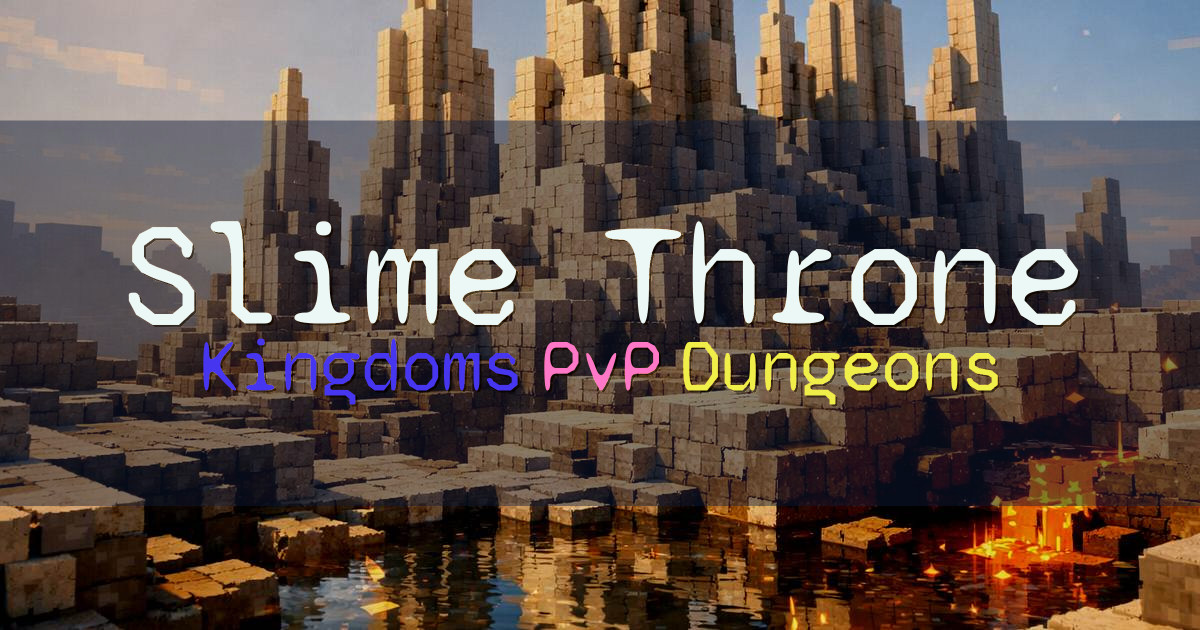 4/2026OnlineSlime Throne is a kingdom-focused server built around building your own legacy, ruling your lands, and choosing when to clash with other players. We put a lot of care into presentation, with custom GUIs, GUI artwork, and custom prefix artwo…
 -
ArcherSMP is a fresh Survival SMP built around a simple twist: melee PvP is disabled. That means no sword or axe fights and no crystal PvP. Instead, PvP is focused entirely on bows and custom arrows, creating a very different kind of…