Minewind is a survival server built around choosing your own path and hunting down powerful loot that fits your play style. Find a wide variety of gear in chests across the world, trade with villagers for emeralds, and take on dangerous mon…
Terralith
Terralith servers use custom Overworld generation that feels curated without being a prebuilt map. Terrain becomes the headline: sharper mountain chains, deeper valleys, cleaner biome edges, and landmarks you can read from a distance. Instead of grabbing the first flat spot, you scout for a location with a silhouette.
The early game leans harder into exploration and site selection. Players range farther because the next ridge can open into a completely different region, and bases often form around natural features like cliff bowls, archipelagos, or high plateaus. On multiplayer worlds, that spreads communities out and creates more outposts, roads, and Nether links as people stitch their finds together.
It is still normal survival Minecraft, just with different incentives. Movement is more vertical, sightlines are longer, and building tends to follow the land rather than erase it. Farms and resources work the same, but good placements are less uniform, so servers naturally develop specialized areas and more trade between groups.
Terralith fits servers that want vanilla gameplay with stronger geography. The draw is not new items or quest lines, it is an Overworld that stays interesting once you leave spawn.
Can I join a Terralith server with a vanilla client?
Most of the time, yes. Terralith is commonly used as server-side world generation, so a vanilla client can connect. Any extra plugins, mods, or resource packs are separate decisions by the server.
Does Terralith change ores, structures, or progression?
Usually it focuses on terrain and biome layout, not progression. Ores, loot, and core mechanics are typically vanilla unless the server pairs it with other datapacks or plugins.
If a server adds Terralith later, will my existing area change?
No. Generation changes only affect new chunks. Servers that switch mid-season usually open new regions, expand the world border, or start a fresh map.
What multiplayer styles work well with Terralith?
SMP and semi-vanilla servers that value exploration, towns, and scenic builds. It also suits light RP or factions because terrain creates natural borders, routes, and defensible positions.
How does building feel compared to default terrain?
You terraform less and plan more around access and elevation. Big slopes and cliffs give instant drama for castles, ports, and mountain towns, but you will think more about paths, bridges, and storage placement on uneven ground.
-
-
Welcome to Lavender Isles, a rising Fabric Cobblemon server built around fair play, quick onboarding, and a community that stays involved. We focus on keeping things anti pay to win while still delivering frequent updates and reasons to log…
-
3
 16/100OnlineWelcome to Cobblemon Callisto, a Non-Pay2Win survival server built from the ground up for a long-term, community-focused Pokémon adventure. Our main worlds are designed to last with no planned wipes, and we’re building Callisto with plenty…
 -
Welcome to Aetheria, a strange and mystical region built around Cobblemon on Fabric. Our goal is to offer a survival experience where exploration and catching feel fresh, with unique Pokémon you won’t find anywhere else. We run double shiny…
-
5
 8/200OnlineMoments Made Together (MM) is a survival multiplayer (SMP) Minecraft server located in Manila, Philippines. It started as a project by MrchntKale to explore Linux system administration, then was opened to the public for testing and has been…
 -
Welcome to Cobblemon Nebula, our community server built for players who want a long-term Cobblemon experience with plenty to do and a community to share it with. We run a survival-focused world with an economy and a range of Cobblemon featu…
-
7
 0/35OnlineVaulted Vanilla is an SMP built to feel like modded Minecraft while staying simple to join and play in vanilla. Our focus is on keeping survival fresh with meaningful upgrades that fit naturally into the game. You’ll find overhauled terrain…
 -
8
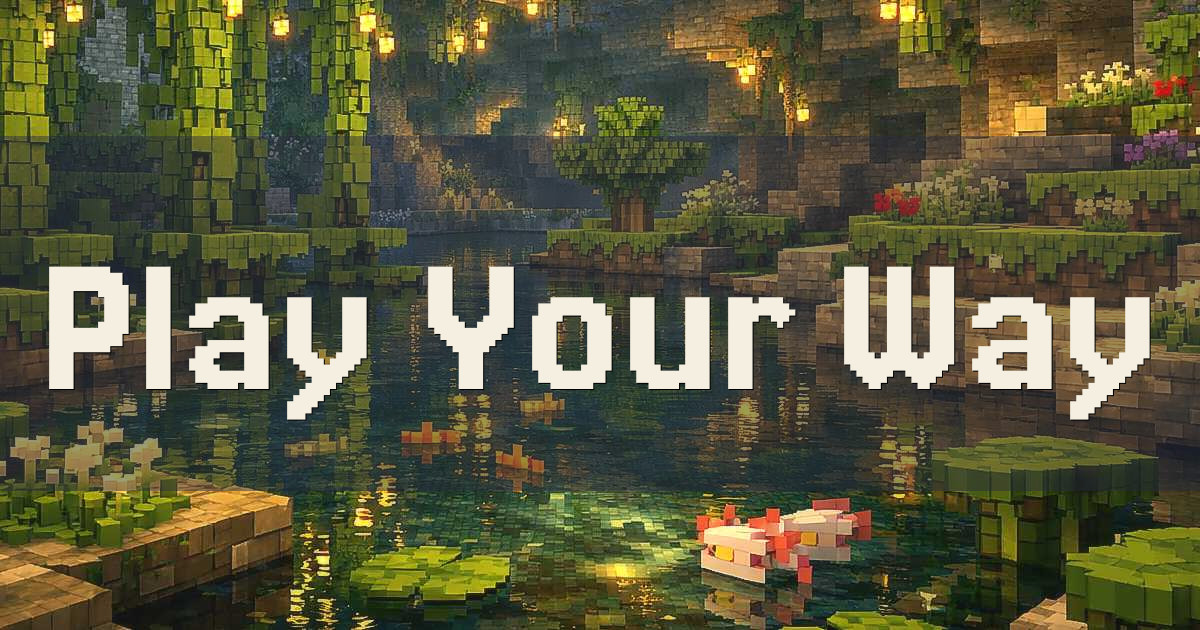 0/300OnlineWelcome to CyberiaCraft, an adult-only LGBTQ+ friendly survival SMP. We focus on giving players freedom and flexibility, with custom world generation and a collection of quality of life features so you can truly play your own way. You can t…
 -
JXT SMP Season 9 is a newly launched semi-vanilla survival server built around a friendly, mature community. We keep the classic vanilla feel while improving performance and expanding world generation to make exploration and building feel f…
-
Cobble & Commons is a small, long-term community SMP for players who want a steady place to settle in, build, and stick around. Our world is intended to be long-running, and we expand the border when new Minecraft updates arrive. We keep…