Minewind is a survival server built around choosing your own path and hunting down powerful loot that fits your play style. Find a wide variety of gear in chests across the world, trade with villagers for emeralds, and take on dangerous mon…
Territory
Territory servers make the map the main progression. You claim space, expand it, and deal with the fact that ownership can be challenged. Your base stops being just a build and becomes infrastructure tied to borders: farms, villagers, portals, storage, and routes that other groups want access to.
The core loop is simple: secure value, then hold it. Good land is measured in utility, not views. Biome access, chokepoints, nearby ore, a clean Nether link, and room for scalable farms matter because they turn into real advantages when borders tighten and rivals start pressuring your edges.
PvP on territory servers is usually objective-based, not random duels. Wars revolve around taking ground through capture timers, vulnerability windows, or a block you have to contest and flip. Fights look like coordinated pushes with crystals, anchors, traps, and gear swaps, backed by scouting and timing. Winning is proving you can take a position and keep it when defenders log in.
Territory also creates politics without needing roleplay. Neighbors negotiate lines, set access rules, share resource zones, and form alliances when a faction starts snowballing. Even players who avoid fighting get pulled in, because trade hubs, safe routes, and public farms depend on who controls the surrounding area.
Implementations vary, from protective claims to fully contestable land, but the feel is consistent: space has consequences. If you like Minecraft where building, PvP, and social strategy are anchored to the map itself, territory play gives you that pressure and payoff.
Is a territory server always factions?
No. Factions is common, but the same land-control format shows up as towns, nations, guilds, or custom war systems. What matters is that space has owners and that ownership affects building, access, or conflict.
How do territory captures usually work?
Most servers use control points you hold for a timer, a core/flag block that can be contested, or scheduled raid windows where land becomes vulnerable. Good setups force a fight over time so defense and counterplay actually matter.
If I lose territory, do I lose my base?
Depends on the rules. Some servers allow raiding and block destruction after a claim flips. Others keep builds intact and make loss mean reduced permissions, lost income, or forced relocation. Check whether defeat removes blocks or just control.
What makes a strong starter claim?
Pick utility: reliable food and wood, a safe Nether plan, room for farms, and terrain you can defend. Being near major routes can pay off through trade and traffic, but it also makes you easier to scout and pressure.
Can solo players do well on territory servers?
Yes, with a different approach. Solos usually stay on quieter borders, keep claims tight, hide high-value infrastructure, and lean on diplomacy and trade. Objective captures that require holding ground tend to favor groups unless the server has solo scaling or strong neutral zones.
-
-
2
 22/5000OnlineEarthSMP is a custom Earth server built to give players a fun, high-quality multiplayer experience. We focus on smooth gameplay, a friendly community, and an active owner team that keeps adding new things so the server stays fresh. Whether…
 -
3
 10/40OnlineEcoSMP is a cross-platform semi-vanilla survival server built around a genuine community and long-term worlds with no server resets. We’re intentionally family-friendly and focused on a smaller, higher-quality community. Our goal is to keep…
 -
4
 8/500OnlineMinelife is a long-running Minecraft server community that has been around for more than 11 years, with players joining from all over the world. We focus on being a relaxed place where you can settle in, meet others, and enjoy Minecraft at…
 -
5
 7/1000OnlineWelcome to EternalMC, an Earth SMP focused on nation building and rewriting history on a massive scale Earth map. Claim your favorite country, expand your borders, form alliances, and compete for influence across the globe. We run a live 3D…
 -
UltraSMP is a public SMP focused on survival with PvP, raiding, and the freedom for players to defend their bases or take risks. If you enjoy competitive survival where stealing and raids can happen, you’ll fit right in. We run extremely cu…
-
Life Finds a Way is a heavily customized modded Minecraft server focused on PvE in a medieval fantasy setting. If you like exploring and building, you will have plenty to dig into with lots of biome variety and a wide range of…
-
8
 2/50OnlineOakenvaleSMP is a medieval-themed survival server built for players who enjoy immersive building, exploration, and steady progression. The world is shaped by the community as towns rise, castles are built, alliances form, and the wilderness…
 -
9
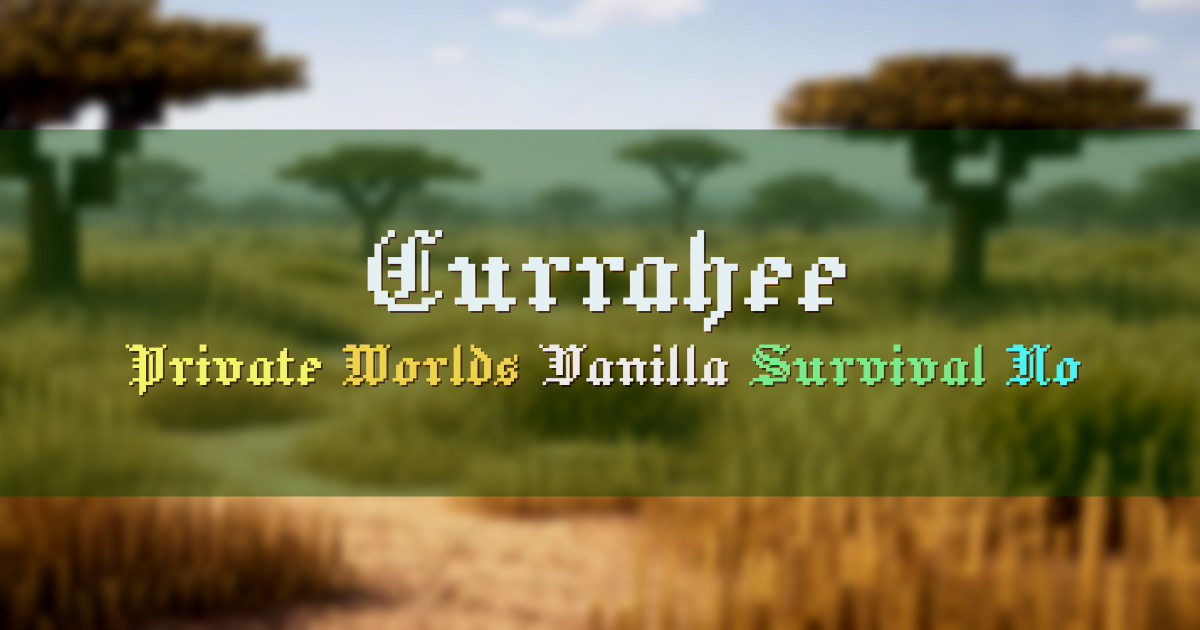 1/1OnlineCurrahee is built around a simple idea: stand alone, together. Every player gets a full private world set with their own Overworld, Nether, and End, so you never have to compete for space or fight over terrain. Because your world is yours…
 -
Empyria es un servidor geopolítico donde las naciones compiten por poder, recursos y territorio dentro de Minecraft. Aquí la diplomacia, la economía y la guerra forman parte de la vida diaria del servidor. Impulsamos una diplomacia real ent…