Minewind is a survival server built around choosing your own path and hunting down powerful loot that fits your play style. Find a wide variety of gear in chests across the world, trade with villagers for emeralds, and take on dangerous mon…
Bartering
Bartering servers make trade the main progression engine. Instead of sprinting straight to a perfect kit, you build value through goods, access, and information, then convert that value into gear, safer travel, and allies. Farms, chests, and routes matter because inventory becomes leverage, and leverage is how you advance.
The loop is simple and social: produce what people reliably need, move it to where deals happen, and reinvest the returns. Early trade is practical and fast moving, like food, wood types, coal, iron tools, leather, arrows, and utility blocks. As the world develops, demand shifts to enchant books, potions, Nether and End access, shulker boxes, beacon materials, and bulk orders like concrete, rockets, quartz, and gunpowder.
Because prices are negotiated, trust becomes real gameplay. Known traders get repeat business, while trade halls, market streets, and protected stalls emerge even without heavy plugins. Depending on the ruleset, scams and theft might be part of the landscape, which makes where you meet, how you stage items, and who you trade with as important as what you are selling.
Conflict, when it exists, tends to center on supply and control more than dueling skill. Cutting off blaze rods, sand, or rockets can slow a rival harder than winning one fight. Even on calmer worlds, competition shows up as undercutting, exclusive contracts, and controlling access to key farms and routes.
The strongest bartering worlds stay grounded in survival Minecraft. You still mine, explore, and build, but every task has a second life as trade stock. Progress feels less like a solo checklist and more like becoming useful to other players, then timing the trade to turn usefulness into momentum.
Is there usually a currency, or is it item-for-item?
Most start as item-for-item, then settle into a shared standard for pricing, often diamonds, netherite, or high-demand consumables like rockets or golden carrots. Even with a standard, big deals usually get paid in practical bundles: shulkers of blocks, beacon sets, or curated enchant and potion packages.
What can a new, undergeared player trade that actually sells?
Reliable basics move fastest: cooked food, wood variants, charcoal, early iron tools, leather, arrows, sugar cane, and common building blocks. If you can survive Nether runs, consistent delivery of quartz, blaze-related items, or magma cream can jump you up the social ladder, but only if you can make the trip repeatedly.
How do people handle big trades without getting burned?
Players often trade in controlled locations, split large deals into smaller confirmations, or use a trusted third party. On servers with claims or protections, dedicated trade booths help. On servers without them, reputation and public vouches do most of the policing.
Are there still shops, or is everything negotiated?
Usually both. Fixed prices work well for repeat commodities, while negotiation stays for rare items, bulk contracts, and services like infrastructure builds, farm access, or delivery runs. The balance depends on whether the community prefers a living market or a stable storefront economy.
What kind of player thrives in this format?
Anyone who likes having a niche. Farmers, miners, explorers, and builders who enjoy running supply lines, fulfilling orders, and making deals tend to progress faster than players who prefer isolated grinding.
-
-
2
 42/999OnlineKlasik survival sunucularının sunduğu sıradan deneyimlerden sıkıldıysan, Tekno MC’de daha özenli ve farklı bir oynanış hedefliyoruz. Amacımız, seni sıradanlıktan uzaklaştıran ve uzun süre keyifle oynayabileceğin bir ortam sunmak. Sunucumuzd…
 -
sVanilla Survival is a semi-vanilla Survival SMP for players who want an old-school, melee-focused PvP and raiding experience with no cheating. Founded in 2019, we run a large permanent world that never resets, with no land claims, so your…
-
4
 27/999OnlineLimitless Network is a Survival SMP built for players who want a steady long term world with room for both chill progression and conflict. We support Bedrock and cross play, with version support back to 1.9, so it’s easy to bring friends…
 -
Welcome to PokeSaga, a Pixelmon Reforged server running v9.1.11. We focus on a Survival PvE experience with an economy, plus extra activities like MCMMO and parkour. To join, use our Technic modpack. If you run into any issues getting set u…
-
6
 11/500OnlineHales AZP is a classic survival SMP with a strong vanilla feel, powered by a small set of QoL plugins and a few fun tweaks. The one core rule is simple: do not cheat. We run a higher mob cap to support…
 -
7
 8/80OnlineSerendipityMC is a forever-world Survival SMP built for players who want a place to truly settle in. We do not reset the world. Your builds stay, your progress is permanent, and what you contribute to the economy continues to matter over th…
 -
8
 7/100OnlineSomos Akio Games, una network que inició sus actividades en junio de 2023. Desde entonces hemos estado construyendo este proyecto con dedicación, buscando destacar dentro de la comunidad con un espacio bien cuidado y cercano. Nuestro enfoqu…
 -
Haven SMP is a young semi-vanilla survival server built for players who want a long-term world, fair play, and a genuinely peaceful community. We keep the experience close to true vanilla, without game-breaking plugins. We run a player-driv…
-
10
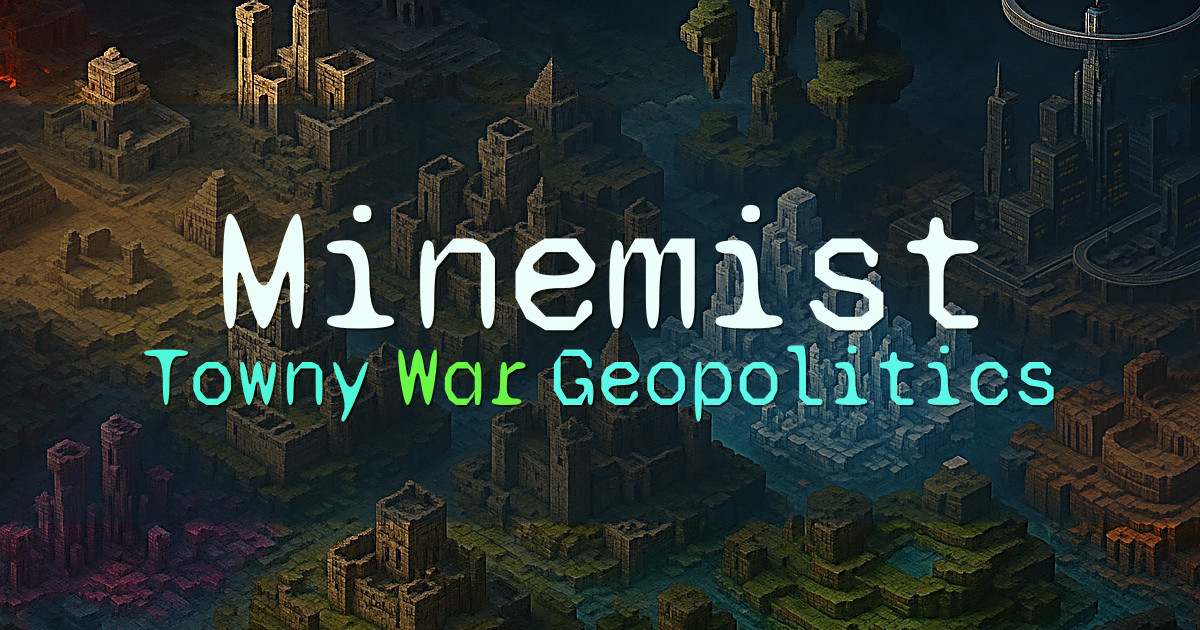 2/50OnlineWelcome to Minemist, an Oceania Towny geopolitics server hosted in Sydney, Australia. Minemist is built around nations, territory, and war, with a bordered world and a live map that shows everyone in the overworld. Politics is public, towns…