Minewind Anarchy
Minewind is an open-ended survival world where we leave your adventure largely in your hands.

218 players online

Browse Minecraft servers related to Building Friendly.
Building Friendly servers run on a simple expectation: builds are meant to survive the week. They draw players who want to sink time into bases, towns, and redstone without treating every login like damage control. The world feels like a shared neighborhood, not a warzone.
Gameplay is standard survival, but the pressure is social and logistical instead of hostile. You gather, pick a spot, and expand project by project: a starter house becomes a district, paths turn into roads, nether tunnels connect hubs, a villager hall feeds the economy. Player interaction is mostly trade, help, and touring each other’s work rather than looking for fights.
Most servers reinforce the culture with protections: claims, container locks, and rollback tools, backed by fast moderation. PvP is usually off, opt-in, or limited to arenas so conflicts do not spill into someone’s base. The unwritten rules matter as much as plugins: ask before editing, do not loot, give neighbors space, and leave shared areas tidy.
The best Building Friendly communities stay consistent over time. Clear boundaries, steady enforcement, and players who respect claims are what keep long-term worlds intact, where towns stay standing and big builds feel worth the investment.
It is often an SMP, but with a stronger focus on build safety and low-conflict play. The point is long-term projects and respect for claims, not just survival with friends.
Typically through land claims or region protection, plus logging and rollback so damage can be reversed. Active moderation is the real difference between safe and risky servers.
Solo building is normal. You can claim your own area and keep to yourself, then trade or collaborate when you want.
Do not modify builds without permission, do not crowd someone’s claim, and avoid linking into other people’s nether routes, farms, or redstone without asking.
Usually yes, within performance limits. Good servers set rules for laggy designs, mob farms, chunk loaders, and AFK so ambitious builds do not hurt TPS.
Minewind is an open-ended survival world where we leave your adventure largely in your hands.
Welcome to JellyCraft, our private, near-vanilla Minecraft survival server.

Join ObtaniaMC for community-focused Java survival with a player-driven economy and plenty to work toward.
ACE MC is a welcoming 1.21 survival community built for players who want a shared world with room to make it their…
TulipSMP is our relaxed, LGBTQ+ safe-space survival community for players who want a friendly world to settle into and enjoy together.
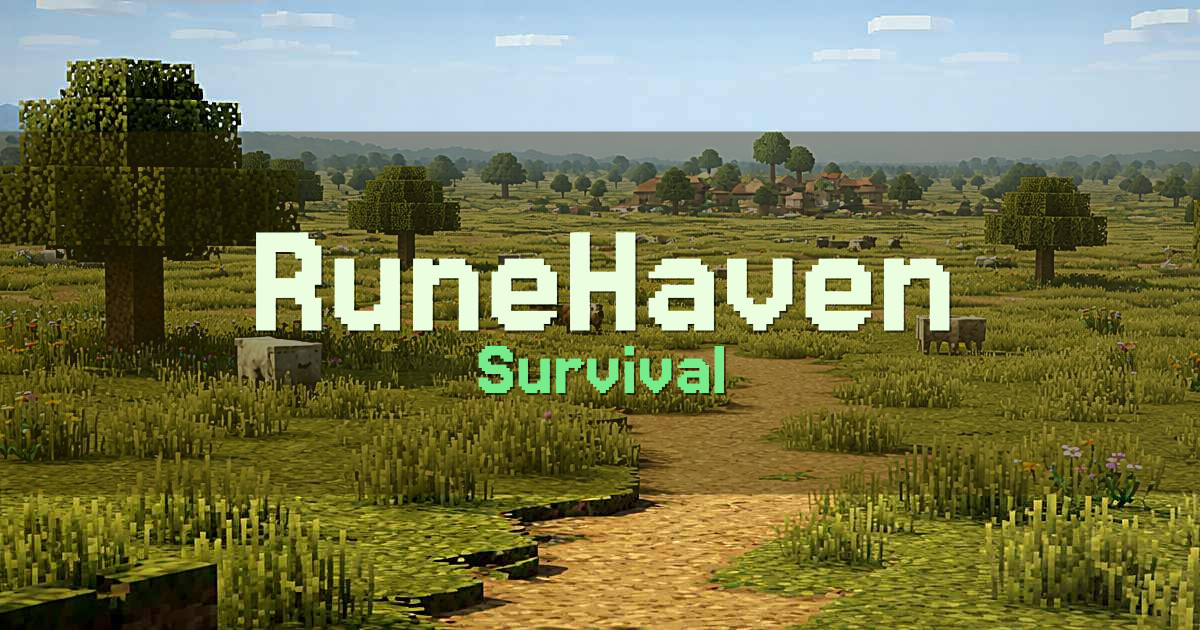
At RuneHaven, we build on familiar Minecraft survival with a medieval-fantasy feel and plenty of long-term goals.
Vanilla Realms keeps Minecraft’s core survival experience front and center: gather resources, craft, build, explore, and grow alongside a friendly community.

At Another Potato Server, we bring players together for friendly survival multiplayer.
MangoSMP is a relaxed, long-term survival community built around fair progression and a world that lasts.

TulipSurvival is our relaxed Minecraft SMP for players who want a friendly shared world, steady progression, and the freedom to build at…
Welcome to Eudora, a relaxed, mostly vanilla survival world for builders, explorers, and players who enjoy making a place their own.