Minewind is a survival server built around choosing your own path and hunting down powerful loot that fits your play style. Find a wide variety of gear in chests across the world, trade with villagers for emeralds, and take on dangerous mon…
Crate keys
Crate keys servers use keys to open reward crates, usually at spawn or a dedicated warp. You get keys from voting, quests, events, logins, or purchases, then redeem them for a roll on a loot table. The loop is straightforward: play the main mode, stack keys over time, then cash them in for currency, boosters, cosmetics, or utility and gear that can accelerate your grind.
What it feels like is part routine, part show. Players crowd the crates, dump stacks during key-all drops, and clip or screenshot rare pulls while chat lights up with broadcasts. In a healthy setup, keys create those hype spikes without making mining, farming, building, island progress, or faction prep feel irrelevant. You still progress the normal way, crates just add bursts of momentum tied to schedules like KOTH, envoys, vote resets, and weekend events.
The real difference between servers is how much power the crates hold. Some keep crate keys mostly cosmetic or convenience-based. Others put core progression behind them with top-tier tools, armor sets, spawners, enchants, or big money hits that can swing PvP and prices overnight. Even when odds are not published, you can usually read the room: watch how often the big items actually appear, and compare crate drops to auction house pricing and trade demand.
Keys also become a market. If keys are tradable items, vouchers, or a balance you can gift, players treat them like currency, flipping keys, reselling pulls, and saving spins for event hype. That second economy lives or dies on whether the loot table has real resale value or is padded with junk. If you like event-driven progression and timed resets, crate keys add a rhythm. If you want grind-to-gear purity, you will prefer servers where keys supplement effort instead of replacing it.
Are crate keys pay-to-win?
Sometimes. If crates regularly drop best-in-slot PvP gear, spawners, or huge economy boosts that are hard to earn otherwise, buying keys is buying power. If keys mostly give cosmetics, small boosts, or items you can reliably get through events and quests, it stays closer to pay-for-convenience.
How can I judge a crate's value if the odds are not shown?
Watch a few key-all or mass-opening moments and note what actually gets broadcast. Then check auction house prices for the common drops and see if they sell. If most results are unsellable filler, the crate is padded. If common drops move and the rare items appear occasionally without flooding the server, the value is usually healthier.
How do non-donors usually earn crate keys?
Voting, daily logins, quests, battle passes, boss fights, KOTH, envoys, seasonal events, and milestone grinds like mining levels or island value. The best servers provide at least one consistent path where regular play becomes a steady trickle of keys, not just random giveaways.
Do players trade crate keys, and what is the safest way?
Often, yes, if the server allows it. Keys are easy to price because they convert into loot. Use the server trade UI or approved market systems, avoid drop trades, and confirm whether keys are physical items, vouchers, or account-bound before you try to buy or sell.
What is the difference between vote keys, event keys, and donor keys?
Usually it is frequency and loot tier. Vote keys are common with smaller payouts, event keys are less frequent with better utility, and higher-tier keys hold the flashier rewards. Some servers use the names as branding, so the only real answer is whatever the crate preview shows.
-
-
2
 73/500OnlineWelcome to BeyondMC, a community-focused Lifesteal SMP for players who enjoy competitive survival without losing the friendly vibe. In Lifesteal, killing a player steals a heart and dying costs you one. You start with 10 hearts and can buil…
 -
3
 12/100OnlineTopBlocks is a competitive box server where everyone starts in a small box with limited resources, then works their way up through smart mining, selling, and upgrading. Progress is permanent with no resets, so your choices matter as you exp…
 -
En Mineverso mantenemos el servidor actualizado y optimizado para que puedas jugar con una experiencia fluida y con buena conexión. Actualmente ofrecemos cinco modalidades para que elijas cómo quieres jugar: Survival, SkyBlock, SkyWars, Van…
-
5
 9/10OnlineBack 2 Basics is a Java vanilla survival server built around a relaxed environment, a friendly staff team, and regular community events. Build what you want and play at your own pace, with a simple chunk-based claim system to help keep your…
 -
Beakscraft is a new factions server built to bring back the classic feel of old-school multiplayer, without the toxicity, constant resets, or the pressure to raid everyone around you. Our focus is on factions as a long-term project: buildin…
-
7
 5/100OnlineCobblemon Vulkan is a Cobblemon survival server focused on competitive battling, with progression and activities built around your Pokédex. We run a curated modpack and include features like Dex ranks, Dex rewards, quests, and a unique curr…
 -
8
 3/200000OnlineEchelonMC is a hand built, fully custom Survival SMP for players who want a long term world with real progression and an active community. We built everything from the ground up over two months of development, and we keep improving it every…
 -
9
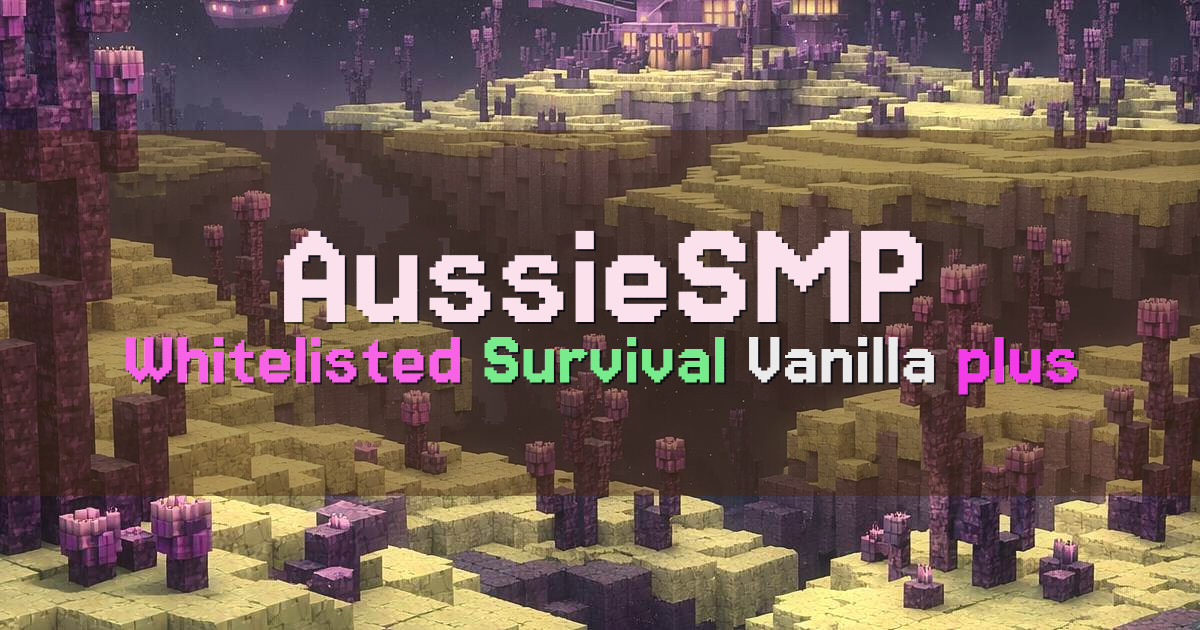 2/250OnlineAussieSMP is a Sydney-hosted Australian survival server built for a small, friendly community. We run a whitelisted, application-based setup to help keep the culture healthy and to make sure players can feel confident their builds will be r…
 -
Welcome to MunchyMC, a Minecraft server built for players who want a mix of fast-paced games and classic modes. Jump into Maze Runner, try out our mini games, or settle in with Survival, Prison, and KitPvP. Whether you are playing with frie…