Minewind is a survival server built around choosing your own path and hunting down powerful loot that fits your play style. Find a wide variety of gear in chests across the world, trade with villagers for emeralds, and take on dangerous mon…
Create minigames
Create minigames are multiplayer servers where the arena is a machine. Instead of static maps driven by commands or pure redstone, you play inside Create contraptions: gear trains, sequenced gearshifts, clutches, gantries, deployers, and belt systems that move the world around you.
Most run on a tight, round-based loop. You queue, load into a compact build, then the mechanism kicks in. Time is physical: a flywheel spools, a clock advances, a clutch bites, and the layout shifts phase by phase. The best arenas are readable, so you can learn the cadence and play ahead of the motion instead of just reacting.
The feel is tactile and controlled chaos. Platforms rotate underfoot, walls slide to break sightlines, lanes open and close, and objectives often hinge on logistics like moving items to a depot or holding a point while the floor reconfigures. Skill leans toward movement, timing, and understanding how belts, fans, and rotating sections behave when players collide with them.
When it works, the contraption is the ruleset. Strong servers keep builds tight, resets fast, and machinery protected so nobody can jam a gear train, steal parts, or desync the match. Each round feels like stepping into a clockwork puzzle that happens to be PvP, parkour, or an objective mode.
Do I need to understand Create to have fun?
No. You can treat it like any other minigame server. Create knowledge mainly helps you read what is about to move, find safe timing windows, and use things like belts, fans, and rotating platforms to your advantage.
What do Create-based objectives look like in practice?
A common pattern is item logistics as scoring: teams route items onto belts or through chutes to hit a depot, vault, or beacon while the arena shifts. Others focus on survival rounds, moving parkour, or PvP where the machine forces rotations and denies camping.
Is it more PvP or more movement games?
Either can work, but the defining feature is motion-driven advantage. Even PvP tends to reward positioning and timing created by the mechanism more than raw trading hits.
How do servers keep matches fair if players can touch the machinery?
Good setups isolate the contraption from players, lock interactions, and reset to a known home position every round. Inventories are cleared, phases are chunk-safe, and the arena is designed so one player cannot stall the machine for everyone.
Should I worry about lag?
It depends on how ambitious the builds are. Smooth servers keep arenas small, limit active moving parts per match, and avoid huge belt networks or constantly updating displays during combat.
-
-
2
 23/2147483647OnlineSimPvP is one of the oldest Minecraft Java servers still running, with a world that has been active since September 2011 and will never be reset. We run a semi-anarchy, semi-vanilla experience where griefing, raiding, and PvP are allowed, b…
 -
3
 10/2000OnlineQuackCraft SMP is a Hermitcraft-like, semi-vanilla survival multiplayer server built for players who want a true SMP feel on a public server. We focus on keeping the experience as close to vanilla as possible while still supporting a strong…
 -
4
 8/200OnlineViking Factions OG is built for players who want the classic factions experience with skill-based 1.8-style pot PvP, running on a modern Minecraft 1.21.4+ server. We focus on fair competition with no pay-to-win and a balanced economy. If yo…
 -
5
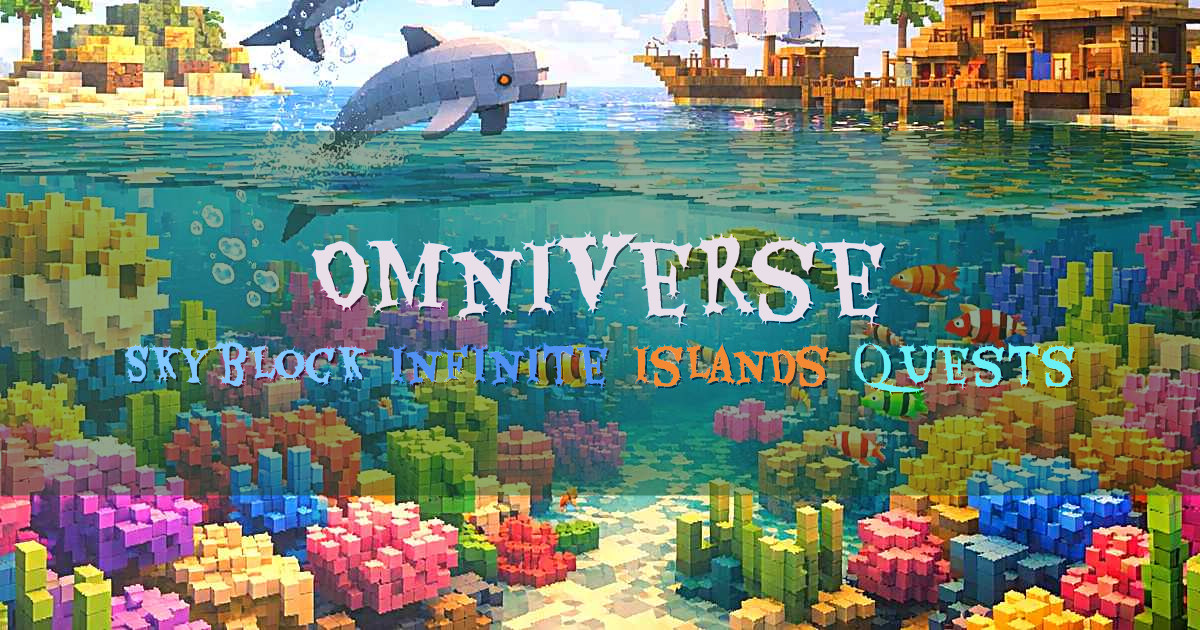 6/7OnlineOmniverse is a Skyblock server built for long-term progression with infinite islands and no island wipes. Your island can expand endlessly as you grow, so you’re never boxed in by a limited world. Exploration matters here. Our custom, multi…
 -
6
 5/500OnlineCreative Central is a work-in-progress Minecraft network built on nearly 10 years of connected lore and worldbuilding. We focus on giving players room to create, settle, and tell stories in a shared world. We currently offer two main game m…
 -
10b10t is an anarchy Minecraft server built for players who want a no-rules environment with no resets, no pay to win, and no enforced playstyle. PvP, griefing, duping, and total base wipes are all part of the deal. What sets us apart…
-
Skyxern Legacy es un servidor modded PvE con lore vivo, diseñado para jugadores que buscan algo más que un SMP genérico. Aquí la historia importa, tus decisiones tienen peso, y el mundo evoluciona con eventos y consecuencias reales. Corremo…
-
Welcome to CosmicX, a long-running creative network built for players who want real freedom to build and experiment. Our legendary creative plot world has been around for well over 10 years, offering expansive 512×512 plots that never reset…
-
Welcome to CreativeFun, a creative server for players who want room to build, roleplay, and turn their creations into something playable. We offer large 505×505 plots with grief protection, advanced WorldEdit commands, and redstone access s…