Minewind is a survival server built around choosing your own path and hunting down powerful loot that fits your play style. Find a wide variety of gear in chests across the world, trade with villagers for emeralds, and take on dangerous mon…
Data packs
Data pack servers play like vanilla Minecraft with the rules rewritten underneath. You join with a normal client and the world still looks familiar, but crafting, loot, advancements, mob behavior, and world generation can be redesigned through server-side logic. The result is survival that feels recognizably Minecraft while pushing you into different choices and routes to progress.
The loop is part survival, part discovery. Early game often becomes a quick audit: test recipes, watch mob drops, read new advancement goals, and pay attention to structures and chest loot. Many servers use data packs to tune difficulty and pacing, like rebalanced enchantments, gated Nether access, custom boss encounters built from commands, or new crafting chains that reward exploration and risk-taking. Because it all runs on the server, everyone plays the same rule set and you can jump in without committing to a modpack.
The best data pack servers feel coherent rather than busy. Changes are learnable in-game, the UI stays readable, and the server resists turning every system into a gimmick. When it works, you get vanilla rhythm with genuinely new progression, surprises that make exploration matter again, and a ruleset you can understand through play.
Do I need to install anything to play on a data pack server?
Usually not. Most are join-and-play on an unmodded client. Some servers offer an optional resource pack for clearer item names, custom textures, or sounds, but the mechanics themselves are server-side.
How is this different from modded servers?
Data packs reshape systems vanilla already exposes: recipes, loot tables, advancements, functions, tags, and worldgen settings. Mods can add entirely new blocks and items, client-side features, and deeper custom mechanics. Data pack servers typically stay closer to vanilla and are easier to join.
What should I pay attention to when I first join?
Crafting and drops first, then progression cues. Try common recipes, kill a few basic mobs, check villager trades if relevant, and read any custom advancements or server guidebooks. Those usually reveal what the server considers early goals and what it has rebalanced.
Can a data pack server add new ores, mobs, or dimensions?
It can create new biomes and even custom dimensions using modern worldgen data, and it can simulate new items or mobs with renamed items, commands, and existing entities. It cannot add truly new block or item IDs without mods. Many servers use a resource pack to make custom items look distinct.
Are data pack servers stable across Minecraft updates?
They can be, but updates do break things. Command behavior, tags, loot tables, and worldgen formats change over time, especially across major versions. Good servers test updates, pin versions for a season, and avoid silent rule changes that disrupt progression.
-
-
2
 105/200OnlinePurity Vanilla is a vanilla anarchy Minecraft server running since March 23, 2019. We keep the experience as close to the base game as possible, giving players total freedom to play Minecraft the way it was intended. There are no gameplay-a…
 -
3
 38/39OnlineWelcome to Survivaldub Network, a multi mode server built around Survival and PvP, with plenty to do no matter how you like to play. Jump into LifeSteal, level up with McMMO, and take on Mob Arenas when you want something more action…
 -
Welcome to Lavender Isles, a rising Fabric Cobblemon server built around fair play, quick onboarding, and a community that stays involved. We focus on keeping things anti pay to win while still delivering frequent updates and reasons to log…
-
Welcome to Better Towny, our take on the Towny experience with progression at the core. Push your character forward with our leveling system using /level, train your MCMMO skills, and level up jobs to earn money as you play. Daily quests an…
-
6
 9/500OnlineCraftiverse is built for players who miss classic factions gameplay and want a competitive place to fight, build, and raid. We focus on smooth, reliable PvP with KOTH and Outposts to keep the action moving. Between fights, you can build up…
 -
GoldenSurvival is a true vanilla limited-lives SMP with minimal plugins, no ranks, and no pay to win. No tpa or sethome either, just vanilla Minecraft. The server runs in hardcore mode. On death, you’ll be temporarily banned until you run o…
-
8
 5/100OnlineWelcome to HartixMC, a Minecraft server built around a fun mix of Survival, Duels, and regular Events. In Survival, you can gather resources, build your own creations, explore the world, and settle in with a welcoming community. If you pref…
 -
9
 3/2000OnlineWelcome to FallenCloud Network. We’ve opened the gates and the network is live, built for players who want variety without leaving a connected hub. Jump between Skyblock, Survival, Factions, Prison, and Minigames from our central lobby. Whe…
 -
10
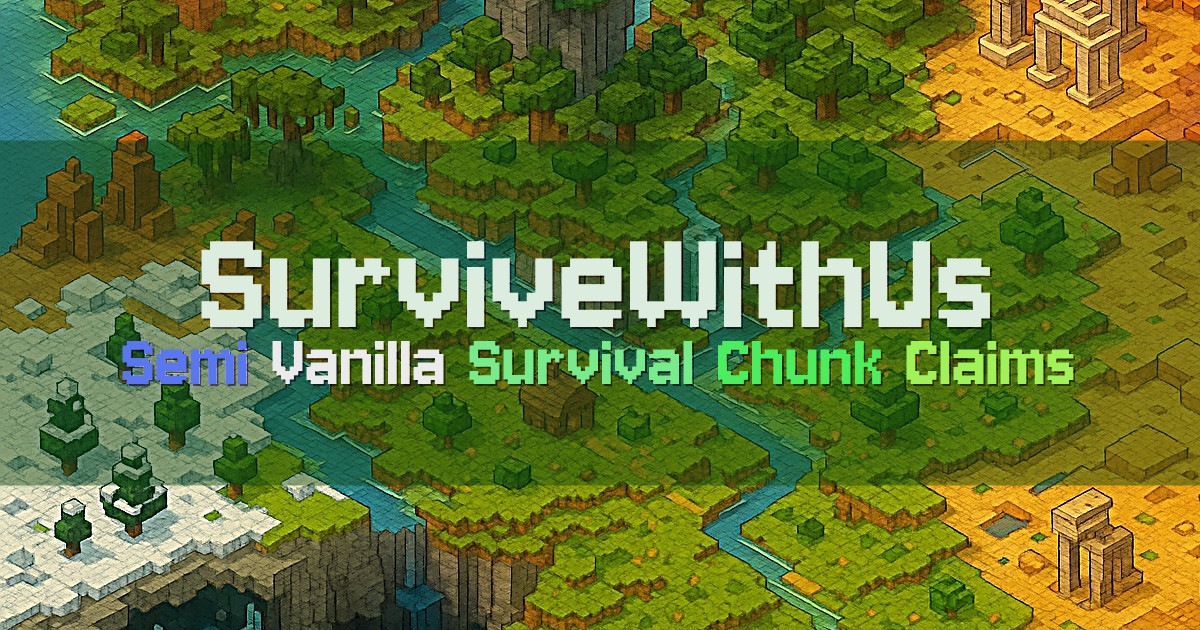 2/69OnlineSurviveWithUs is a semi-vanilla survival server built around community and long-term play. We focus on keeping the core survival experience intact while giving players chunk claiming to help protect what they build. The server is back under…