Minewind is a survival server built around choosing your own path and hunting down powerful loot that fits your play style. Find a wide variety of gear in chests across the world, trade with villagers for emeralds, and take on dangerous mon…
Glide
Glide servers turn Elytra flight into a time-trial game. You launch onto a course, follow rings or checkpoints, and try to finish with a clean line. The failure state is rarely a single missed jump like parkour. It is losing speed, taking a wide corner, clipping a block, or burning too much height and having to limp to the next gate.
Most maps are built around momentum control: dive to gain speed, pull up to trade it for distance, then thread tight gaps where a small mistake turns into a wall scrape and a dead run. If fireworks are allowed, boost discipline becomes the main skill. Good players treat rockets as tools for specific moments, not a spam button: a tap to hold a line, a save for recovery, a commit for a fast section.
The best Glide servers respect your time. Restarts are instant, checkpoints are obvious, and leaderboards make small improvements feel meaningful. The vibe is usually focused rather than loud: people grinding runs, comparing routes, and spectating attempts to learn a better line. Done well, it makes Elytra feel like a movement game with real depth instead of just travel.
Is Glide about rockets or pure Elytra control?
It depends on the ruleset. No-rocket modes are about keeping speed through dives, clean turns, and good height management. Rocket-legal modes reward boost timing and restraint: using a rocket to stabilize a risky line, saving one for a recovery, and committing boosts only where the course actually pays you back.
What do Glide leaderboards usually track?
Fastest completion time per course is the standard, sometimes with checkpoint splits. Many servers also show personal bests, global ranks, and seasonal resets. If there is a ghost or replay, it is mostly for line optimization and consistency, not just flexing.
Do I need to bring my own Elytra and fireworks?
Usually not. Most servers auto-kit an Elytra on entry and provide rockets when the mode allows them. The point is repetition and improvement, not resource grinding.
What makes a Glide course feel fair?
Clear readability and consistent expectations. Good courses use visible rings, sensible checkpoint placement around hard sections, and turns that reward proper entry speed. Frustrating ones lean on awkward collision, unclear resets, or gaps so tight they feel random instead of skill-based.
Is Glide beginner-friendly or only for time-trial grinders?
It is beginner-friendly when there is a real difficulty range. Easier courses teach diving, pulling up, and basic cornering without constant crashes. Hard tracks add sharper turns, low ceilings, and speed checks. Even without chasing ranks, beating your own PB is the hook.
-
-
Welcome to Lavender Isles, a rising Fabric Cobblemon server built around fair play, quick onboarding, and a community that stays involved. We focus on keeping things anti pay to win while still delivering frequent updates and reasons to log…
-
Welcome to Better Towny, our take on the Towny experience with progression at the core. Push your character forward with our leveling system using /level, train your MCMMO skills, and level up jobs to earn money as you play. Daily quests an…
-
4
 9/500OnlineCraftiverse is built for players who miss classic factions gameplay and want a competitive place to fight, build, and raid. We focus on smooth, reliable PvP with KOTH and Outposts to keep the action moving. Between fights, you can build up…
 -
5
 5/100OnlineWelcome to HartixMC, a Minecraft server built around a fun mix of Survival, Duels, and regular Events. In Survival, you can gather resources, build your own creations, explore the world, and settle in with a welcoming community. If you pref…
 -
GoldenSurvival is a true vanilla limited-lives SMP with minimal plugins, no ranks, and no pay to win. No tpa or sethome either, just vanilla Minecraft. The server runs in hardcore mode. On death, you’ll be temporarily banned until you run o…
-
7
 4/100OnlineSurvival Plus is a custom Survival SMP built for players who want real progression with PvP and a player-driven economy, without losing the survival feel. The server supports both Java and Bedrock. Progression is centered around a full cust…
 -
8
 3/2000OnlineWelcome to FallenCloud Network. We’ve opened the gates and the network is live, built for players who want variety without leaving a connected hub. Jump between Skyblock, Survival, Factions, Prison, and Minigames from our central lobby. Whe…
 -
9
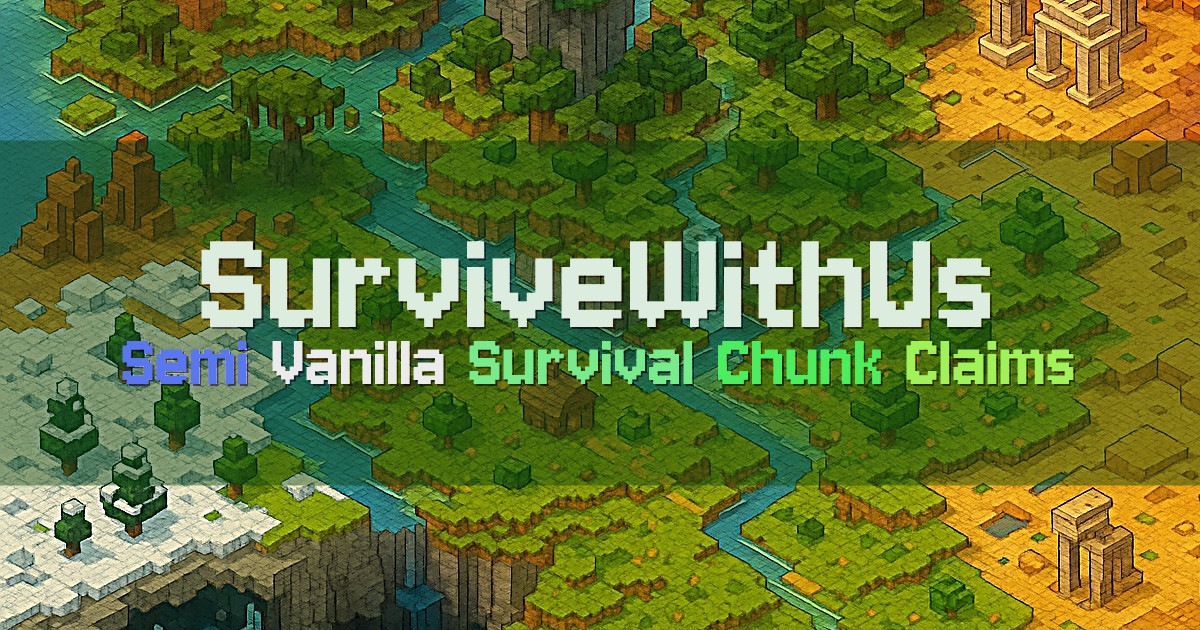 2/69OnlineSurviveWithUs is a semi-vanilla survival server built around community and long-term play. We focus on keeping the core survival experience intact while giving players chunk claiming to help protect what they build. The server is back under…
 -
10
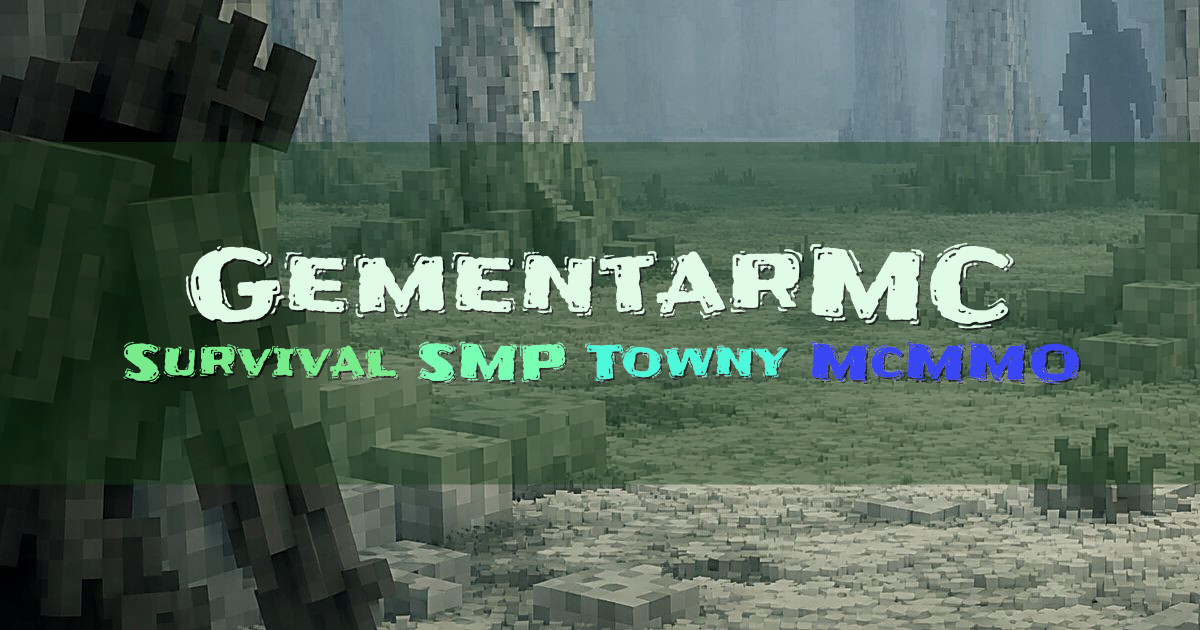 1/500OnlineGementarMC is a survival SMP server for players from Malaysia, Singapore, and Indonesia who want a solid experience with a chill community and competitive vibes. Set up your base, grind resources, and explore new lands at your own pace. Tea…