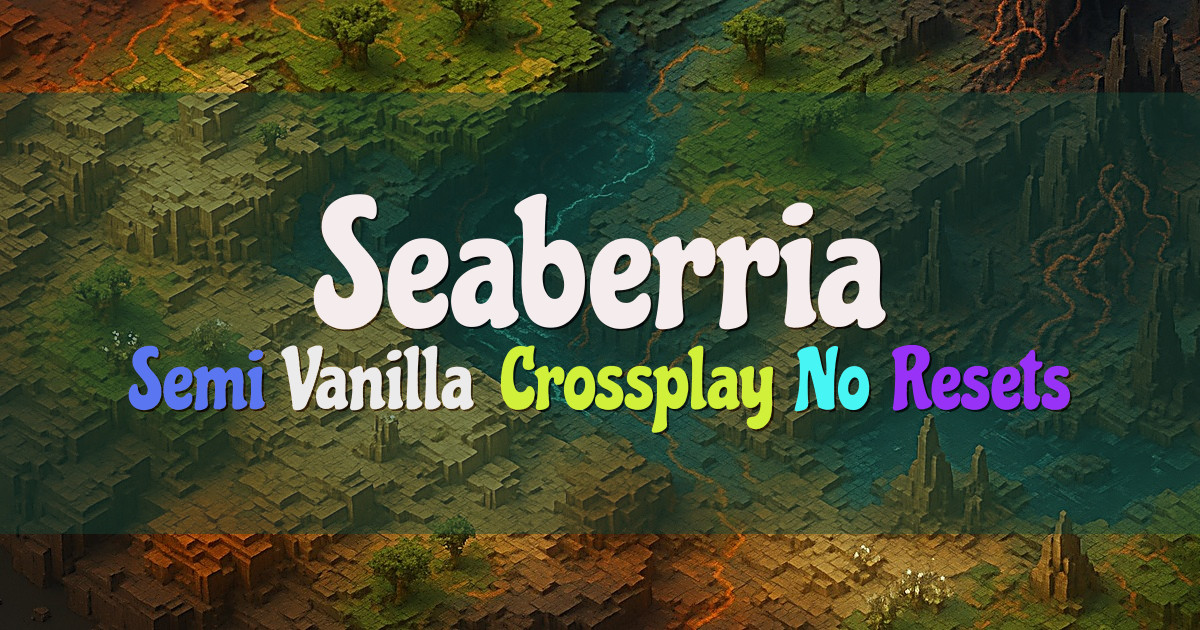
A large border world is built for breathing room. Instead of everyone stacking up around the same starter biomes, players can actually roam, pick a spot that fits their style, and build without feeling like the neighborhood is already full. The early game lands closer to vanilla survival: long walks, real scouting, and the payoff of finding terrain that is still untouched.
The main loop becomes travel plus discovery. Boats, horses, Nether tunnels, and later elytra routes matter because distance is part of the game. Infrastructure shows up naturally: portal hubs, marked paths, ice boat lines, regional outposts. You are not just grabbing resources, you are claiming logistics.
Resource pressure stays lower for longer. Fresh caves, unmined oceans, and new chunks are always a trip away, so spawn does not get stripped to bedrock in the first week. That makes big builds and long-term bases easier to sustain, and it reduces the constant scramble over the nearest slime chunk or the last patch of sand.
Social play is still there, it just forms differently. People cluster around convenience points like spawn projects, portal networks, or a shopping area if the server runs one, while others settle far out for privacy. PvP and raiding tend to be more intentional than random: scouting takes time, supply lines matter, and knowing routes can be as important as gear.
The upside is longevity. Hidden bases can last, new players can still find room, and the world avoids that exhausted, over-mined feel. The cost is convenience: meeting up takes planning, and spontaneous encounters are rarer unless players naturally gather around shared infrastructure or events.
How big does the border need to be to feel large?
Big enough that you can pick a direction, travel for a long while, and still be in viable, unclaimed terrain. In practice that is often 20k to 100k blocks from center, but the real test is whether new players can settle without immediately running into other peoples leftovers.
Will I actually see other players, or does it feel empty?
You see people where travel converges. If there is a Nether network, spawn hub, community builds, or a market, those become the meeting points. If everyone plays fully nomadic and never connects portals, it can feel quiet even with a healthy player count.
How does raiding and PvP change on a huge map?
Less doorstep chaos, more scouting and setup. Finding a target often means tracing portals, checking travel corridors, or watching hubs, and fights tend to happen around routes and objectives instead of random wilderness bumps.
What should I do early so my group stays connected?
Get portals up early and make them easy to find and label. Pick a shared meeting spot near spawn or along a main corridor, then move farther out once you have reliable travel. On large maps, bad portal links and missing coordinates cause more frustration than mobs do.
Does a larger border help with lag?
Not by itself. A huge world can mean heavy chunk generation if lots of players are exploring. Servers that feel good usually manage it with pregen, sensible view distance, and rules or systems that keep constant new-chunk flying under control.
Is it easier to find rare biomes and structures?
You have more untouched world to roll the dice on, which helps, but you may travel farther. Large border play supports real expeditions for things like mansions, ancient cities, and specific biomes, especially before you have elytra and a clean portal network.