Minewind Anarchy
Minewind is an open-ended survival world where we leave your adventure largely in your hands.
210 players online

Browse Minecraft servers related to Loot Hunting.
Loot hunting servers turn Minecraft into a repeatable run: find value, take it, get out. The goal is not long-term building or passive survival, but gaining power through smart route choices and controlled risk. Most of your time is spent moving with purpose, clearing rooms quickly, and deciding what is worth carrying when death can convert progress into someone else’s inventory.
The map is designed around payout locations: dungeons, ruins, vault rooms, shipwreck-style points of interest, or custom structures with tuned chest tables. Some servers anchor this in vanilla hotspots like bastions, end cities, and ancient cities. Either way, success comes from learning the environment, understanding which threats matter, and exiting before the area becomes a magnet for other players.
Competition is the constant background noise, even when PvP is limited. Loot is scarce on purpose, so information becomes leverage. Players watch who leaves spawn geared, track portal traffic, camp chokepoints, or tail teams until a chest room is opened. On more restricted servers, that pressure shows up as racing for resets, contesting bosses, or simply arriving first and denying access.
Progression is gear-forward and cyclical. You get ahead by stringing together clean runs: upgrade armor, secure utility like ender pearls or totems, stock healing, then push into higher-tier zones. Strong players stay resilient with backups, stashes, and quick kits so a death hurts, but does not end their season.
What it feels like is momentum and restraint. The best moments come from the extraction, not the chest: the sprint back to safety, the hallway standoff, the choice to drop something expensive to keep speed, and the discipline to leave after a good hit instead of gambling on one more room.
Exploration is the main activity, but it is structured as contested exploration. Some servers make conflict direct with open PvP around high-value areas. Others limit combat and let the competition play out through races, contested objectives, and depleted locations. If you want more space, look for wide map spread, many points of interest, and rules that curb camping.
They add resets to the supply: chest refills, rotating loot tables, instanced dungeons, or periodic wipes. Healthy setups also include sinks like durability pressure, upgrade costs, or item loss on death so gear circulates instead of stockpiling indefinitely.
A light kit built for survival and escape: armor you can afford to lose, food, blocks, a water bucket, and healing. Mobility tools often matter more than raw damage because getting out clean is the win condition. Leave inventory space and assume you may need to drop items to stay alive.
They treat timing and exits as part of the loot. They avoid obvious routes, commit only after checking escape lines, and read signs of recent activity like placed blocks, opened doors, missing mobs, or broken spawners. Most importantly, they take the first solid payout and leave before the location turns into a fight.
Groups gain safety and coverage, but solos can do well when loot is spread across many viable routes. Solo success usually comes from speed, low noise, and consistent mid-tier runs rather than forcing the single hottest location every time.
Minewind is an open-ended survival world where we leave your adventure largely in your hands.
VentureLand is a custom Minecraft RPG built around a large, hand-built open world made for exploration, adventure, and long-term character progression.

At Dungeon Realms, we bring you a fantasy action RPG built around exploration, character progression, and PvE combat.
Welcome to MysticRunes MMORPG, our adventure through Aurya, a vivid world filled with detailed quests, memorable inhabitants, hidden secrets, custom monsters, and…
AdventureCraft is a living survival world where something changes every 30 minutes.
PiratesMC is our custom island-based RPG adventure, built for players who want much more than routine resource grinding.
Tenko Minecraft is a modded survival server where we’re building a place for ambitious projects, worthwhile loot hunts, and unexpected discoveries.
Alyssa Montana brings modded survival together with dungeon adventures and a chance to put down roots.
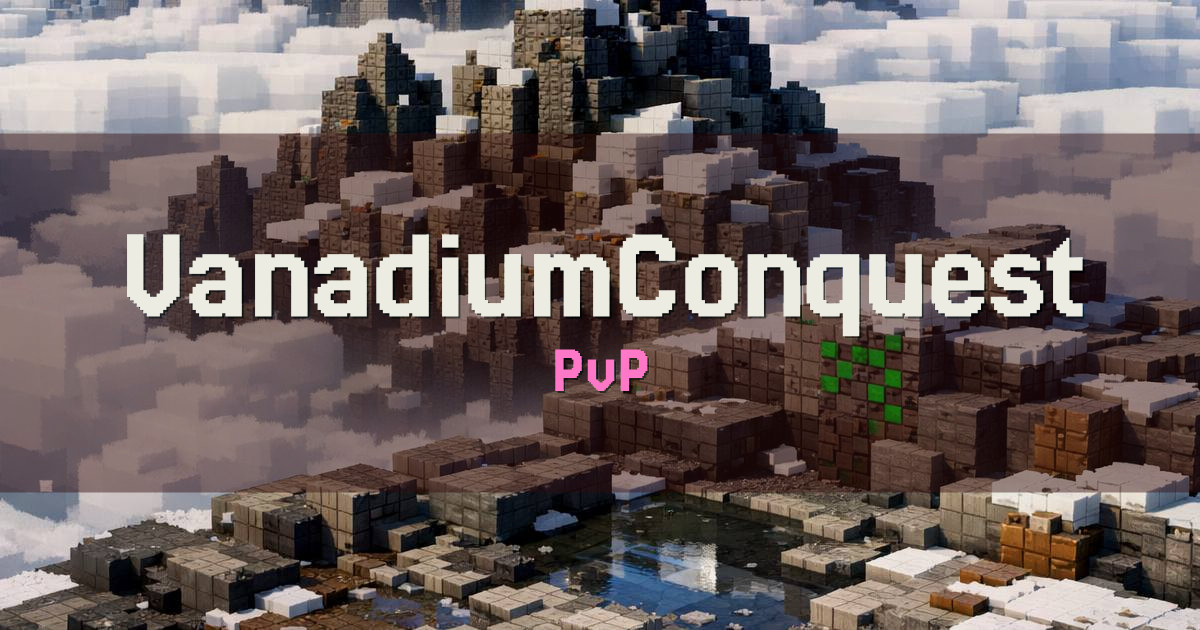
VanadiumConquest is a high-difficulty survival server where hostile mobs and other players both threaten your progress.
At RotMC, we bring bullet-hell combat to a Minecraft MMO RPG built around permadeath.