Minewind Anarchy
Minewind is an open-ended survival world where we leave your adventure largely in your hands.
197 players online

Browse Minecraft servers related to Custom Plugins.
Servers built around custom plugins play less like a generic public survival world and more like a tuned ruleset. Instead of bolting together the usual public plugins, the server runs code written for its exact loop: how you earn, what counts as progress, what risks matter, and how players collide. You feel it quickly in small things like GUIs that match the server, commands that behave predictably, and features that stay stable when the player count spikes.
The real difference is flow. Good custom plugins smooth the rough parts of Minecraft without turning the whole experience into pay-to-skip. Quests can track real actions instead of vague checklists, jobs and economies can be throttled to prevent inflation, and claims can actually respect the server’s combat and raid rules. Because the systems are designed to work together, you see fewer weird conflicts and fewer loopholes that turn into exploits.
Custom mechanics also shape the social game. Unique dungeons, custom enchants, event rule sets, or a factions raid mechanic that changes how walls, cannons, and regen work create server-specific knowledge. Regulars develop metas, callouts, and reputations that only make sense there, and that shared understanding becomes part of the draw.
Custom code cuts both ways. The best implementations feel almost invisible: clear rules, steady performance, and balance that holds up when players push hard. The bad ones feel like half-finished patches, unclear mechanics, and TPS drops whenever anything “special” happens. A healthy sign is simple: the server can explain its systems cleanly, fix bugs without constant progress resets, and enforce rules consistently.
It usually means features written specifically for that server, not just configuring public plugins. Sometimes it is private code, sometimes a heavily modified fork. If menus, progression, combat, or economy rules behave in ways you do not recognize from common setups, you are likely dealing with custom work.
No. Custom plugins can be used to sell power, but they are also used to control power creep and reduce grind fairly. The clearest red flags are paid combat advantages, exclusive best-in-slot enchants, or rank-only access to top-tier items. Cosmetic perks and convenience that do not change fights are a different story.
Look for clear onboarding: in-game guides, tooltips, a readable wiki, and progression you can predict. You should understand how to get stronger, what you can lose, and what triggers danger. If the server relies on vague menus and surprise rules, you will spend more time guessing than playing.
Not by default. Well-written custom code can run cleaner than generic plugins because it is built for one environment. Poorly written code can be a lag magnet. Judge it at peak time: responsive inventory and GUIs, stable combat, and major features like dungeons or events running without obvious TPS dips.
Early on, yes, because knowledge matters. Good servers bridge that gap with starter quests, a clear first-hour path, and gear that gets you into the main loop. If the advantage is mostly understanding the mechanics, you can catch up. If it is locked behind time gates or purchases, you will feel stuck.
Minewind is an open-ended survival world where we leave your adventure largely in your hands.
PotionMC is our Lifesteal SMP for players who enjoy survival progression with real stakes and player-driven combat.
Tidefall Network is an Australian Java Minecraft network built around custom plugins, smooth gameplay, and a welcoming community.
Ethria.de CityBuild brings familiar Minecraft survival and building into a custom-developed network with its own plugins, items, and quality-of-life features.
Faeries is a welcoming Minecraft community built for players who want relaxed survival, meaningful progression, and new friends.
CivMC is a player-driven Minecraft civilization server where politics, economy, diplomacy, history, and survival come together.
CityNova is a modern Minecraft city-building server where you can design and grow your own city in a creative-focused world.
At Mystian Fields, we bring together modded Minecraft, survival progression, and plenty of room to build.
The Penguin Network is a friendly modded Minecraft community built around seven public modpack servers, giving you several ways to play under…

At Cozy Crafters, we keep survival familiar and give you plenty of reasons to make the world your own.
At EdenMine, we bring fast-paced KitPvP and practice combat together with custom plugins.
PokeHub brings Pokémon collecting to a large shared Minecraft survival world.
At HallowPrison, we bring classic Minecraft prison progression together with RPG-style features and custom content.
At UnseenSMP, we’re building a vanilla-like survival world where you can gather resources, make a home, explore, and find your place in…
Holycraft Community is a friendly survival multiplayer server built around a dedicated world, player-driven progression, and a welcoming community.
MC4FUN is a Turkish Minecraft network built around our custom plugin ecosystem and a range of ways to play.
MC Prison is our classic Minecraft prison server, built around mining your way through an A-to-Z rank path.
Mineflake is a public Minecraft server welcoming both Java and Bedrock players.
Welcome to Evolved Survival, where we keep the familiar rhythm of Minecraft survival and add useful ways to build, trade, and play…
AngelicMC is our enhanced survival world for players who enjoy long-term progression, building, and a strong shared community.
MinecraftOffline is our high-stakes Lifesteal survival server, where every player kill grants a heart and every death costs one.
Welcome to Cubeville, a family-friendly Minecraft survival server where we bring together community survival, an automated economy, and custom activities.
At DragonMc NetWork, we bring players together for community-focused Minecraft survival.
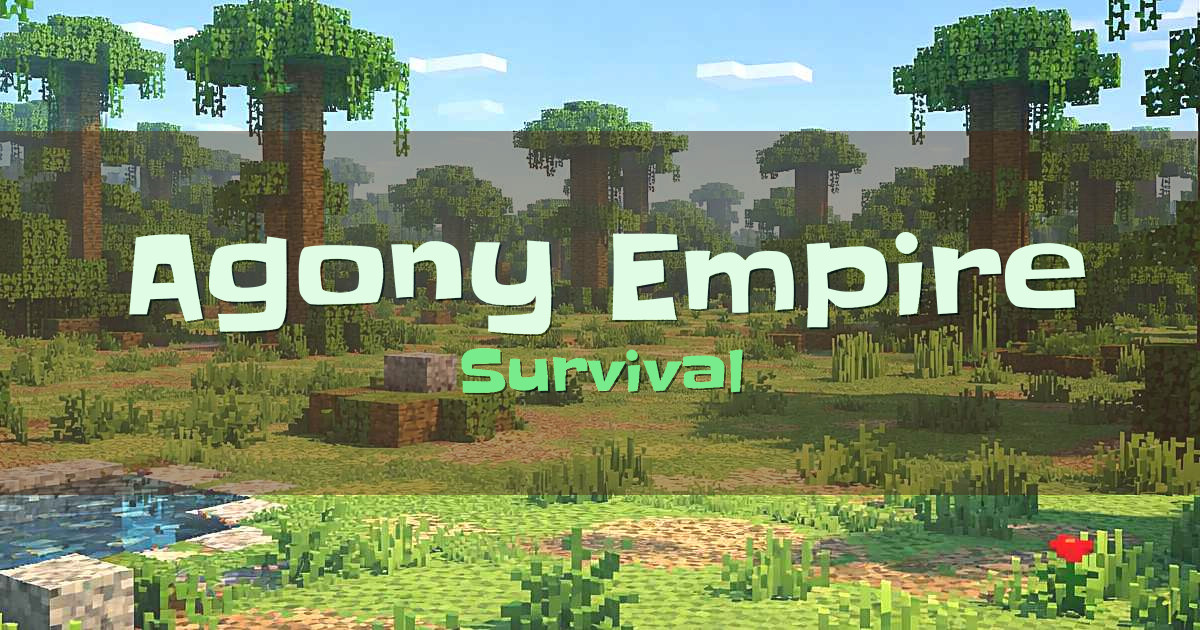
Welcome to Agony Empire, where we keep survival close to vanilla and focus on a friendly shared-world experience.
MinexSMP is a community-focused Minecraft server where you can settle into a shared SMP world, gather resources, build, and play alongside friends.