Minewind is a survival server built around choosing your own path and hunting down powerful loot that fits your play style. Find a wide variety of gear in chests across the world, trade with villagers for emeralds, and take on dangerous mon…
Optimized
An optimized Minecraft server is built around a simple expectation: the world responds on time. Chunks load while you sprint, blocks place when you click, mobs move predictably, and combat stays consistent instead of feeling a tick behind. The difference is clearest when the server is busy, where good optimization keeps TPS steady and avoids rubberbanding even with farms running, players spread out, and multiple regions active.
Optimization is usually about reducing wasted work, not rewriting the game. Servers tune simulation and view distances, entity processing, and chunk behavior so normal play does not trip over avoidable lag spikes. That means fewer moments where a redstone clock or crowded spawn causes hitching, and fewer freezes when new terrain is explored or multiple players load fresh chunks at once.
You notice it most in timing-sensitive edges of play: PvP hit registration, elytra flight through dense bases, and shared areas packed with villagers, item frames, and mobs. Builders and technical players feel it too. Consistent tick pacing makes contraptions and farms behave more predictably, while sensible limits on abusive setups stop one hotspot from dragging down the whole server.
Not every optimized server makes the same tradeoffs. Some aim to stay close to vanilla and simply run cleaner; others cap entities, hoppers, or per-chunk activity to protect performance. The common thread is reliability: the server feels stable day to day, not just when the player count is low.
Will an optimized server still feel like vanilla?
Often, yes. Many keep core mechanics intact and focus on configuration and performance fixes. Some do add limits, like tighter entity caps or reduced hopper impact, to keep TPS stable in shared areas.
How can I tell if a server is actually optimized?
Test it during peak hours, not off-peak. Look for delayed block breaks, rubberbanding, chat delay, and inconsistent combat. Smooth elytra flight, reliable chunk loads, and redstone that does not drift when the server is full are strong signs.
Does optimization matter for PvP?
Yes. Stable server tick rate and consistent processing reduce the random feeling in fights. Even with the same ping, combat tends to feel cleaner when the server is not stuttering or falling behind.
Will my farms and redstone still work?
Most common designs do. The builds that suffer are usually extreme ones that depend on huge entity counts, massive hopper networks, or constant updates. If you play technical, check rules and limits around villagers, minecarts, hoppers, and entity counts before scaling up.
Why do optimized servers limit entities or automation?
Entities and frequent block updates burn tick time fast, especially in one concentrated area. Limits keep a single base or farm from consuming the tick budget and degrading the experience for everyone online.
-
-
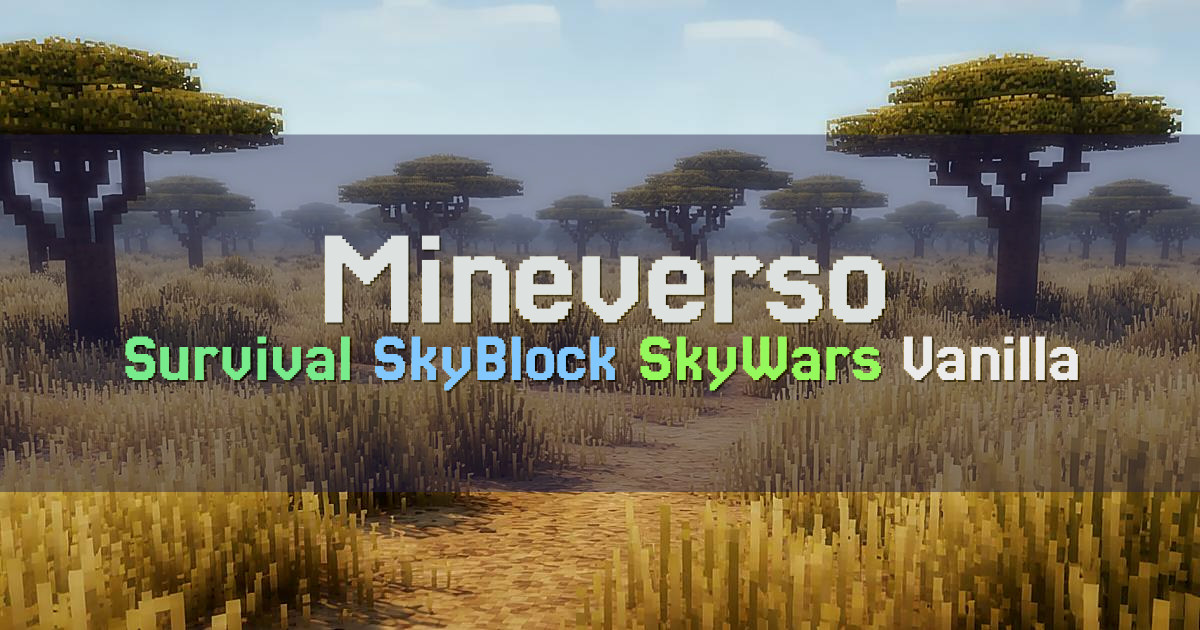
En Mineverso mantenemos el servidor actualizado y optimizado para que puedas jugar con una experiencia fluida y con buena conexión. Actualmente ofrecemos cinco modalidades para que elijas cómo quieres jugar: Survival, SkyBlock, SkyWars, Van…
-
Welcome to the KAIMUX Network, an ambitious project built around uniqueness, quality, and long-term development. We focus heavily on performance and smooth gameplay, backed by powerful hosting and a setup where most of our plugins are custo…
-
SpongeTopia is a 99% vanilla Java SMP for players who want a near-pure survival experience without modern server gimmicks. We keep it simple: hard mode, no gameplay-altering plugins, and a focus on performance. We also take protection again…