Minewind is a survival server built around choosing your own path and hunting down powerful loot that fits your play style. Find a wide variety of gear in chests across the world, trade with villagers for emeralds, and take on dangerous mon…
Protections
Protections servers run on a simple promise: time spent building is not a gamble. You play normal survival, mine, farm, and expand, but your base is backed by a system that stops strangers from tearing it apart or walking off with storage.
The loop is claim first, build second. You pick a spot, mark it as yours, then set who can break and place blocks, open containers, or use doors and switches. Most servers also curb common grief plays around claimed land, like lava, fire, or explosives. That security is why these worlds develop real permanence: towns, roads, player shops, and massive farms that would never last on an unprotected map.
Good protections stay out of your way. You notice them when you extend a border, add a friend, or hit a boundary and get clear feedback that you do not have permission. The best setups make access requests and shared projects straightforward, so the rules feel predictable instead of bureaucratic.
Protections change conflict more than they remove it. When raiding and casual theft are limited or pushed into specific zones, players compete through trading, territory planning, and reputation instead of destruction. The tradeoff is a quieter wilderness and fewer organic base-hunting stories, but a stronger long-term world where cooperation is practical.
What do protections usually cover?
Most systems prevent non-members from breaking or placing blocks and from accessing containers like chests, barrels, hoppers, furnaces, and shulker boxes. Many also restrict interacting with doors, buttons, levers, item frames, and certain grief mechanics such as TNT, fire spread, or lava placement near claimed builds.
How do I build with friends without opening my whole base?
Use roles. Give trusted friends build permissions, give others only container access, and keep a separate claim for shared builds like a town farm or community hall. Splitting public and private areas is the cleanest way to avoid accidental access to storage and redstone.
Does this make grief and theft impossible?
It stops the common forms, but it does not remove risk. Players still lose items to unclaimed areas, misconfigured permissions, scams, or simple mistakes. The key habit is claiming early and checking what your server protects by default.
Will protections interfere with farms or redstone?
Sometimes. Servers may limit certain mechanics for performance, and permission settings can block interaction with levers, buttons, or collection systems. For public farms, it is common to allow interaction where needed while keeping storage and sorting locked behind stricter access.
What should I check before committing to a big build?
Look at how claims are earned and expanded, whether claims expire with inactivity, how boundaries are shown, and what interactions are protected by default. Also pay attention to staff policy on disputes and recovery, since that is what matters when something goes wrong.
-
-
2
 236/2026OnlineNetherite is a Minecraft network built around three core ways to play: Lifesteal, Survival, and Skyblock. Whether you want competitive PvP with real stakes or a more classic survival pace, you can pick the mode that fits and settle in. We f…
 -
3
 102/200OnlineWelcome to FadeMC, a never-resetting Minecraft survival server for players who want a classic experience without the stress of losing everything. We keep things semi-vanilla and focused on what makes survival fun, while protecting your prog…
 -
4
 16/1000OnlineWelcome to SuperSMP, a survival SMP for players who want a fun, welcoming place to build, explore, and take on new challenges. We feature custom worlds with unique landscapes to discover, plus exclusive bosses and custom models that give yo…
 -
5
 13/150OnlineWelcome to FaithAvenue, a Christian faith-focused, family-friendly city-themed network built to feel like a long-term home. Our world features a massive interactive city with shops, random events, and hundreds of places you can settle into…
 -
6
 6/120OnlineMinecraftOffline is a lifesteal anarchy server built around high-stakes PvP and survival. Kill players to gain hearts, and lose hearts when you die. If you run out of hearts, you’re banned. New players get a one hour grace period where hear…
 -
Bienvenido a PlatiumCraft Pixelmon 1.21.1, un servidor donde Pokémon y Minecraft se combinan para crear una aventura completa, con una comunidad amigable y eventos frecuentes. Aquí puedes construir y jugar con tranquilidad gracias a nuestro…
-
8
 5/110OnlineNovaTek is an international, community-oriented SMP built for both technical players and casual players who want to enjoy the base game with minimal technical restrictions. Our main world is a no-resets, forever world meant for long-term bu…
 -
9
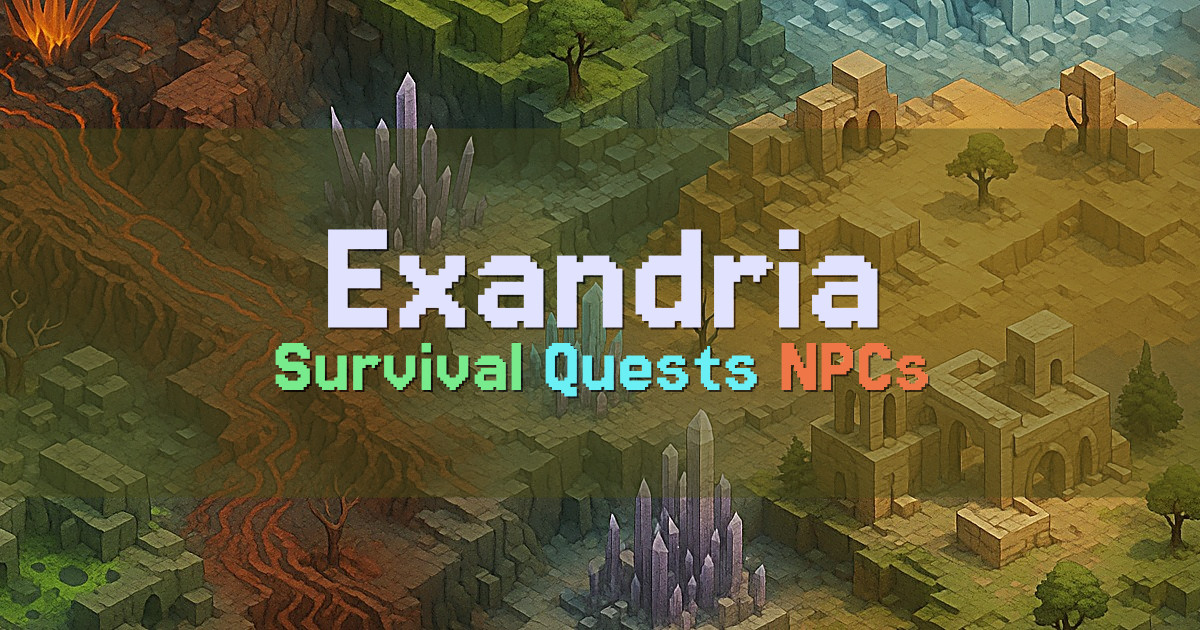 5/50OnlineExandria MC is an Australian (Brisbane) survival server we started with a simple goal: make a world that feels alive. We’re building around ongoing lore, recurring NPCs, and custom questlines that are designed to feel like part of the world…
 -
The Anchor is a Survival SMP built around a simple goal: a community that’s listened to, with server changes vetted through player feedback so progress-impacting reworks are handled carefully. We support crossplay for both Java and Bedrock…