Minewind is a survival server built around choosing your own path and hunting down powerful loot that fits your play style. Find a wide variety of gear in chests across the world, trade with villagers for emeralds, and take on dangerous mon…
Shard economy
A shard economy server revolves around a dedicated currency called shards. You earn shards through server-defined gameplay and spend them on features the server wants to price consistently. Instead of the whole economy swinging with diamond supply or a single /sell shop, shards act as a stable unit of value that sits on top of survival and turns progression into something the server can pace and balance.
The core loop is straightforward: run content that pays shards, then convert shards into convenience, progression, or power. Earnings usually come from quests, dailies, dungeon clears, skill milestones, kill trackers, events, and sometimes vote streaks. Some servers also drop shards directly from mobs or crates as a tangible pickup. Spending tends to cover things vanilla items struggle to price cleanly, like extra homes, shop plots, crate keys, custom enchants, spawners, kits, upgrade trees, and cosmetic unlocks.
Shards change how people play because efficiency shifts from items-per-hour to shards-per-hour. Players route quests, time dungeons with a party, tune grinders, and chase whatever activity has the best payout that season. The healthiest shard economies keep several earn paths relevant, then protect the currency with real sinks like upgrade costs, rerolls, repair fees, auction taxes, and limited-time sales so shards stay meaningful instead of inflating into trivia.
Trading usually splits into two layers: a player market priced in shards for services and rare items, plus server shops that anchor basic prices. Done well, this makes it easier for new players to participate without needing a diamond stack first. Done poorly, it turns into bot-friendly daily farming, runaway inflation, or a single dominant meta. The difference is tuning and enforcement, not the idea itself.
How do you earn shards on most servers?
Usually through structured systems: quests, daily missions, dungeon completions, event placements, skill or leveling milestones, and kill goals. Some servers also award shards as drops from mobs or from crates. The key is that the currency is issued by the server, not discovered like diamonds.
What do shards typically buy?
Common purchases include extra /homes, kit or skill upgrades, custom enchants, spawners, crate keys, shop plots, rerolls, and cosmetics. Shards often become the default price for player-to-player trades because it is easier to value a service or rare drop in one currency than in mixed items.
How is a shard economy different from a diamond economy?
Diamonds are limited by mining time, world resets, and farm or dupe metas, so prices swing hard. Shards are server-issued, so admins can reward specific activities, set consistent costs for perks, and add sinks like taxes and upgrade fees to control inflation. You trade some vanilla purity for predictability.
Do shard economies usually feel pay-to-win?
Only if real money becomes the fastest path to combat power or hard-gated progression. If shards mostly buy convenience, cosmetics, or long-term upgrades earned at a similar pace in-game, the server can still feel fair even with a store.
What are signs a shard economy is well run?
Multiple viable ways to earn shards, clear payout rates, active currency sinks (taxes, upgrades, rerolls, fees), and enforcement against alt abuse and AFK automation. If one activity prints most shards or prices never move as the population grows, the economy usually drifts.
-
-
6b6t is an anarchy Minecraft server running on 1.21 with no rules and no queue. We built the server around custom technology to keep things moving so you can get in and play without waiting. Join on both Java and Bedrock and…
-
KobbledKarp is a Cobblemon-focused Fabric survival server built around progression and plenty to do beyond the basics. Take on both player-run and NPC gyms as you build your team and explore. Work through Dex rewards for clear goals that pa…
-
4
 25/500OnlineLightNetwork is built for players who want progression that feels rewarding, competitive gameplay, and a clean experience without bloated gimmicks. We focus on solid systems and a grind that feels worth it. Our Skyblock x GenSMP experience…
 -
O Servidor Magnatas foi feito para quem quer viver uma experiência modded completa no Minecraft, com foco em exploração, progresso e diversão em grupo. Aqui você encontra os modpacks ATM10, ATM10TTS e o Magnatas Original, combinando magia e…
-
6
 11/80OnlineMysticLand es una network de Minecraft para Java y Bedrock con 3 modalidades disponibles, pensadas para distintos estilos de juego. En Elite encontrarás mazmorras, estructuras, armaduras especiales y mobs con mayor dificultad, además de sis…
 -
7
 8/50OnlineDominion is a semi-vanilla Minecraft server for adult players who want a shared survival world focused on community, collaboration, and long-term play. We keep the experience close to vanilla, without land claims or big add-ons like skills…
 -
8
 6/200OnlineSunflower SMP is a friendly, safe, and relaxing place to play Survival with a community-first focus. We keep things welcoming and low-stress with keep-inventory and a selection of cute cosmetics. Settle in and build with land claiming, take…
 -
9
 5/2026OnlineSlime Throne is a kingdom-focused server built around building your own legacy, ruling your lands, and choosing when to clash with other players. We put a lot of care into presentation, with custom GUIs, GUI artwork, and custom prefix artwo…
 -
10
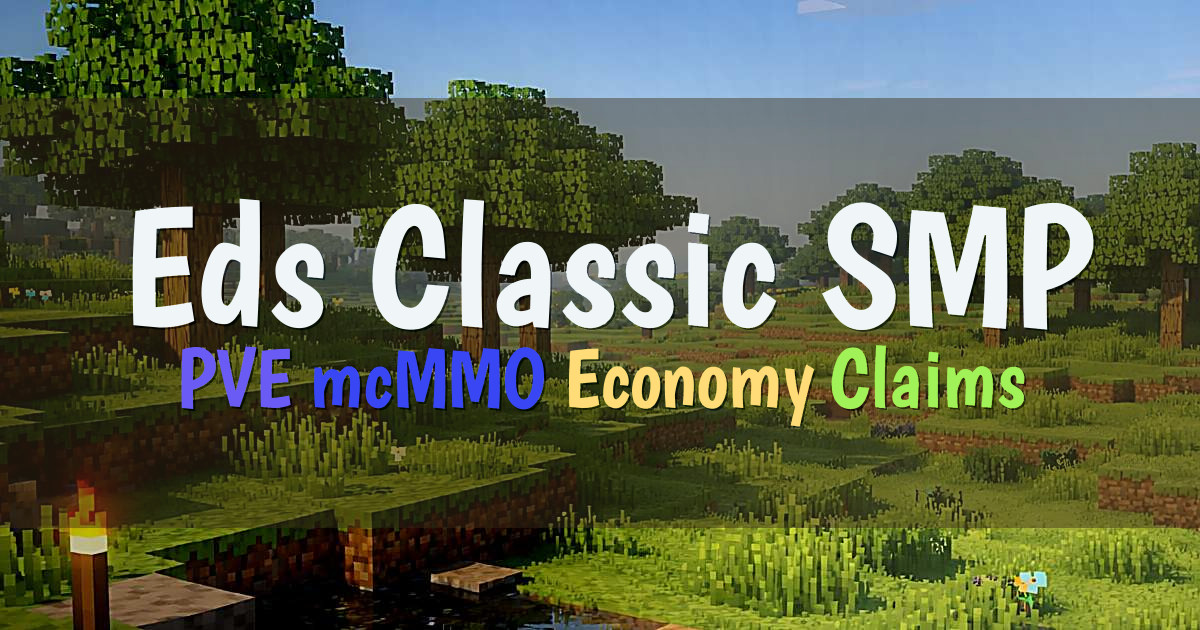 4/20OnlineEds Classic SMP is a relaxing PVE survival multiplayer server built for long-term play, with steady progression and a community that can grow over time. The server is still being updated and expanded, and we welcome player feedback as we co…