Minewind is a survival server built around choosing your own path and hunting down powerful loot that fits your play style. Find a wide variety of gear in chests across the world, trade with villagers for emeralds, and take on dangerous mon…
Shop based economy
A shop based economy server organizes survival around currency and shops. Instead of most trading happening in chat, items move through defined buy and sell points: player-run shops, server shops, or both. Your progress is measured as much in balance and prices as it is in gear and blocks.
The loop is straightforward: produce resources the economy rewards, sell them, then buy whatever saves time or enables the next project. Early income often comes from boring but reliable work like mining, logging, or basic crops. As the world matures, the focus shifts to consistent production: farms, routes, bulk storage, and choosing what you would rather buy than grind.
Player shops are the heart of the experience because they create competition and personality. Whether it is chest shops on a road or a market warp full of storefronts, supply and convenience matter. Regulars become known for specialties, and you start thinking in terms of stock, restocks, and whether your price is worth the trip.
Server shops usually act as an on-ramp and a safety net by setting baseline rates for common goods. They make it easier for new players to earn spending money and keep essentials from being controlled by a small group. The best versions keep fixed-price shops focused on fundamentals so the player market still determines the value of higher-effort items.
At its best, a shop based economy feels intentional. You build because it pays, travel because markets are worth visiting, and plan projects in stacks, time, and cost. The world stays recognizably survival, but the day-to-day decisions are driven by demand and the choices you make about what to produce versus what to purchase.
How do I make money early on in a shop based economy?
Find the server's most reliable bulk buyers and lean into consistency. Logs, stone, basic crops, and common mob drops are typical starters because you can scale them quickly. A small farm you can harvest every session usually beats chasing rare loot.
What is the practical difference between player shops and server shops?
Player shops are a real market: prices move with competition, shortages, and convenience, so you can hunt deals or profit by filling gaps. Server shops are usually fixed-price and exist to provide stable buyback and predictable access to basics.
What usually sells well to other players?
Time-savers and bottlenecks: rockets and gunpowder, slime, iron, redstone components, quartz and other nether materials, glass and concrete, shulker boxes, and curated enchants or book sets. Bulk building blocks also move if you can keep stock and package them in sensible quantities.
How do I know if the economy is fair or skewed by paid perks?
Look at how currency enters the world. If most money comes from selling items and normal play, trading stays meaningful. If ranks can generate money, apply major sell multipliers, or access exclusive buyback rates, the market tends to bend around them.
Why do prices change so much over a season?
Early scarcity makes basics expensive, then farms and infrastructure push supply up and prices down. Servers keep things from spiraling with money sinks like taxes, shop fees, repairs, or expensive utility purchases. Healthy economies are easy to enter but hard to inflate forever.
-
-
2
 60/1000OnlineMinestria is a custom Java survival server built around one core idea: every player places a Shard Generator underground, and protecting it is everything. Your generator produces shards over time, but if someone finds your base they can bre…
 -
3
 47/500OnlineAstralis Network es un servidor de Minecraft en español que busca darte un espacio lo más ameno y amable posible, fomentando una comunidad linda y respetuosa. Disfruta de un modo Survival con clanes, menús, NPCs, warps, encantamientos custo…
 -
4
 24/2026OnlineWelcome to PeanutSMP, a safe and friendly crossplay SMP for both Java and Bedrock players. We focus on a welcoming community where you can make friends, build freely, and enjoy a relaxed, no-grief experience. We run on the latest version wi…
 -
5
 17/2026OnlineAngelicMC is an enhanced Survival server built for long-term, community-driven gameplay. Compete on leaderboards, create and manage player shops, and take part in a thriving player-driven economy. Protect your builds with land claims, progr…
 -
6
 9/200OnlineSunflower SMP is a friendly, safe, and relaxing place to play Survival with a community-first focus. We keep things welcoming and low-stress with keep-inventory and a selection of cute cosmetics. Settle in and build with land claiming, take…
 -
7
 7/50OnlineWelcome to Minemist, an Oceania Towny geopolitics server hosted in Sydney, Australia. Minemist is built around nations, territory, and war, with a bordered world and a live map that shows everyone in the overworld. Politics is public, towns…
 -
Welcome to StatesMC, a PvP-focused SMP built around factions and geopolitics, with a gun system that works without mods. Our factions dynamic is designed to minimize grinding so you can spend more of your time on the parts that make this st…
-
MCBEGEDIS.LT is a Lithuanian Minecraft server built for players who want clear, easy-to-understand gameplay with plenty to do. Our goal is simple: bring a large, friendly, active community together in one place. Whether you enjoy BoxPvP and…
-
10
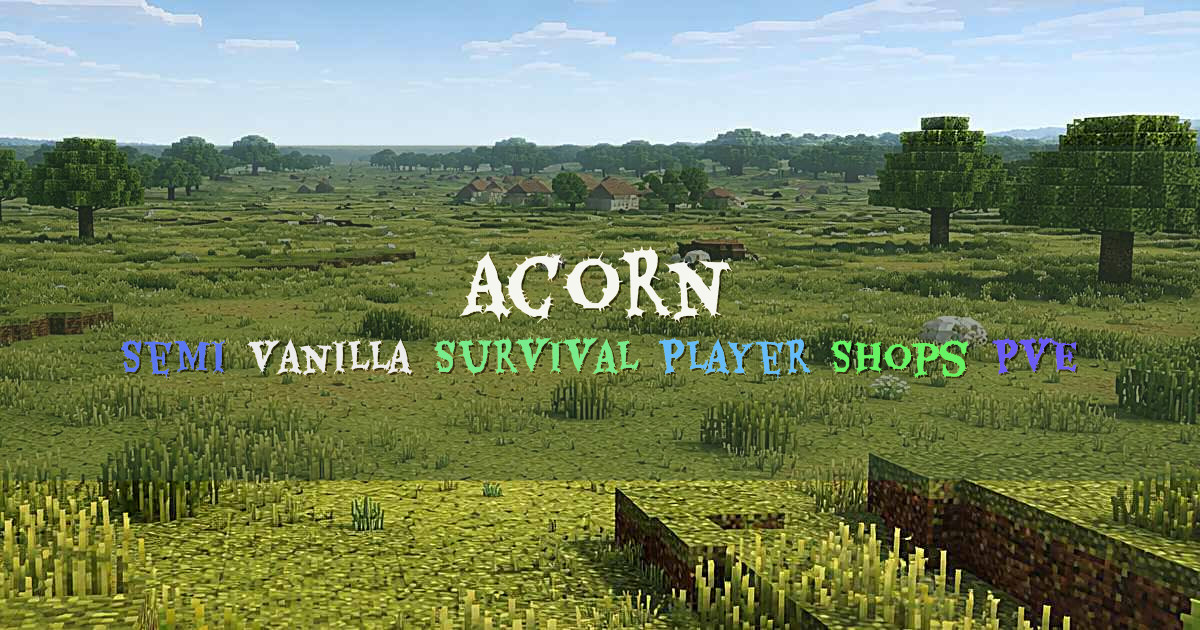 3/50OnlineWelcome to Acorn, a semi-vanilla Survival server focused on a clean, player-driven experience. Build and explore with a PvE focus in a grief-free, theft-free world where your progress is protected and the community can thrive. Our economy i…