Minewind is a survival server built around choosing your own path and hunting down powerful loot that fits your play style. Find a wide variety of gear in chests across the world, trade with villagers for emeralds, and take on dangerous mon…
300k border
A 300k border server caps the main world to about 300,000 blocks from spawn, or a 300,000 by 300,000 square depending on how the server defines it. The map is enormous, but it is not endless, and that limit becomes part of the server’s identity. You can still get privacy and distance, yet the world stays mappable, revisitable, and increasingly shared over time.
Early on it feels like normal SMP, then the geometry starts to matter. Players expand outward to claim quieter land and scout biomes and structures, but they do it with an edge in mind. Travel routes solidify between spawn, hubs, and settled regions, and certain coordinates become common knowledge: nether roof highways, portal grids, shopping districts, and agreed meeting points.
In a finite world, scarcity turns into social pressure. Most resources remain plentiful, but specific terrain, convenient build sites, and desirable structures become contested once the server fills in. Exploration shifts from drifting into fresh chunks to planned runs: locating strongholds, hunting rare biomes, mapping ancient cities, or checking the perimeter for unclaimed space.
A 300k border also keeps the server cohesive. It limits runaway chunk generation and world file growth, which helps performance and makes resets simpler. It also narrows the gap between established players and newcomers: you cannot vanish millions of blocks out, so trade, diplomacy, rivalries, and community projects stay within reach of each other.
Is 300k a radius or a full width?
Servers use both meanings. Some set the border at x/z ±300,000 (a 300,000 block radius in each direction). Others mean a 300,000 by 300,000 world with edges around ±150,000. The reliable detail is the stated edge coordinates and whether the border is square or circular.
What changes in day-to-day SMP with a 300k border?
Location stays relevant. You see more overlap between player regions, established highways and portal links, and a stronger incentive to build shared infrastructure. Over time, the server develops recognizable centers and contested hotspots instead of endlessly scattering into unreachable outposts.
Will resources run out on a 300k border?
Not in any practical sense, because the area is still huge. What changes is convenience: nearby biomes and easily accessed structures get used up first, so mature servers lean more on trade, community farms, and coordinated mining trips rather than always generating new chunks.
What happens when I reach the border?
Most servers block movement with a hard wall. Some use a soft border that pushes, teleports, or damages you. Either way, the edge becomes a known boundary, and bases near it feel remote without being truly outside the server’s orbit.
Does the Nether or End share the same border?
Often, but not always. Many servers mirror the limit across dimensions and adjust Nether scaling so portals cannot bypass it. The End is sometimes handled separately to control outer island access. Check dimension-specific rules if you rely on nether highways or End city travel.
-
-
2
 41/100OnlineFruitySMP is a friendly, inclusive survival SMP built as a safe space for the community. It was created by content creator Monjii after struggling to find an LGBTQ+ friendly place for his community. We welcome all people and work to keep th…
 -
3
 40/300OnlineTrappedMC is a modern take on the classic prison experience for players who miss OG-style progression and want a server that values community over pay-to-win shortcuts. We focus on a balanced grind with meaningful progression, aiming for a…
 -
4
 22/200OnlineWelcome to Evolved Survival. We recently reset for a new season and focus on a survival experience built around a player-driven economy. Set up and trade with other players, use public farms, and protect your builds with land claiming. We r…
 -
5
 10/35OnlineHardcore SMP is a hardcore survival multiplayer server for both Java Edition and Bedrock Edition. We keep the experience focused on vanilla-style hardcore gameplay, with a few carefully chosen features that make multiplayer smoother without…
 -
VanillaEvolved has been focused on a vanilla Minecraft experience since 2013. We keep things simple and avoid adding unnecessary extras, so the core survival gameplay stays familiar and player driven. The server runs as a semi anarchy SMP…
-
7
 7/1000OnlineAnarchySMP is a no-rules anarchy survival server where PvP is always on and the world will never reset. The experience is intentionally open-ended and unstructured, so you can build, raid, ally, or destroy without protections or claim syste…
 -
8
 7/2026OnlineInfinityX.Network ist ein frisch gestartetes Server-Netzwerk für alle, die echtes Vanilla-Survival im CraftAttack-Stil suchen. Da der Server erst vor Kurzem gestartet ist, sind die Fortschritte noch nicht weit auseinander und du kannst von…
 -
9
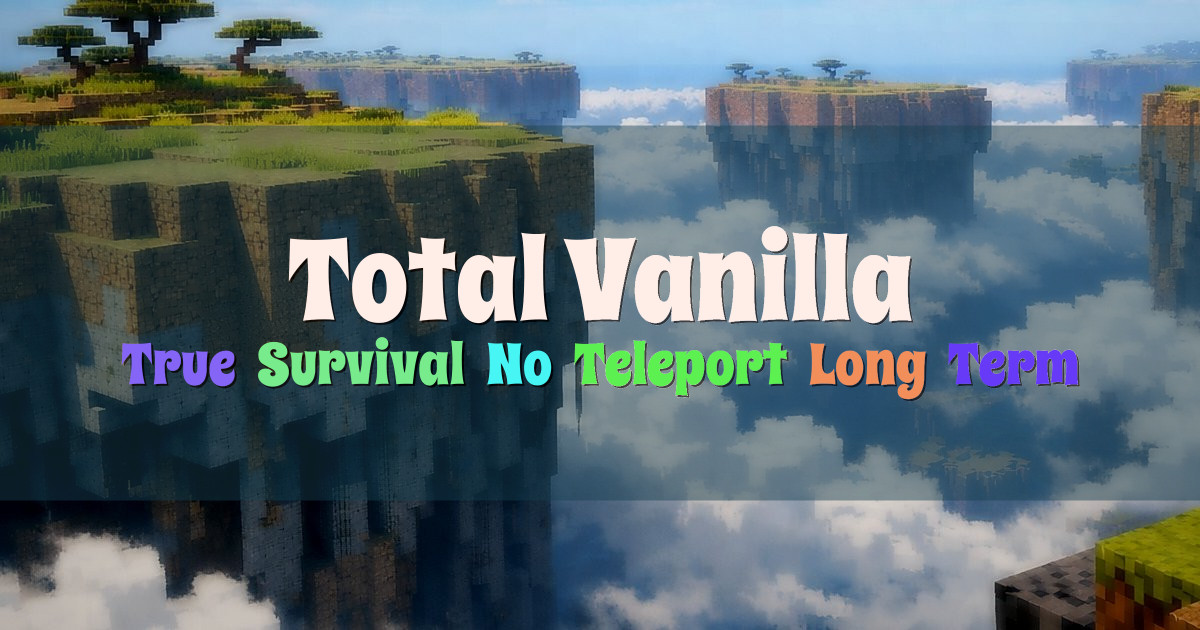 4/200OnlineTotal Vanilla is a true survival server focused on the classic vanilla experience. We keep gameplay straightforward and familiar, without shortcuts or game-changing plugins. There is no TPA and no home commands. What you do and where you go…
 -
10
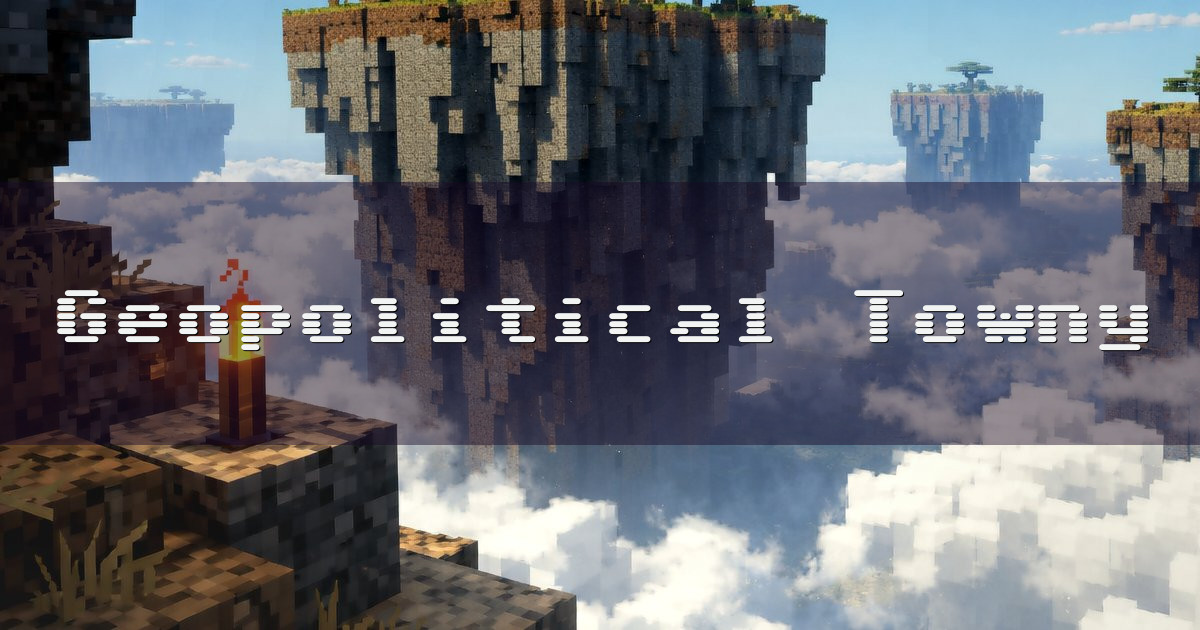 0/?OnlineAtlasMC is a Towny geopolitical server built around nations, politics, and large-scale conflict. Our Towny Geopolitica experience focuses on building powers that matter. Form nations, create vassals, claim titles, and work your way up towar…