Minewind is a survival server built around choosing your own path and hunting down powerful loot that fits your play style. Find a wide variety of gear in chests across the world, trade with villagers for emeralds, and take on dangerous mon…
Civilization
Civilization servers turn a survival world into a political map. Players form nations, stake borders, and build settlements where location and resources matter. Neighbors are rarely just background noise; they are trade routes, buffers, rivals, and sometimes the reason your base survives the season.
The loop is straightforward: join or found a nation, secure land, build the survival backbone (food, iron, farms, roads, defenses), then convert that leverage into influence. Capitals grow around public works, markets, and infrastructure. You log in and the world has moved without you because other groups were negotiating, expanding, or preparing.
Diplomacy is the main content. Treaties, alliances, embargoes, vassal deals, and betrayals are normal, usually organized through Discord and reinforced in-game with town halls, books, and signage. Conflict is expected, but it is structured so it has stakes without turning into mindless griefing: wars are declared, objectives are defined, and outcomes often include territory transfers, reparations, or enforced borders.
Pacing is often controlled so early choices stay relevant. Many servers delay Nether or End access, run seasons, or use timed unlocks to prevent instant elytra dominance and keep scouting and politics meaningful. The best civilizations reward specialization: builders set identity, miners and redstoners power industry, traders stabilize supply, and diplomats keep a nation alive when the map tightens.
Is it closer to SMP or factions?
It sits between them. Like SMP, the world and relationships persist. Like factions, territory and power matter. The difference is intent: conflict is political and rule-bound, with terms and consequences, not nonstop opportunistic raiding.
Do I need to run a nation to enjoy it?
No. Most nations are carried by members with a job: infrastructure builder, farmer, miner, brewer, villager handler, scout, soldier, mapmaker, or logistics. Leadership is visible, but reliability wins wars and keeps cities running.
What does war usually look like?
Declared conflicts with limits and goals. Common patterns are claim-focused pushes, siege windows, restricted griefing, and victory conditions tied to territory or specific targets. The point is to change the map and politics, not to erase weeks of work overnight.
What should I prioritize on day one?
Pick a defensible region with resources, get basic tools and food online, and secure your land. Then make contact early. Your first alliances and trade partners often matter more than your first diamond pick.
Are civilization servers roleplay servers?
Sometimes, but not always. Some groups write lore and play titles in-character; others keep it modern and strategic. The shared core is nation identity and negotiated rules, not acting.
-
-
CivMC is a Minecraft civilization server where gameplay intertwines with politics, economy, diplomacy, and history. The server has been running for more than 3 years with an established player base and a custom suite of plugins designed to…
-
3
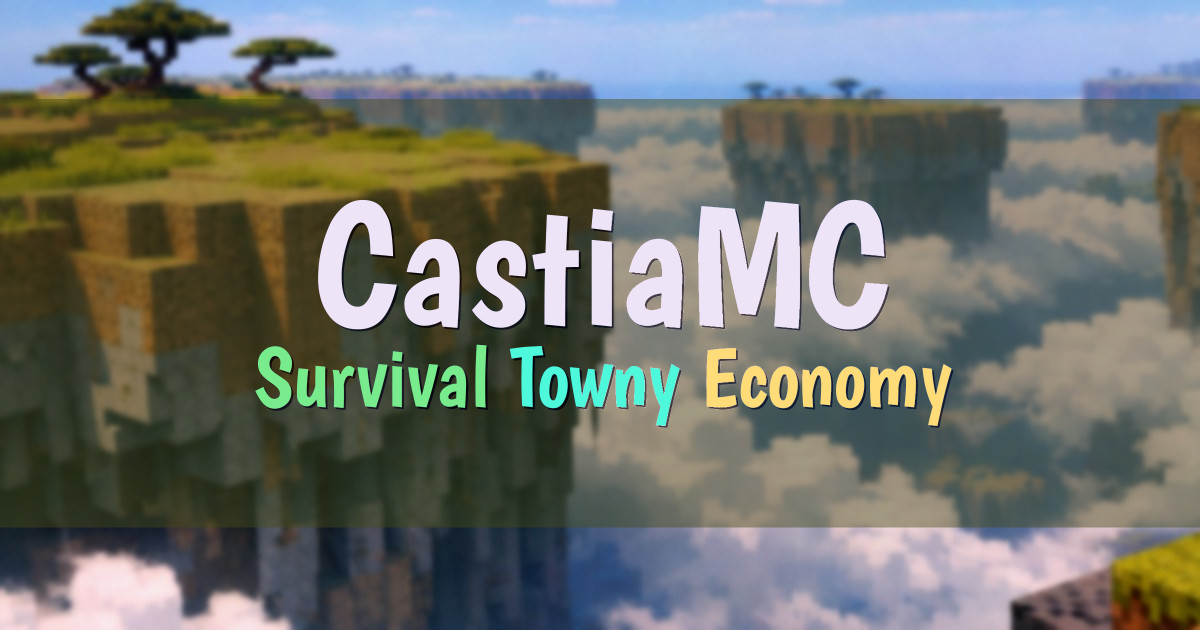 80/350OnlineCastiaMC is a server where players can enjoy an enhanced version of Survival. Build your own town, work with others, and help create a growing civilization over time. We focus on a relaxed Survival experience built around Towny, an economy…
 -
EdenMC is a vanilla-client survival server with tweaked progression designed to encourage cooperation. Solo play is possible, but intentionally difficult, and biome-specific crops create real reasons to trade, build supply lines, and work w…