Minewind is a survival server built around choosing your own path and hunting down powerful loot that fits your play style. Find a wide variety of gear in chests across the world, trade with villagers for emeralds, and take on dangerous mon…
Island management
Island management servers turn Minecraft into a long-term base builder where the island is the main loop. You start with a small plot and a thin trickle of materials, then grow it into a self-sustaining operation. The appeal is ownership and control: planning layouts, automating production, and squeezing real progress out of limited space.
Progress comes from improving the island itself, not living out of a backpack. You unlock larger boundaries, better resource sources, and new tiers of production, then reorganize to match. Strong islands end up feeling like tuned workshops: compact storage, sorting lines, villager trading, grinders, and farms built with purpose. The win is iteration, where each rebuild cuts friction and pushes output higher.
Day-to-day play settles into a rhythm of produce, process, sell, reinvest. Crops, mob drops, and mined materials turn into money, points, or island value, which you funnel back into upgrades and higher-yield setups. Players who think in throughput get rewarded: spawn rates, farm cycle times, hopper bottlenecks, chunk limits, and what happens when your island gets busy and starts to lag.
Even on mostly PvE servers, the multiplayer pressure is constant. Leaderboards for level, worth, or challenges nudge everyone toward efficiency, and the economy turns islands into businesses through shops, trades, and supply control. Co-op islands add their own management game: permissions, shared banks, who places the expensive blocks, and how you protect the island from one bad actor.
Compared to pure Skyblock or Survival, the identity of the island matters more than the map. Exploration can exist, but the center of gravity is your platform and the systems you build on it. It plays like running a small kingdom: set priorities, pick the next upgrade, and turn a starter patch into something clean, fast, and impressive.
Is island management basically Skyblock?
They overlap, but the focus shifts. Skyblock often leans on surviving with little, rebuilding vanilla progression, and completing challenges. Island management leans harder into scaling systems: upgrades, production chains, economy loops, and optimizing your island for output and value.
What do you do after the starter setup?
You stabilize income, then optimize. Most players lock in a reliable farm or two, add storage and selling, then start pushing upgrades and layout. From there it becomes a cycle of expanding capacity, removing bottlenecks, and chasing goals like island level, worth, or timed challenges.
Do I need redstone knowledge to enjoy it?
Not required. Many servers provide island upgrades, autosell, and simplified machine mechanics that replace complex builds. Redstone mostly gives you an efficiency edge for sorting, item movement, and compact farm layouts.
Is it competitive or casual?
It can be either, but the format naturally creates competition through leaderboards and economy. You can quietly build a neat, efficient island, or treat every upgrade as part of a race against other islands and teams.
What makes an island management server worth sticking with?
A progression path that feels earnable, an economy that does not hyper-inflate in a week, and performance that holds up once islands get dense. For co-op, strong permission controls and action logs matter a lot, since your island is your bankroll.
-
-
2
 278/750OnlineWelcome to Skyblock, home of the original Skyblock experience by Noobcrew. This is classic survival Skyblock focused on building up your island, progressing over time, and playing alongside others. We keep the experience current with the la…
 -
3
 182/500OnlineWelcome to OtterSMP, a cozy and friendly Survival SMP focused on bringing vanilla gameplay back with carefully designed custom twists. Take on dungeons, defeat dungeon commanders, and earn loot as you progress. While you explore, you can al…
 -
4
 32/150OnlineWelcome to Survivify, a 1.20+ survival server released in June 2023. We keep gameplay simple and centered on the core survival experience, with an active community at the heart of everything. Whether you prefer PvE progression, friendly com…
 -
5
 17/100OnlineVanilly SMP is a family-friendly survival server focused on bonding with other players and building together. We’re all about a helpful community where people team up, share ideas, and create builds made to last. We include quality-of-life…
 -
6
 15/500OnlineEn Iberian te invitamos a embarcarte en un viaje de aventura y creatividad dentro de un mundo creado por dioses, donde los barcos fantasmas y las mazmorras en lo más profundo de la tierra prometen buenas recompensas. Nuestra generación mund…
 -
7
 9/100OnlineMineRealm is a long-running public SMP that has been online since 2010, with a welcoming community built over years of survival gameplay and over 265,000 players having joined. We keep the experience grounded in 100% legit survival with no…
 -
8
 6/2026OnlineMofuCraft is a Japan-based Minecraft Java server focused on a vanilla-style survival experience with an economy, MCMMO, minigames, PvE, and optional PvP. Standout features include a casino, pets that can accompany you, a four-seasons system…
 -
9
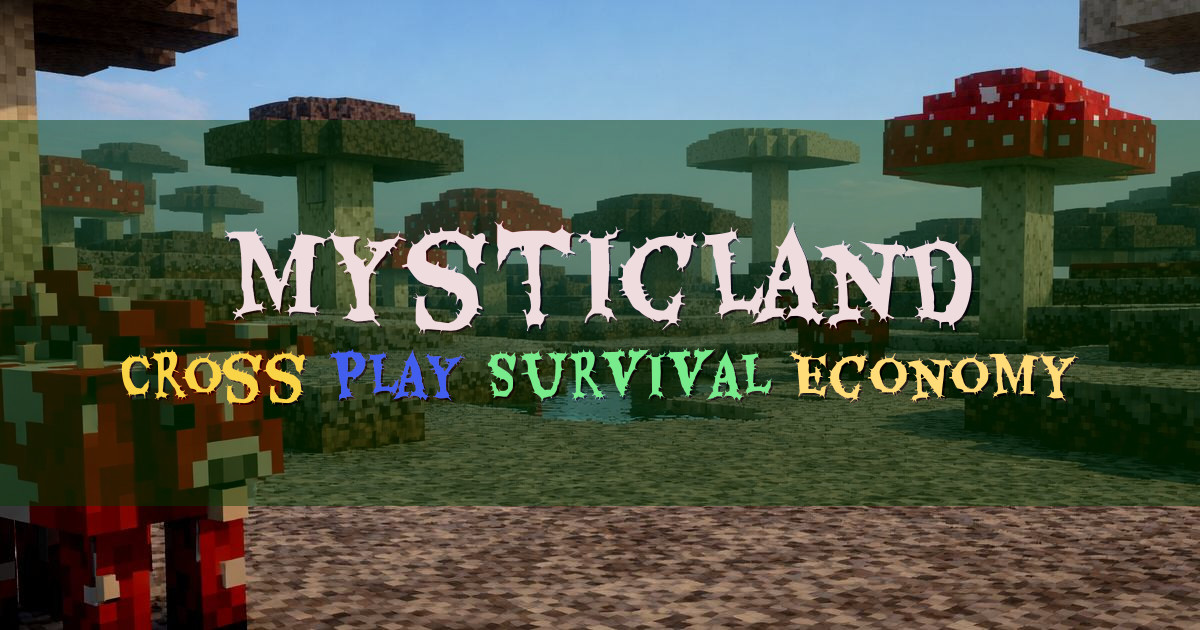 6/80OnlineMysticLand es una network de Minecraft para Java y Bedrock con 3 modalidades disponibles, pensadas para distintos estilos de juego. En Elite encontrarás mazmorras, estructuras, armaduras especiales y mobs con mayor dificultad, además de sis…
 -
Solar Network is a new Minecraft network we have been building and polishing over the past couple months, focused on bringing back the competitive style of gameplay many of us grew up with. We currently run HCF, Arena, and SMP, and the…