Minewind is a survival server built around choosing your own path and hunting down powerful loot that fits your play style. Find a wide variety of gear in chests across the world, trade with villagers for emeralds, and take on dangerous mon…
Mystery
Mystery servers turn Minecraft into an investigation game. You spawn into a map meant to be read, not mined: a mansion with sealed wings, a village full of alibis, a lab of terminals, a dungeon where the danger is what you have not learned yet. Progress comes from observation and inference, not gear checks.
The loop is tight: explore, spot what is off, collect evidence, and use it to open the next layer. That can mean matching a diary line to a coordinate, decoding a redstone device, finding a hidden trigger, or noticing a chest inventory that does not fit the story. Strong maps reward careful players with clean, legible clues: changed NPC dialogue, missing items, unnatural block placement, repeated paths that suddenly matter.
A lot of the format is social. Some servers run hidden-role rounds where you identify a killer, traitor, or saboteur from behavior and limited facts while avoiding getting framed. Others are cooperative case files where teams split up, compare notes, and argue over interpretations. The best moments happen when everyone stops fighting and starts watching, re-reading, and retracing.
Expect custom systems instead of vanilla progression: evidence items with lore, boards or journals, local chat or proximity voice, and puzzles built with redstone, item frames, and map art. Combat may exist, but mostly as pressure to make choices fast. The feel is curiosity first, suspicion second, then the click of a reveal when the clues finally line up.
Is Mystery closer to puzzle adventure, or murder mystery PvP?
Both. Some servers focus on case-based co-op stories with triggers and puzzles. Others are round-based hidden-role games where the main skill is reading players and timing, not solving a fixed map.
Can I play solo, or do I need a group?
Solo fits narrative cases where you want full control of pace and note-taking. Hidden-role rounds work solo too, but they shine with active lobbies because deduction depends on watching interactions and testing stories.
What makes a Mystery server feel fair instead of random?
Readable clues, consistent rules for what counts as evidence, and progression that resists brute force. In hidden-role modes, good servers provide limited but meaningful info tools, keep downtime short, and protect the map so deduction stays the focus.
What skills actually matter in Mystery gameplay?
Attention and discipline: re-check rooms, track names and locations, compare timelines, and avoid locking into the first theory. Mechanical skill helps, but it is rarely the deciding factor.
-
-
2
 20/75OnlineWelcome to Avalore, a fantasy-touched medieval world set in the Southern Reach. The land is full of misty plains, ancient forests, and forgotten ruins, shaped by the lingering presence of the enigmatic Aedall and the remnants of a lost magi…
 -
3
 14/500OnlineNerdNu is a long-running public Minecraft community with both a Survival PvE server and a Creative server. We focus on mostly vanilla gameplay and a welcoming, tight-knit place for players who want to settle in and belong. On PvE, survival…
 -
4
 14/500OnlineWelcome to VoidMines, an OP Prison experience built around fast progression, powerful custom enchants, and a long mine and rank climb. Start with nothing and build your way up through a deep progression system using Money, Tokens, and Gems…
 -
5
 9/350OnlineWelcome to SixStack, a chill crossplay survival economy server with a cherry blossom theme, built for players who like to progress, build, and trade. Play together across Java and Bedrock while keeping a focused survival experience. Claim l…
 -
Vista Valley is a community-first Minecraft SMP built around an immersive 1:500 scale Earth map. Settle anywhere in the world, claim land, and work together to build towns, nations, and a lasting mark on the map. Our economy is player-drive…
-
Welcome to AnarchyMC, a true anarchy server built around one simple idea: no rules, no anti-cheat, and no map resets. The world has been running for around 1.5 years, with a solid history and a spawn that shows it. If you enjoy…
-
8
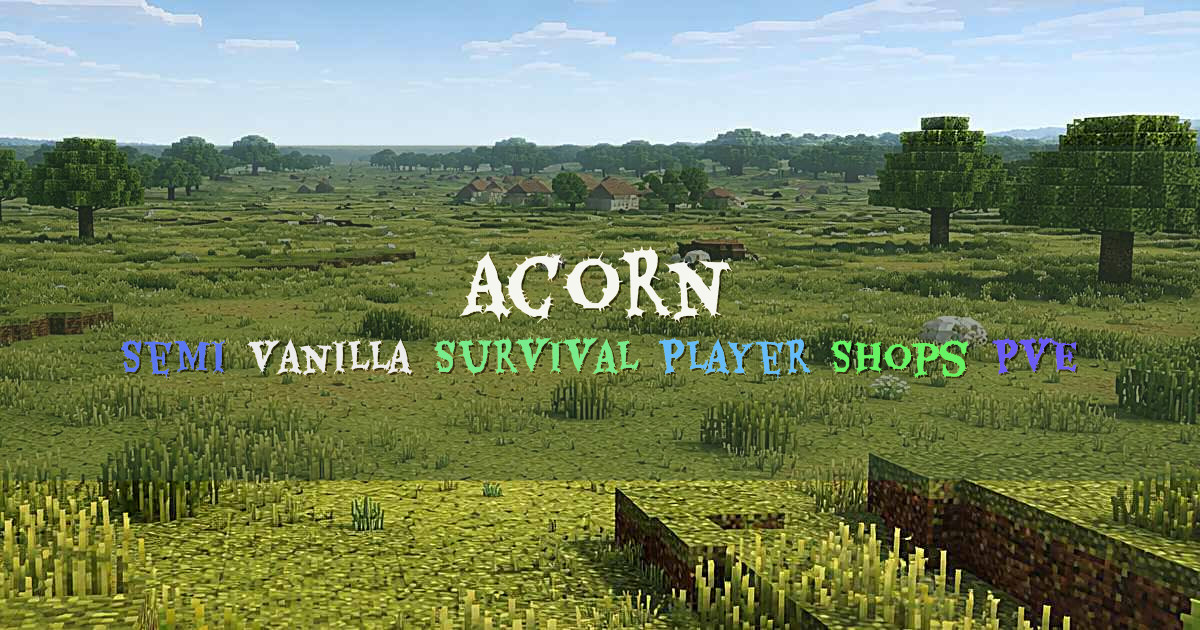 2/50OnlineWelcome to Acorn, a semi-vanilla Survival server focused on a clean, player-driven experience. Build and explore with a PvE focus in a grief-free, theft-free world where your progress is protected and the community can thrive. Our economy i…
 -
9
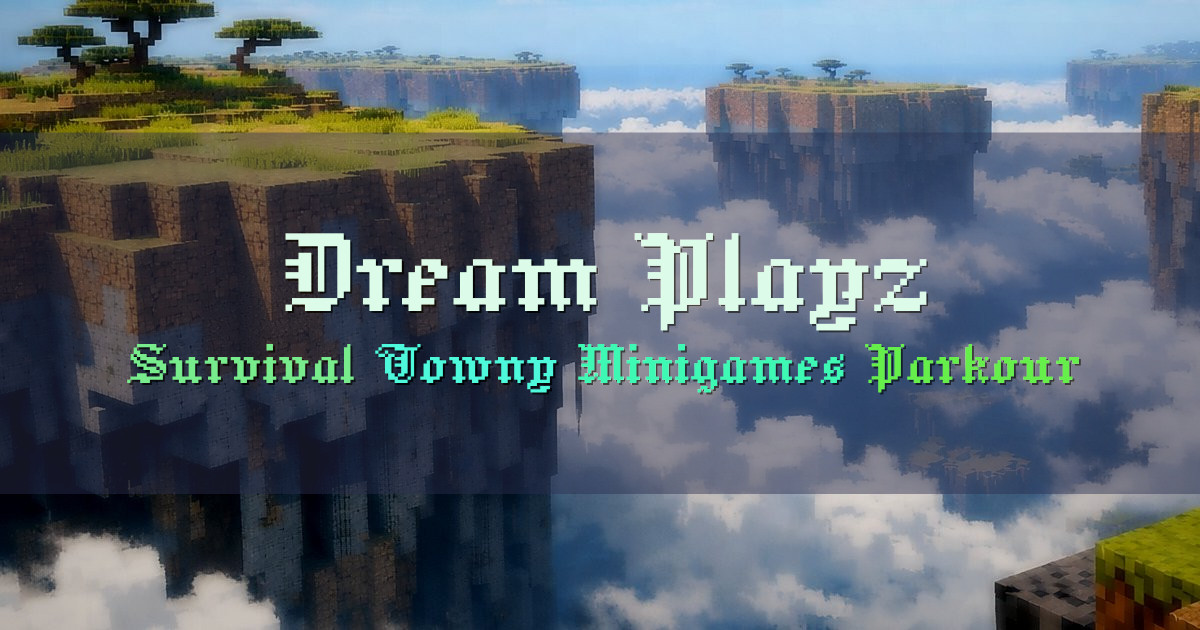 1/100OnlineDream Playz is a friendly, feature-rich survival server where players can team up, build, survive, and create lasting memories together. We aim to be a welcoming place for all playstyles, from casual builders to dedicated redstone players…
 -
Welcome to AllaySMP, a crossplay Minecraft server where Java and Bedrock players can play together. Build your place in a competitive economy, trade with others, and grind your way up through ranks with exclusive perks. Unlock custom kits a…