Minewind is a survival server built around choosing your own path and hunting down powerful loot that fits your play style. Find a wide variety of gear in chests across the world, trade with villagers for emeralds, and take on dangerous mon…
voice chat
Voice chat servers are Minecraft multiplayer where real-time talk is part of normal play, not a side channel. You do not stop to type mid-fight or mid-task. You call what you see, ask for help, negotiate, argue, and laugh while the world keeps moving. The whole server tends to feel more like a shared session than a bunch of solo players sharing a chat box.
Most run proximity voice, meaning you only hear players near you, with direction and distance. That single choice changes everything: towns sound busy, bases have actual rooms, and running into someone on a road turns into a conversation instead of a silent stare. You can drift in and out of groups naturally, and you start recognizing people by voice before you even read a name tag.
Survival and PvE get smoother because coordination is immediate. Clearing a nether fortress, exploring deep caves, or doing an End fight becomes about quick callouts: where the blaze spawned, who has blocks, when to pearl, who needs food, who is one hit. Builds and resource runs also stop feeling like parallel chores and start feeling like hanging out while you work.
In PvP, raiding, and faction-style conflict, voice raises both the ceiling and the tension. Teams rotate, bait, and reposition without breaking momentum, and a nearby voice can be more intimidating than gear. Because comms are instant and personal, the best voice chat servers are usually strict about behavior and boundaries, and they make expectations around harassment and consent obvious.
Voice also makes light roleplay and server events actually land. Town meetings, trials, tavern nights, bandit checkpoints, and rescue missions work because players can improvise on the spot. Even without formal RP, voice turns a world into a place with familiar voices, regulars, and little routines.
Do I need to install anything to use voice chat?
Often, yes. Many servers rely on an in-game proximity voice setup that requires a client mod (with a matching server plugin). Others use external voice, but if the server advertises proximity voice, expect a short install and a quick mic setup.
Can I join without a microphone?
Usually. A lot of communities are fine with listeners who respond in text, especially on casual SMPs. For organized PvP, dungeons, or scheduled events, servers may expect you to at least hear callouts, since silent players can become a liability in group fights.
Why does proximity voice feel different from staying in Discord?
Discord is typically global and persistent, which flattens distance and makes information travel too fast. Proximity voice is tied to the world, so secrets, ambushes, and chance encounters work the way you would expect in-game. It also pulls people out of private calls and back into the server’s public spaces.
Can players eavesdrop through walls or from underground?
Sometimes. Some servers let voice pass through blocks like real sound, while others heavily dampen it or treat walls as stronger barriers. If stealth, raiding, or private meetings matter to you, check how the server config handles occlusion and whether eavesdropping is considered fair play.
What makes a voice chat community worth sticking with?
A playerbase that actually uses voice without turning it toxic, plus moderation that acts fast when someone crosses the line. Good servers also make setup painless, encourage push-to-talk, and are clear about streaming, recording, and unwanted attention.
Does in-game proximity voice work on Bedrock or consoles?
It is most common on Java Edition. Bedrock and console players usually rely on platform party chat or external apps, and true in-game proximity voice is much less consistent there unless the server explicitly supports it.
-
-
2
 35/500OnlineMineDemon.de is a German-speaking Survival SMP focused on a classic survival experience with extra depth and a strong sense of community. We run integrated voice chat to make teaming up, trading, and building projects together feel more nat…
 -
3
 32/250OnlineBienvenido a OsirisMC. Nuestro servidor está pensado para quienes disfrutan la supervivencia, pero quieren un mundo más grande, más exigente y con progresión real mientras exploran. Jugamos en un mapa colosal de 20,000 x 20,000 bloques, con…
 -
4
 31/100OnlineLegendaryHardcore is a permanent-death, deathban survival server built for players who want real stakes. The world never resets and there are no revives, so every life, base, and alliance becomes part of a long-running history. We keep the…
 -
5
 29/300OnlineHugeSMP is a Lifesteal survival server built around active PvP and systems that keep fights and progression feeling fresh. If you enjoy taking risks, defending what you build, and earning your wins, you’ll fit in here. We run hourly PvP eve…
 -
6
 27/999OnlineLimitless Network is a Survival SMP built for players who want a steady long term world with room for both chill progression and conflict. We support Bedrock and cross play, with version support back to 1.9, so it’s easy to bring friends…
 -
7
 25/100OnlineTerraTrove is a long-term, seasonal, whitelisted Minecraft SMP for players aged 18 and over. We focus on the core vanilla survival experience, with a small set of quality of life features that support day-to-day play. Alongside vanilla game…
 -
8
 20/50OnlineSolace SMP is a 1.21.11 survival economy server built for long-term progression, player interaction, and community-driven gameplay. If you want more depth than a quick vanilla playthrough, there’s always something to work toward here. We su…
 -
Welcome to Provim, a Survival server for players who love classic Minecraft but want a little more depth without losing that familiar feel. We are voice chat compatible, with playtime ranks and an economy that fits naturally into day to day…
-
10
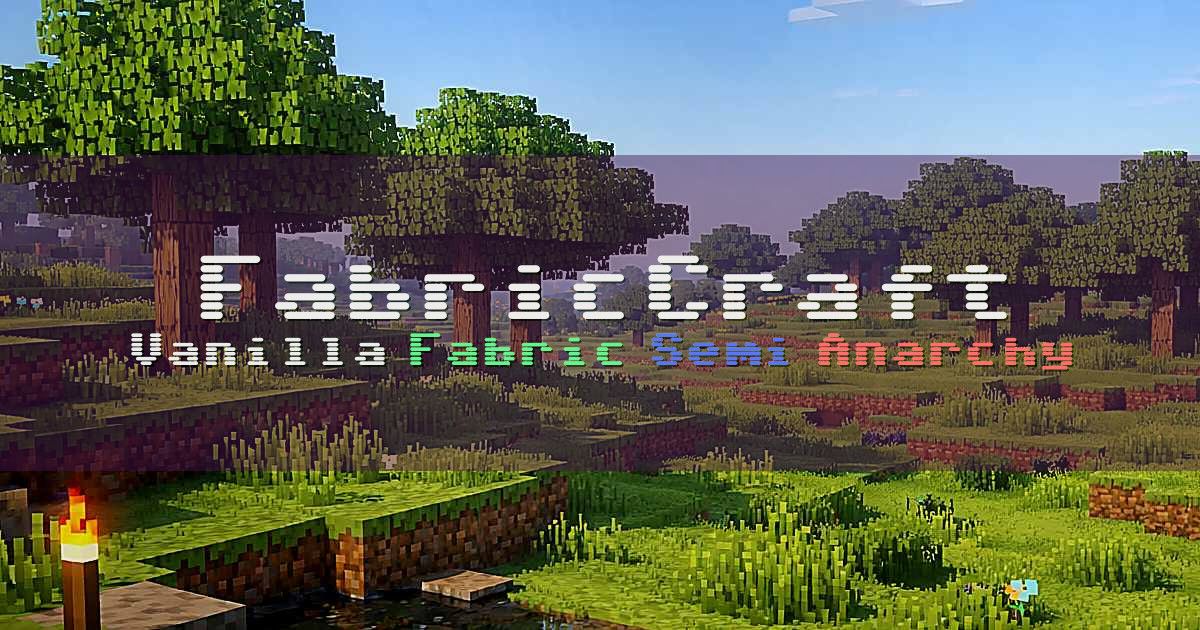 15/250OnlineFabricCraft is a recently launched vanilla semi-anarchy survival server running on Fabric, built for real vanilla mechanics at scale. If you care about redstone and farms working the way they should, this is the kind of environment we run…