Minewind is a survival server built around choosing your own path and hunting down powerful loot that fits your play style. Find a wide variety of gear in chests across the world, trade with villagers for emeralds, and take on dangerous mon…
Co op questing
Co op questing servers center the whole playthrough on a shared questline. Quests are the backbone: they track milestones, point the group at the next goal, and reward progress so the server stays moving as a team instead of splintering into separate tech paths.
The loop is straightforward: form a party, sync progress, split the workload, then regroup to turn in and push the next chapter. One player hunts Blaze Rods or slime, another sets up early ore processing, someone stabilizes food and storage. Each turn-in is a small payoff that nudges the base from starter chaos into a real hub with power, automation, and reliable crafting.
At its best, co op questing feels like cooperative problem-solving rather than a sprint. Team credit means progress is communal, and good packs create moments that naturally demand coordination, like gated recipes tied to exploration, boss drops, or multiblock builds. The social rhythm stays active: deciding priorities, dividing roles, and building shared infrastructure that removes friction for everyone.
You get direction without being boxed in. The questline provides a common roadmap that works for mixed-skill groups, while still leaving room for side projects, building, and personal experiments. The difference is that the server keeps pulling the party back into the same arc instead of letting everyone disappear into their own isolated progression.
How does shared quest progress usually work?
Most servers use a party system where completions sync to the team. Sometimes any single turn-in counts for everyone, and sometimes each player must contribute a portion or complete certain steps personally. Check the server rules if your group cares about equal contribution.
Do we need to stay together, or is splitting up expected?
Splitting up is expected. Groups usually parallelize: mining and processing, farms and food, exploration and mob drops, base logistics. You tend to regroup for gated crafts, boss fights, or when wiring up shared systems like storage, power, and automation.
What makes this different from regular modded survival with friends?
Regular modded survival is self-directed, so groups often drift into separate mod paths and pacing. Co op questing is built to keep everyone on the same progression track with clear milestones and shared incentives, so the team advances as a unit.
Are quest rewards shared, and can they cause conflict?
It depends on configuration. Some quests give everyone identical rewards; others force a choice that affects the whole party, like picking one machine or resource bundle. Groups that avoid drama decide early how to handle choice rewards, and well-tuned servers minimize zero-sum picks.
Is co op questing good for beginners?
Usually. A strong questline teaches progression step by step and gives newer players useful ways to contribute through gathering, building, farming, and exploration, while experienced players handle harder gates and automation planning.
-
-
2
 16/200OnlineSunflower SMP is a friendly, safe, and relaxing place to play Survival with a community-first focus. We keep things welcoming and low-stress with keep-inventory and a selection of cute cosmetics. Settle in and build with land claiming, take…
 -
3
 10/100OnlineObscuros is a Pixelmon server that has been running since 2014, built to offer a unique mix of custom content and a competitive scene. We focus on keeping the experience fresh with frequent updates and new features, while still feeling like…
 -
4
 9/100OnlineMineRealm is a long-running public SMP that has been online since 2010, with a welcoming community built over years of survival gameplay and over 265,000 players having joined. We keep the experience grounded in 100% legit survival with no…
 -
5
 6/2026OnlineMofuCraft is a Japan-based Minecraft Java server focused on a vanilla-style survival experience with an economy, MCMMO, minigames, PvE, and optional PvP. Standout features include a casino, pets that can accompany you, a four-seasons system…
 -
6
 6/80OnlineMysticLand es una network de Minecraft para Java y Bedrock con 3 modalidades disponibles, pensadas para distintos estilos de juego. En Elite encontrarás mazmorras, estructuras, armaduras especiales y mobs con mayor dificultad, además de sis…
 -
8
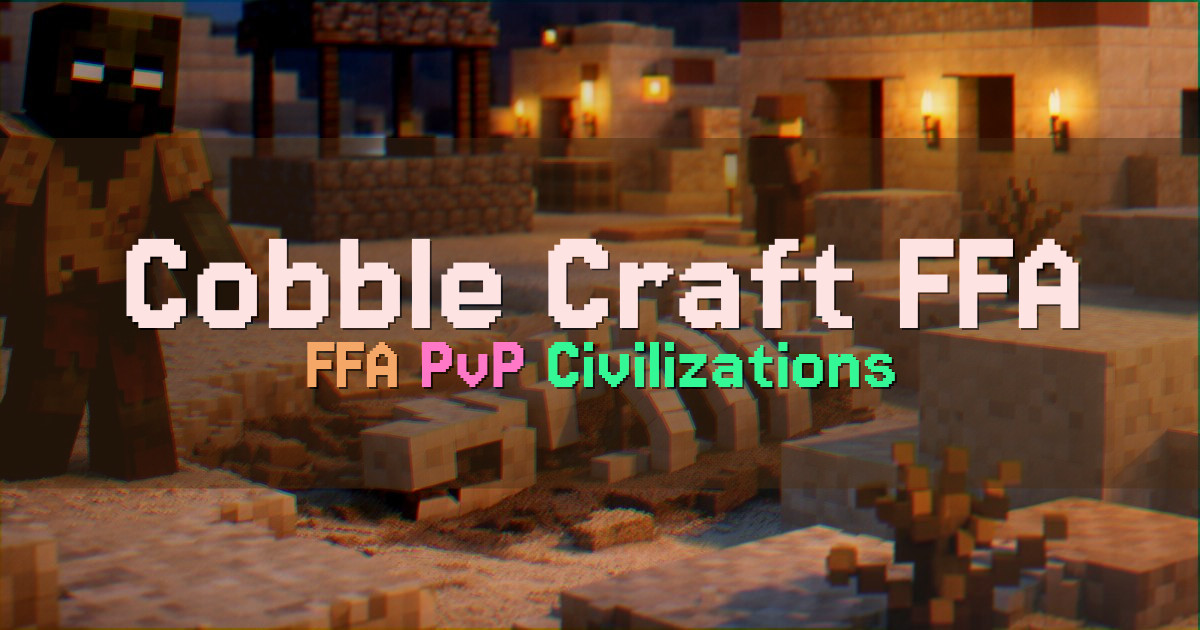 3/60OnlineCobble Craft is a Minecraft FFA server built around fast PvP and a community that keeps growing every season. We run new seasons every few months, and each reset comes with a revamp and new features to keep the experience fresh. Whether…
 -
Dragon Block Apollo is a modded Minecraft 1.7.10 server built around the Dragon Block C experience, with a strong focus on progression and questing. Our main story questline has been recently revamped and features 240 main story quests. We…
-
PCSMP Pixel Craft Network is built for competitive players who want a chaotic, grindy survival experience with real stakes. Our core mode is Lifesteal SMP, where defeating other players lets you steal their hearts, and losing all your heart…