Minewind is a survival server built around choosing your own path and hunting down powerful loot that fits your play style. Find a wide variety of gear in chests across the world, trade with villagers for emeralds, and take on dangerous mon…
player driven
Player driven servers are built around one idea: the world moves because players push it. Instead of a questline or a calendar of staff events, the server gives you rules and tools, then lets the community decide what matters. Districts get planned, shops open, factions form, public projects happen, and the social map becomes as important as the terrain.
The loop is momentum and buy-in. You log in because someone is extending a nether highway, setting up a new market street, recruiting for a big build, or paying for materials. Resources have weight because demand is real. A good slime chunk, an end gateway route, or a well-run villager hall can turn into influence, not through a menu perk, but because other players rely on it.
When conflict shows up, it usually starts as people friction, not combat. Competing builds, territory boundaries, shop rivalries, shared storage trust, pricing wars, and how a community handles disputes create most of the tension. Some servers lean cooperative and civic. Others drift into politics and rivalries. Either way, your name, consistency, and relationships are a form of progression.
This style fits players who like setting their own objectives and staying long enough for them to matter. Running a shop, supplying a niche, organizing a group project, or building infrastructure that others actually use feels rewarding here. If you need constant prompts and guaranteed action, the freedom can feel quiet until you connect with the community.
What should I do first on a player driven server?
Get stable, then get involved. Set up food, tools, and one or two reliable farms, then pick something that helps other people: stock a shop with rockets, glass, concrete, and books; offer bulk mining; or join a settlement and take on a needed job. Trading and collaboration make the format click faster than playing fully solo.
Does player driven always mean economy focused?
No. Economy is common because it gives players an easy way to depend on each other, but player driven also covers build collectives, infrastructure crews, politics, roleplay-lite towns, and community planning. The point is that players create the goals and demand, whether that demand is for diamonds or for a finished district.
Is PvP required on player driven servers?
Not at all. Many are PvE with claims and strict anti-grief rules, where the rivalry is social and economic. Others allow duels, arenas, or declared wars between groups. The defining trait is that players initiate the action and the consequences, not that PvP is always on.
If players run things, what keeps it from turning into chaos?
Good guardrails and a culture that remembers. Solid servers enforce basics like no cheating, no harassment, and protections against random theft or griefing. Inside that, reputation does a lot of work: trusted trade partners, blacklists, alliances, public receipts, and community votes. Staff usually handles hard rule breaks, while everyday disputes are often settled socially.
Can a solo player thrive on a player driven server?
Yes, as long as you participate. A solo base, a one-person shop, or contract work can go far. What feels slow is staying invisible, because much of the payoff comes from other players using what you built, buying what you sell, or recognizing you as reliable.
-
-
2
 233/550OnlineStoneworks is a worldbuilding Towny server for Minecraft Java Edition 1.21.8. Create and grow your own town, city, or nation, and help shape the world around you. Whether you prefer building and community planning or stepping into conflict…
 -
3
 124/300OnlineCivMC is a Minecraft civilization server where gameplay intertwines with politics, economy, diplomacy, and history shaped by the players. We run a custom suite of plugins designed to support player-driven gameplay, with no admin involvement…
 -
4
 51/500OnlineWelcome to HayCube, a laid-back, player-driven Minecraft community where you can play solo or bring your friends. We currently offer a simple Survival SMP experience alongside a Creative server, with more planned for the future. HayCube sup…
 -
5
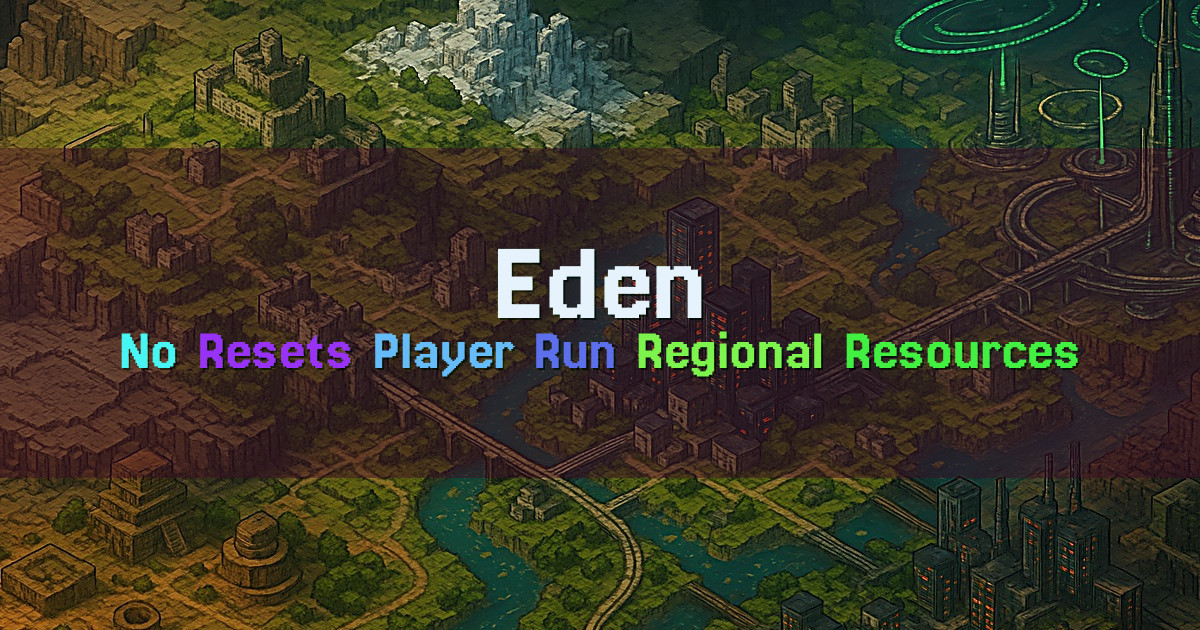 33/120OnlineEden is a vanilla-client survival server with tweaked progression designed to push players toward cooperation. Solo play is possible, but it’s intentionally brutal, and key crops and ores are region-locked. Where you choose to live matters…
 -
6
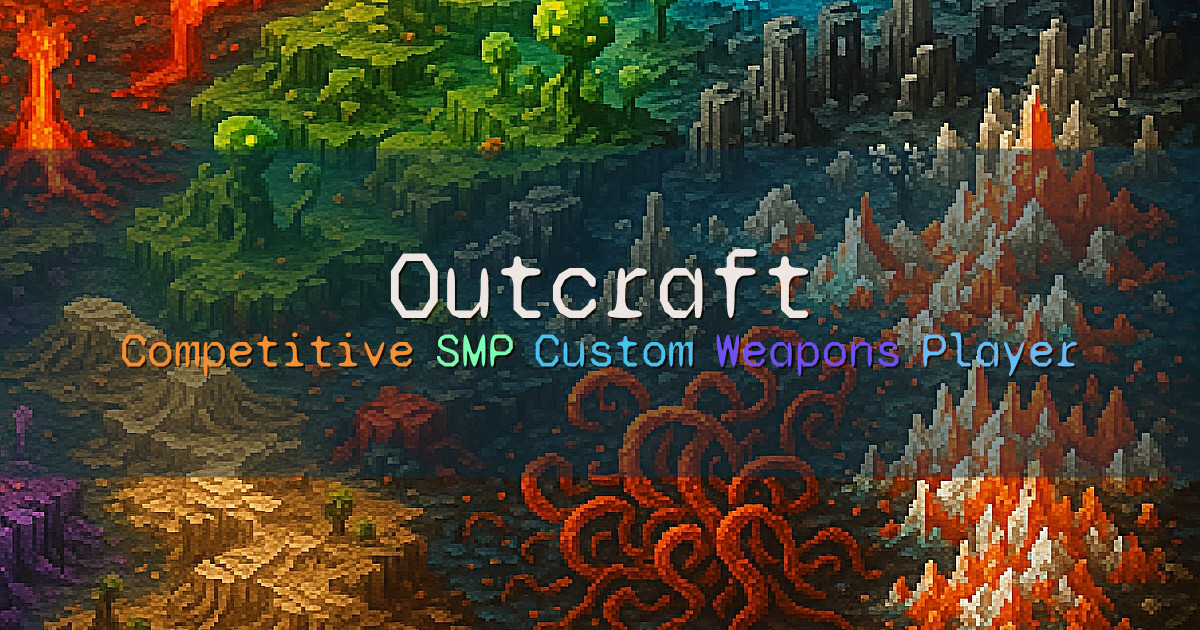 30/1000OnlineOutCraft is a competitive SMP built around progression, strategy, and large-scale player events. The world evolves through dynamic mini-events, and each season is shaped by the choices players make. We focus on meaningful conflict and coope…
 -
7
 15/40OnlineGoblinSMP is a semi-anarchy, vanilla-focused survival server where the world is shaped entirely by players. No claims. No protection. Minimal plugins. PvP is on, and raiding, griefing, alliances, and conflict are all part of the experience…
 -
8
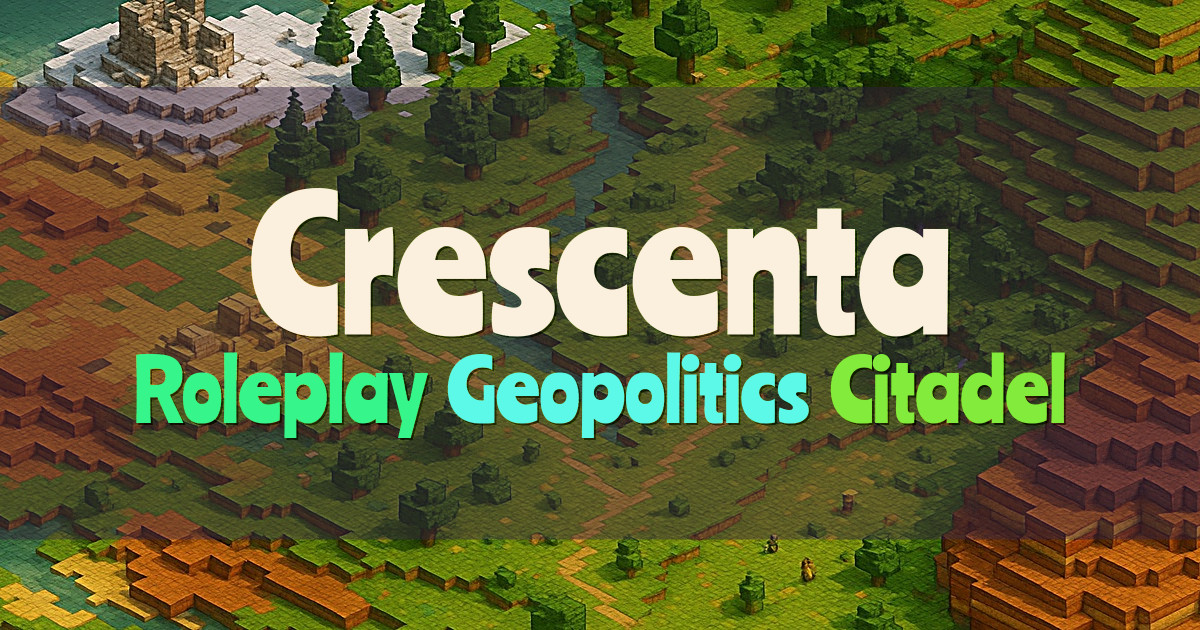 14/48OnlineCrescenta is a long-running worldbuilding, storytelling, and geopolitical roleplay server built around a mature community and player-driven stories where your choices can meaningfully change what happens next. Our current world, Gary, is ab…
 -
Gladius is a semi-anarchy survival server built for players who want freedom without the hacking. We keep rules to a minimum and avoid pay-to-win, so what happens in-game is driven by players, not purchases. There are no land claims, and Pv…
-
10
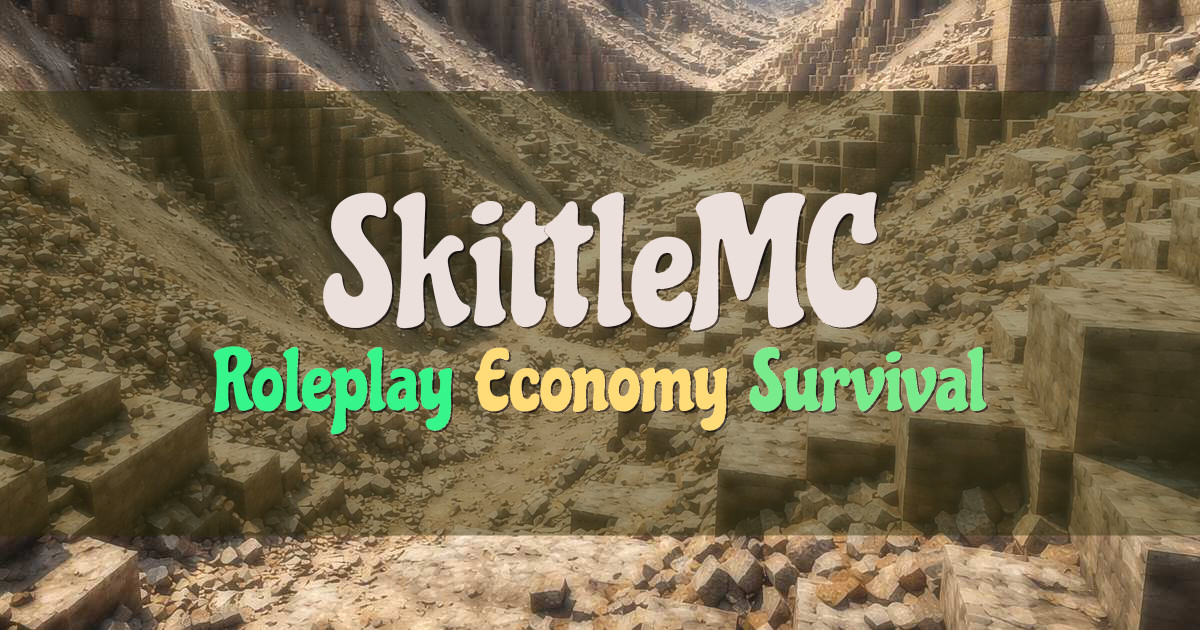 4/99OnlineWelcome to SkittleMC, a Minecraft network that’s been running since 2017. We focus on roleplay, economy, and survival, with a strong PvE lean and a community-first atmosphere. Our goal is to keep SkittleMC a place where you can express your…