Minewind is a survival server built around choosing your own path and hunting down powerful loot that fits your play style. Find a wide variety of gear in chests across the world, trade with villagers for emeralds, and take on dangerous mon…
Seasons
Seasons servers run Minecraft in planned cycles. Each season starts as a true fresh world where everyone is broke, undergeared, and racing for position. Over time the server settles into an endgame where borders are stable, the market is priced in, and most players have the farms, enchants, and gear they need. When the pace slows, the server wipes and a new season begins, often with a new map and a few rule tweaks to keep the opening weeks sharp.
The core loop is momentum. Early season is a land rush: finding a good biome, getting villagers and iron online, claiming a spot near key resources, and establishing safety before nearby groups do. Mid-season becomes logistics and social power: roads, shared farms, shop districts, alliances, grudges, and control of high-value areas like nether routes or rare biomes. Late season is where people flex with mega bases, optimized grinders, max gear, organized fights, and community builds that only happen when a server has critical mass.
What seasons do well is fairness with urgency. You are not permanently behind because progression gets wiped on a schedule, but you also cannot coast because early advantages compound fast. Miss the first week and the best shop plots, spawner access, nether travel lines, and trading networks may already be locked in.
Good seasons servers make resets feel like a chapter ending, not lost time. The world and progression reset, but the community carries forward through Discord, leaderboards, hall of fame builds, or a downloadable archive. Some servers also rotate the rules between seasons, like a tighter world border early, delayed elytra, adjusted shop taxes, or different claim limits, so each start has its own meta.
Clarity matters: players should know exactly what wipes and what persists. Worlds, inventories, ender chests, claims, homes, and economy balances are the usual reset targets. Ranks, roles, and cosmetics often carry over. When that line is explicit, wipes feel like a shared event instead of a surprise punishment.
How long does a season usually last?
Most seasons run long enough for active players to stabilize: roughly 4 to 12 weeks on fast-paced servers, or 3 to 6 months on slower survival communities. When the economy and borders stop moving and logins drop, it is typically close to wipe time.
What typically resets when a new season starts?
Commonly the entire world and anything tied to it: inventories, ender chests, claims, homes/warps, and economy balances. Some servers also wipe skills or stats; others keep them. Persistent perks are usually social or cosmetic, like ranks, Discord roles, and vanity unlocks.
Will my base be gone after the season ends?
In the live world, usually yes. Many servers preserve the work through a world download, a museum map, or a showcase area for notable builds. If you care about keeping builds accessible, look for a server that explicitly archives past seasons.
What should I prioritize on day one?
Get stable fast: food, bed, iron, and a defensible location away from obvious spawn paths. Then pick a concrete early advantage to chase, like villagers, a shop spot, a nether route, or control of a specific resource biome. In seasons, speed and positioning beat perfection.
How do seasons change trading and the economy?
They keep the market from getting permanently solved. Early season demand is basics and progression items, mid-season shifts to bulk materials and convenience, and late season is mostly vanity and optimization. The wipe is what makes shops, currency, and price swings matter again.
Are seasons only a survival thing?
No. Survival seasons emphasize economy and building with a reset that refreshes the world. PvP or faction-style seasons use the wipe to keep fights competitive and prevent one group from sitting on permanent dominance.
-
-
2
 57/2026OnlineFadeRealms Network is a cross-play Minecraft server for Java and Bedrock players, with support for cracked clients. Play Survival/SMP with PvP, an economy, and Earth-style gameplay, backed by dedicated staff and frequent weekly updates. Rec…
 -
NationMC is an Earth SMP built on a custom 1:500 scale Earth world, where you can choose a real-world location and turn it into something lasting. Start a town, claim land, recruit allies, and unite with others to form nations as you…
-
4
 6/2026OnlineMofuCraft is a Japan-based Minecraft Java server focused on a vanilla-style survival experience with an economy, MCMMO, minigames, PvE, and optional PvP. Standout features include a casino, pets that can accompany you, a four-seasons system…
 -
5
 2/50OnlineMineScape is a survival factions MMO built on top of vanilla Minecraft with several custom systems layered in. After about three months of development, we’re moving from pre-alpha into alpha, and we want to share what we’ve built so far. Pr…
 -
6
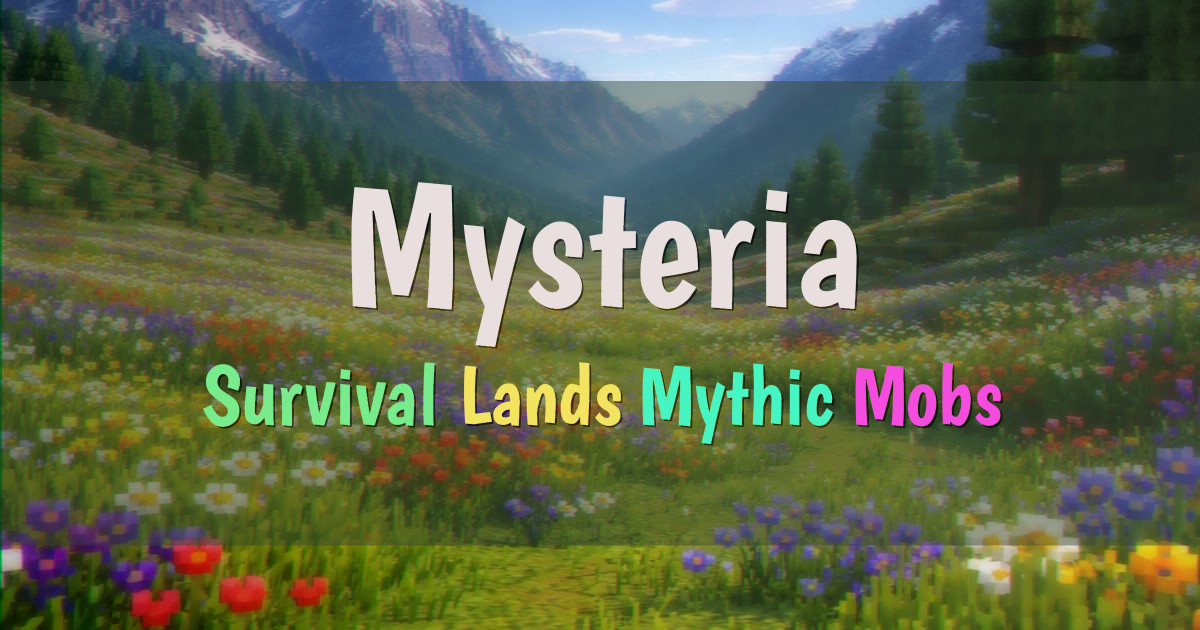 0/100OnlineMysteria is a survival server built around a friendly community, a beautiful custom world, and unique monsters that make exploration and progression feel fresh. We focus on adding meaningful challenges and discoveries beyond a basic surviva…
 -
7
 0/100OnlineBELAIR is an EU-based Java PvP server focused on arena fighting with a strong competitive core. Choose between two arenas: a casual arena where everyone can jump in and fight freely with equal loadout tiers and enchantments, and a competiti…
 -
RepulseSMP is a competitive Lifesteal SMP built for players who want skill-based PvP in a fair environment. We focus on balanced gameplay with no pay-to-win advantages, so fights and progress are earned. The server is optimized for smooth…
-
AeternalCiv is a geopolitical, civilization-building nations SMP focused on player-driven societies and long-term progression. Whether you want to live as a citizen, lead a town or nation, or keep to yourself as a hermit, there’s room here…
-
Chilltown is a calm, long-running Survival SMP built for players who want a true vanilla feel without the chaos. We have been running since 2019, and our current world has grown naturally over time through player-built towns, farms, and lon…