Minewind is a survival server built around choosing your own path and hunting down powerful loot that fits your play style. Find a wide variety of gear in chests across the world, trade with villagers for emeralds, and take on dangerous mon…
Zero reset world
A zero reset world is a Minecraft server world meant to persist. The map does not wipe, so bases, farms, and infrastructure are built with the expectation they will still matter months later. Instead of sprinting to beat a reset, players invest in permanence: megabases, rail and ice-boat networks, spawn towns, long-term redstone, and practical farms that get upgraded over time.
Compared to seasonal servers, the pace is steadier and the social layer matters more. You are joining an ongoing world with established shops, portal routes, and veteran storage rooms full of surplus. Getting started is less about winning an early-game race and more about plugging into what already exists: community hubs, public farms, trading areas, and towns if the server runs them.
The main tradeoff is fresh terrain. Older regions near spawn are often heavily used, with strip mines, nether tunnels, and abandoned projects baked into the landscape. Many servers support this style by expanding the world border over time or keeping a separate resource world for renewable mining while the primary overworld stays the permanent home. Expect longer travel for new biomes and a Nether that feels like public infrastructure.
Because history accumulates, loss hits harder. Griefing or theft is not just a setback, it is months of work erased, so rules and etiquette tend to be taken seriously even on casual servers. If you like worlds with real landmarks, scars, and community-built systems, a zero reset world gives you that lived-in continuity that wipe cycles cannot.
Does zero reset world mean nothing ever resets?
It usually means the main overworld is not wiped. Servers may still do targeted resets or maintenance, like regenerating the End, pruning long-unused chunks, expanding borders for new terrain, or running a separate resource world that can reset without touching the main home world.
How do you start on a world where spawn is already crowded?
Use the Nether for distance fast, then portal out beyond the built-up ring. Established servers often publish claimed areas, town locations, or a map to help you avoid landing on someone else. If you want access to shops and neighbors, joining an existing town is often the smoothest start.
What happens to the economy on a long-running world?
It matures. Basics tend to be cheap because farms exist, while convenience and time-savers stay valuable: rockets, shulker boxes, beacons, enchanted books, trims, and bulk deliveries of common building blocks. Reputation matters too, since people remember who trades fairly and who causes problems.
What should I prioritize early so I do not feel behind?
Transportation and stability. Secure a safe Nether route, set up reliable food and storage, then build one dependable progression engine like villagers or an iron farm. After that, lean on the server: public infrastructure, community farms, and shopping districts are there to reduce grind.
Are older worlds always laggy or cluttered?
Not by default. Performance comes down to management: limits on redstone and mob farms, clearing abandoned entities, maintaining Nether hubs, and moderating problem builds. A well-run old world can feel smoother than a newer one with no rules.
-
-
2
 34/35OnlineWelcome to Survivaldub Network, a multi mode server built around Survival and PvP, with plenty to do no matter how you like to play. Jump into LifeSteal, level up with McMMO, and take on Mob Arenas when you want something more action…
 -
3
 23/150OnlineWelcome to Safe Survival, a semi vanilla survival server for players who want a classic, single player-like experience with the benefits of multiplayer. Getting started is quick and straightforward. You can begin right away after walking ab…
 -
Welcome to Better Towny, our take on the Towny experience with progression at the core. Push your character forward with our leveling system using /level, train your MCMMO skills, and level up jobs to earn money as you play. Daily quests an…
-
5
 7/250OnlineCrafters One is a whitelist Minecraft server built for players who want their work to last. Our goal is to preserve the classic feel many of us remember from 2011–2013, while providing a stable home for long-term builds. We do not reset…
 -
6
 5/125OnlineExeosCraft is a long-term Survival SMP for players who want a stable place to call home. Our world is permanent and we do not reset the map, so your builds and progress are made to last. We run a no-grief environment with…
 -
7
 5/50OnlineMineScape is a survival/factions MMO built on top of vanilla Minecraft with several custom systems layered in. After roughly three months of development, we’re moving from what we’d call pre-alpha into alpha, and we want to share what we’ve…
 -
8
 4/500OnlineGementarMC is a survival SMP server for players from Malaysia, Singapore, and Indonesia who want a solid experience with a chill community and competitive vibes. Set up your base, grind resources, and explore new lands at your own pace. Tea…
 -
VanillaEvolved has been focused on a vanilla Minecraft experience since 2013. We keep things simple and avoid adding unnecessary extras, so the core survival gameplay stays familiar and player driven. The server runs as a semi anarchy SMP…
-
10
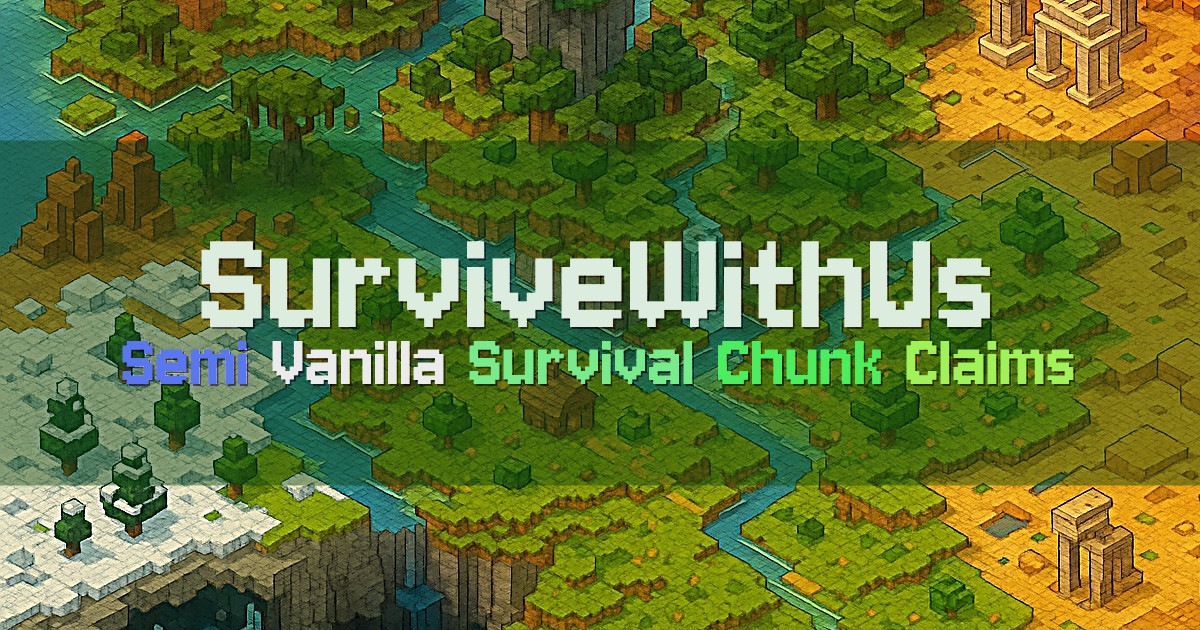 1/69OnlineSurviveWithUs is a semi-vanilla survival server built around community and long-term play. We focus on keeping the core survival experience intact while giving players chunk claiming to help protect what they build. The server is back under…