Minewind is a survival server built around choosing your own path and hunting down powerful loot that fits your play style. Find a wide variety of gear in chests across the world, trade with villagers for emeralds, and take on dangerous mon…
classicube
Classicube is a Classic Minecraft-style multiplayer format built around the older creative ruleset: instant placing and breaking, a small block palette, no hunger, and no modern progression loop. The point is to get building immediately. You join a public map, find open space or a designated area, and start shaping terrain and structures without material grinding.
Most Classicube communities center on persistent shared worlds that stay online for months or years. That persistence shifts the social loop away from winning and toward stewardship. People collaborate on towns, connect roads, finish each other’s shells, and keep the map readable. Moderation and permissions are core, because grief, spam, and careless edits do more damage here than any balance issue.
What gives Classicube its identity versus modern Creative is constraint plus culture. With fewer blocks and fewer conveniences, builders rely on proportion, clean silhouettes, and disciplined color choices. The result is a recognizable Classic look: bold shapes, practical architecture, and builds that work with the palette instead of trying to imitate newer blocks.
On the technical side, Classicube servers typically stay lightweight and quick to join, prioritizing stability and community rules over heavy plugin stacks or rotating minigames. Choosing a server usually means choosing a map theme, build standards, and how strictly the shared space is managed.
Do I need the ClassiCube client to play?
Often, yes. Many servers in this ecosystem expect the ClassiCube client and account. Some projects offer alternate connection methods, but the default assumption is playing through the ClassiCube client.
If there is no progression, what keeps people playing?
Long-term maps create long-term stakes. Players return to extend builds, link projects together, earn trust for larger areas, and become part of the server’s shared history. Reputation and collaboration replace gear progression.
Are these servers only creative building?
Creative building on persistent worlds is the common baseline. Some communities run survival-like or PvP modes, but they are secondary to the build-first public-map experience most players associate with Classicube.
How do servers prevent griefing on a shared map?
Expect a mix of rank-based build permissions, claimed areas or zones, clear rules about editing near others, and staff rollbacks. Protection is usually social and administrative as much as it is technical.
How is this different from a typical modern Creative server on Java or Bedrock?
Modern Creative servers often emphasize huge palettes, fast resets, and large-scale tooling. Classicube tends to be slower and more communal: fewer blocks, simpler mechanics, and persistent public worlds where the map itself is the project.
-
-
2
 89/90OnlineMineVN Network là một server Minecraft Việt Nam được xây dựng theo hướng hoàn toàn custom, với nhiều lối chơi khác nhau để bạn có thể đổi gió bất cứ lúc nào. Bạn có thể tham gia MineStrike, Economy, Revelation Skyblock, Hololive…
 -
3
 47/300OnlineTrappedMC is a modern take on the classic prison experience for players who miss OG-style progression and want a server that values community over pay-to-win shortcuts. We focus on a balanced grind with meaningful progression, aiming for a…
 -
4
 27/1000OnlineSwiftServers is our completely free Minecraft hosting platform built for players who want a clean, fast experience without the usual queues, lag, or clunky interfaces. We run a control panel we built from scratch (not a reskinned Pterodacty…
 -
5
 19/200OnlineWelcome to Evolved Survival. We recently reset for a new season and focus on a survival experience built around a player-driven economy. Set up and trade with other players, use public farms, and protect your builds with land claiming. We r…
 -
6
 15/200OnlineTotal Vanilla is a true survival server focused on the classic vanilla experience. We keep gameplay straightforward and familiar, without shortcuts or game-changing plugins. There is no TPA and no home commands. What you do and where you go…
 -
Aegea is a semi-vanilla Spigot SMP focused on a close-knit community, building over time, and simple quality-of-life features. We run a light plugin setup with helpful commands like /help to see what’s available, /back to return to your dea…
-
8
 6/1000OnlineAnarchySMP is a no-rules anarchy survival server where PvP is always on and the world will never reset. The experience is intentionally open-ended and unstructured, so you can build, raid, ally, or destroy without protections or claim syste…
 -
9
 5/99OnlineBoredomMC is a Java network for players who want fair survival and long-term worlds, with two very different survival experiences plus a parkour server. Everything is hosted in the UK, with an online-mode-only setup. Our Whitelisted SMP is…
 -
10
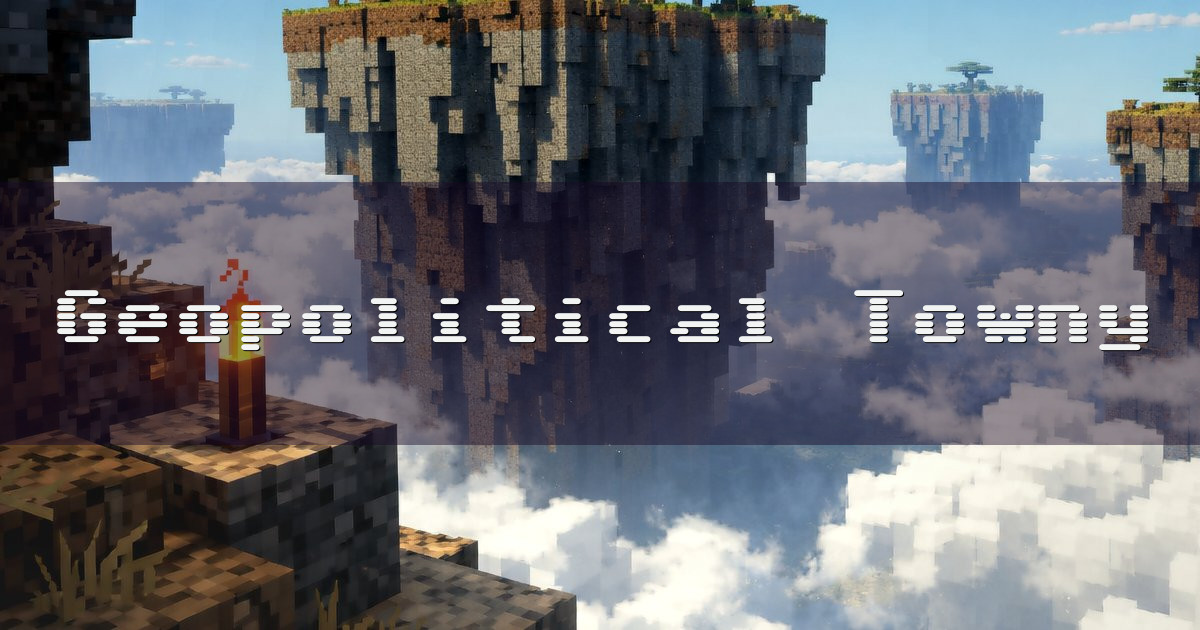 0/?OnlineAtlasMC is a Towny geopolitical server built around nations, politics, and large-scale conflict. Our Towny Geopolitica experience focuses on building powers that matter. Form nations, create vassals, claim titles, and work your way up towar…